Skunk Spray Facts

Skunk Spray Facts thumbnail
Skunks are one of the most recognized mammals in North America.

The human nose can detect a skunk's spray at 10 parts per billion. Emitted at any predator that is deemed a threat, a skunk's spray is extremely malodorous in small doses and can cause serious reactions in higher concentrations. A skunk's pre-spraying behavior, on the other hand, will often show its prey its intention to attack.

  1. The Skunk

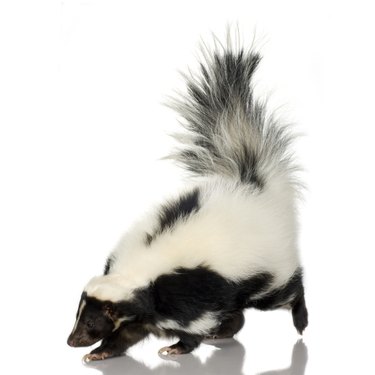
    • According to the website Dragoo, the skunk is one of the most recognized types of small animals in North America because of its spray and its coloring, but the striped skunk is only one of 12 species in four genera. Genetic fossil records have proven that skunks are some of the oldest mammals on the planet, with the first skunk fossil dating from 11 million to 12 million years ago in Germany. The skunk's super-family, the Musteloidea, dates back to 30 million to 40 million years ago. Other members of this super-family include otters, badgers, weasels, raccoons, ringtails and red or lesser panda.

    The Spray Defined

    • A skunk's "spray" consists of a yellow oil that is made from thiols and thiol-derived thioacetate. A skunk's spray is discharged from two walnut-sized glands in the anus and is usually the skunk's primary method of deterring a predator's attack. The chemicals in thiols include sulfur compounds, which explains the malodorous scent, and the chemicals in thioacetates are the salts of those sulfur compounds. According to Dragoo, all carnivores have anal scent glands, but skunks have the most developed of all animals.

    Distance and Aim

    • A skunk's spray can reach distances of up to several feet. Skunks use a coordinated muscle movement to spray when a predator is giving chase, which causes a cloud of the spray to be emitted in the predator's running path, which is called the "shotgun" approach. Another tactic, which is called the ".357 magnum," involves the skunk spraying the predator's face directly.

    Pre-Spray Behavior

    • Striped and hooded skunks stomp both front feet prior to spraying a predator. They may even charge the predator and then stomp their feet first. Striped and hooded skunks may also drag their front feet while edging backward before they spray. Hog-nosed skunks hiss while making a similar movement, and spotted skunks will charge the predator while doing a front handstand. Stink badgers, which are also a part of the skunk family, will show their teeth, snarl and stomp their forefeet. Some stink badgers will play dead to deter a predator, making sure to keep their anal area in the direction of the predator.

    Human Reaction

    • The human reaction to a skunk's spray is equal to a spray of tear gas in the human eye and may also cause retching or nausea. In lower concentrations, the only side effect is the spray's foul odor.

Related Searches:

References

  • Photo Credit valentine skunk image by Maria Bell from Fotolia.com

You May Also Like

  • How Many Times Can a Skunk Spray?

    Skunks are perhaps most commonly known for the foul-smelling spray that they eject when they feel threatened or frightened. They are common...

  • Facts on Rabies in Skunks

    Skunks are often feared out of an exaggerated concern about rabies, according to the website of the Humane Society of the United...

  • Is Skunk Spray Harmful?

    Skunks have a somewhat tainted reputation, mostly because they practice chemical warfare. Without their smell, skunks might be seen as cute, possibly...

  • Reactions to Skunk Spray

    Skunks are shy and slow-moving. The humans who get sprayed by skunks are most often toddlers trying to pet the "kitty" but...

  • How to Keep a Skunk in a Trap From Spraying While Moving It

    Few people want to get up close and personal with a skunk, especially with a not-so-happy trapped skunk. As a defense against...

  • Skunk Spray Treatment

    The smell of skunk spray is not only unpleasant, it can also be extremely irritating to mucus membranes like the eyes and...

  • Skunks & Bird Seed

    Skunks, when left alone, are beautiful creatures. When threatened, however, skunks are smelly pests. How can you deter skunks from making your...

  • Skunk Spray Effects on Humans

    Skunk Spray Effects on Humans. Skunks spray musk from a duct that protrudes from the anus. The skunk can spray musk in...

  • What Do Buzzards Eat?

    If you notice a flock of buzzards gathered in one spot, particularly in rural areas and in or near roadways, this often...

  • Removing Skunk Odor

    Distinguished for their black and white fur, skunks are nocturnal animals that burrow in dens and feed on pests. Although generally docile,...

Related Ads

Featured