
Samurai Mental Training
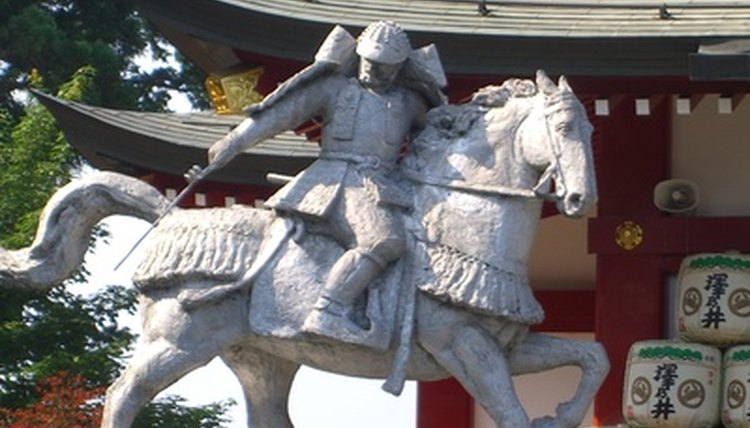
Known as the way of the Samurai, Bushido was a code of conduct followed by the samurai class, according to the International Shorin-Ryu Karate Kobudo Federation. These precepts were transmitted orally over generations. Loyalty, honor and bravery were the three paramount virtues that infused Bushido. Samurai were mentally trained to be unflappable in battle, displaying fearlessness in the face of danger.
Origins
Between the 10th and 12th centuries, large military clans emerged in provinces in Japan. Towards the latter part of the 12th century, the Minamoto and Taira clans vied for control of the Imperial Court. At the end of five years of conflict, political power shifted from the court to the samurai class. The emperor Minamoto Yoritomo became Japan’s first Shogun (military dictator) in 1192, reports the International Shorin-Ryu Karate. The samurai ascended to nobility by the 13th century. Bushido reached its apex during the reign of the Tokugawa Clan from 1603 to the mid-1800s. As its code of conduct became ritualized in ceremony, Bushido evolved in terms of philosophy as well as outlook on death.
Feudal Values
One of the cardinal precepts of the samurai was loyalty to his master (daimyo). Throughout Japan’s history and literature, feudal lords were portrayed as served by lines of samurai from generation to generation. Wandering samurai (ronin) without ties to a master were held in contempt. The most well known account of the samurai’s blind allegiance is the tale of the 47 Ronin, in which 47 samurai followed their master to death by committing suicide, according to the Samurai Archives.
Attitude towards Death
The epitome of courage in Bushido is indifference to death. The 18th century tome, “Hagakure,” (translated “Hidden under the Leaves”) by samurai turned Buddhist monk Yamamoto Tsunetomo, captures the samurai’s readiness to die at all times, reports the Open Library. This macabre vigilance enabled the samurai to conquer fear during life-and-death conflict.
Ritual Suicide
Disembowelment (seppuku) was not only a preferred form of ritual suicide, but also a legal institution. Seppuku allowed the samurai to exonerate himself from disgrace, and was deemed an honorable penalty for criminal acts. Because it required an imperturbable will, seppuku was thought to be the master stroke in the learning of Bushido, according to the International Shorin-Ryu Karate.
The Sword
Symbolizing the ethics underlining Bushido, the sword was perceived as an instrument of mental discipline. Bushido condemned the reckless use of the sword, stressing self-possession and discretion. In ancient Japan, swords were finely wrought and commanded a price equal to a year's salary of a commoner, reports the International Shorin-Ryu Karate.
Seven Virtues
According to Castle Rock Aikido, “Bushido, The Soul of Japan,” written by Inazo Nitobe in 1899, was the first English translation of Bushido, and put forth the “Seven Virtues of Bushido.” As put forth by the text, the virtues include: right decision (Gi); courage and valour (Yu); compassion and benevolence (Jin); respect (Rei); honesty (Makoto); success and honor (Meiyo); and, loyalty (Chungi), reports the Makoto Ryu Karate-Do Association.
References
Writer Bio
Kay Tang is a journalist who has been writing since 1990. She previously covered developments in theater for the "Dramatists Guild Quarterly." Tang graduated with a Bachelor of Arts in economics and political science from Yale University and completed a Master of Professional Studies in interactive telecommunications at New York University.