The state of Michigan hosts hundreds of species of beetles. Due to Michigan’s varied climate and distinct seasons, beetles appear in higher numbers at different times of the year. Some are benign or beneficial, while others are invasive or intrusive in or around the home.
TL;DR (Too Long; Didn't Read)
Michigan houses hundreds of beetle species, many nocturnal, some beneficial, and some invasive and threatening to crops and other plants.
General Beetle Facts
Beetles are insects with the typical construction of six legs, a head, abdomen and thorax. Beetles lay many eggs, preferably near potential food for larvae. As larvae, they resemble worms with hard heads and small legs, and often these grubs are larger in size than their adult forms. As adults, beetles grow two sets of wings, a small hard set and a second set. Over 300,000 beetle species exist in the world, and they survive across most habitats. Most beetles are nocturnal. They can eat plants or animals or fungi or even dung, depending on the type of beetle. In Michigan beetle types range from large black beetles to tiny reddish beetles, and each species varies in what it eats.
Michigan Beetles Around the Home
The tremendous range of Michigan bugs extends from beneficial, to benign, to invasive, to toxic. One example of a beneficial Michigan beetle is the bumble flower beetle. Upon first glance, this beetle resembles a bumblebee visiting and pollinating flowers, with its fuzzy appearance and yellow and brown coloring. Approximately nickel-sized, the bumble flower beetles live as detritivores, feeding upon waste and dead plant matter as small cleaners. Because of their pollination and their diet, these interesting beetles are considered beneficial and not pests.
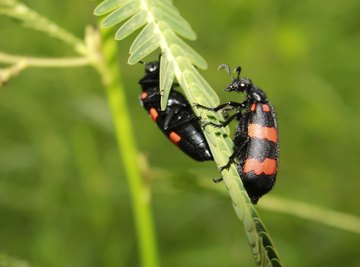
Blister beetles cause problems when handled without rubber or plastic gloves. These beetles have soft bodies with narrow thoraces, and can grow to just over 1 inch long. They subsist on numerous garden plants, but some provide benefit by consuming grasshopper eggs. When accosted, they ooze a yellow irritant that causes blisters on unprotected skin in people and animals. Generally blister beetles are best left alone.
Larder beetles are Michigan insects that make their presence known in homes. These are small, brown-banded black-shelled bugs that like to come inside homes that are not well sealed. They play the role of detritivores of dead bugs, but also enjoy eating stored food, hence their name. Larder beetles live mostly in wall spaces, but when they leave those spaces to intrude into people’s homes, issues arise.
Elm leaf beetles, as their name suggests, can raze the leaves of elm trees in summer. In winter, elm leaf beetles like to reside in the attics of homes to avoid the cold. A good sealant and proper food storage serve to prevent beetle incursions into the home.
Invasive Bugs in Michigan
Asian longhorn beetles are large black beetles found in Michigan. These striking, spotted black beetles with long, hornlike antennae savage hardwood trees such as:
- maple
- willow
- poplar
- sycamore
Their larvae bore into tree trunks, slowly killing trees.
Endangered Michigan Beetles
Unfortunately, some species of Michigan beetles are now considered endangered. One is the American burying beetle. The other is Hungerford’s crawling water beetle, an aquatic species.
References
- State of Michigan: Michigan Invasive Species
- BioKIDS Critter Catalog: Coleoptera
- USFWS: Endangered Species in Michigan
- Michigan State University Extension: What Are All Those Little Brown Beetles on the Porch?
- Michigan State University Extension: Fall Insect Pest Invaders Found in Homes
- Michigan State University Extension: Blister Beetles: Handle With Care
- Michigan State University Extension: Japanese Beetles
- Michigan State University Extension: Asiatic Garden Beetles May Cause Corn Field Yield Losses in Southwest Michigan
- Michigan State University Extension: Bumble Flower Beetles: Not Your Typical Grub
- Michigan State University Extension: Larder Beetles Are of Significant Interest for Many Residents This Summer
About the Author
J. Dianne Dotson is a science writer with a degree in zoology/ecology and evolutionary biology. She spent nine years working in laboratory and clinical research. A lifelong writer, Dianne is also a content manager and science fiction and fantasy novelist. Dianne features science as well as writing topics on her website, jdiannedotson.com.