


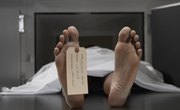
Every day is as different as the tragedies that bring the bodies to the office of the medical examiner. Whether conducting part of a murder investigation in the field or figuring out a medical mystery under the bright lights of an operating theater, a medical examiner can be a rewarding and exciting career choice.
Once an overlooked career conducted in the bowls of a hospital or at the edge of a crime scene, the medical examiner has been glorified on television and in movies. The vital position of the medical examiner with a forensic team is not all it appears to be on the big and small screen. It takes years of dedication and an ability to look at a suspicious situation from many angles.
To wrap up the mystery of becoming a medical examiner, explore the many paths to earning a degree in forensic science or pathology. There are many avenues to arrive at this prestigious position. The best colleges for forensic pathology hold a multitude of opportunities for the right candidate.
What is a Medical Examiner?
The medical examiner sweeps in at the end of an active crime scene to consider how, what and possibly why a murderous or suspicious death took place.
Through study and real-life experience, a medical examiner’s main goal is to understand how an individual took their last breath. Was it the bullet that tore through their torso or an unforeseen medical condition brought on by the trauma? A medical examiner explores things beyond the obvious to find the exact reason a person no longer walks on this side of the soil.
Also called a coroner, a medical examiner is considered a physician and holds a Doctor of Medicine degree. There are many jobs that fall under the umbrella of medical examiner, not all of which require extensive schooling. A forensic photographer or nurse and other medical examiner-related jobs are highly satisfying and beneficial for those looking for an edge into this competitive field.
How to Earn the Degree
A solid foundation in forensic science will set you up to succeed in the medical examiner field. To do that, you should specialize in chemistry or sociology during your undergraduate tenure. After earning a bachelor’s degree, preferably with a roster of pre-med subjects, a medical degree from a four-year college is required.
Once a student delves into the forensic side of the medical examiner schooling, you may find that other areas related to the position of coroner are just as rewarding. Other fields medical examiners are needed in include cyber-crime and digital analytics. For these types of more modern forensic positions, a medical examiner hopeful should study the latest in technology as well as dive deep into psychology and social studies.
Medical Examiner Education and Training
After two years of general education courses, a future forensic specialist will need to complete a variety of pre-med, math and social study courses. Once the main undergraduate classes are complete, a student can begin to focus on the area of expertise they hope to work in. These can include:
- Criminal justice
- Biology and forensic science
- Anthropology
- Chemistry and forensic science
Medical examiner education and training should include some sort of apprenticeship or other work experience gained while still in undergraduate school. An anatomic pathology residency that allows a student to fully integrate into the details of the position must be completed before a medical examiner can perform in most cases. An internship that is either paid or provided for by the school can help to round out your college career and prepare you to work in the field.
What You Can Earn
The salary of a forensic specialist is as varied as the job. A wide range of industries require the special skills of a medical examiner, from small town detective agencies to worldwide medical institutions. A lab technician will earn around $60,000. Coroners in a large city can earn on the high end of six figures, although they normally would have quite a bit of experience under their belt working through the ranks.
A cyber-crime specialist can earn upward of $150,000 depending on the niche and the reach of the company they work for. A forensic psychologist can bring in around $80,000.
Virginia Commonwealth University
This public school was founded by a medical college and is research driven. It provides more than 200 academic degree programs. It is fairly large with more than 30,000 students but has a stellar faculty and a healthy student ratio of approximately 4-1. It is classified with Carnegie University as having the highest research activity.
Undergrads in the renowned Department of Forensic Science School study a wide range of topics from microscopy to basic criminal procedures. The school is fully recognized by the Forensic Science Education Programs Accreditation Commission. It has three concentration tracks:
- Forensic biology
- Forensic chemistry
- Physical evidence
Graduates will have a firm foundation in science and have many opportunities to work in situations alongside staff and professional medical examiners.
Pennsylvania State University
Consistently rated as one of the top medical examiner colleges, Pennsylvania State University is constantly improving its research and lab programs for medical examiner students. Students will explore a wide variety of essential topics, including sociology, computer science, psychology, engineering and anthropology, from faculty with decades of experience in their respected fields. The forensic undergrad program is one of less than 40 across the country that is accredited by the American Academy of Forensic Science.
Multiple campuses sprawled across the state offer a host of research opportunities for students. As one of the nation’s largest universities, Penn State offers lab and crime scene facilities in conjunction with its forensic science course work. Revered forensic classes at this top university include:
- Criminalistics
- Scientific approach to crime scene investigation
- Laboratory in crime scene investigation
- Essential practices of forensic science
Texas A&M University
Nestled in the bustling city of College Station, Texas, this university is home to one of the world’s best research and forensic programs. TAMU’s program is extensive and varied, covering a wide range of topics concerning many areas of forensic science and its counterparts. It combines the theoretical with the practical side of forensic science as undergraduates discern what area of focus speaks to them.
The college focuses on the principles of investigation with an emphasis on pre-law forensic science. Basic classes for forensic students include:
- Latent print processing
- Forensic soil science
- Biotechnology and forensics
- Forensic implications of inheritance
Michigan State University
The Bachelor’s in Criminal Justice program produces well-versed and knowledgeable graduates who specialize in forensics. The broad-based curriculum covers the causes of crimes and explores the patterns that lead up to a suspicious death or event.
Students can take advantage of the renowned research facilities, centers and labs that focus on the introduction to forensic science, methods of research, criminal procedures and more.
George Mason University
From a lucrative career as a forensic anthropologist to the exciting position of forensic photographer, George Mason University offers students a chance to explore a slew of professional choices that pertain to this growing industry. The Forensic Science Program in the College of Science has an in-depth criminal curriculum. It probes into CSI techniques, lab methods in varying settings, offers training demonstrations and experiments.
Related Articles






References
Writer Bio
Kimberley McGee is an award-winning journalist with 20+ years of experience writing about education, jobs, business trends and more for The New York Times, Las Vegas Review-Journal, Today’s Parent and other publications. She graduated with a B.A. in Journalism from UNLV. Her full bio and clips can be seen at www.vegaswriter.com.