
How to Make a Breakable WWE Table
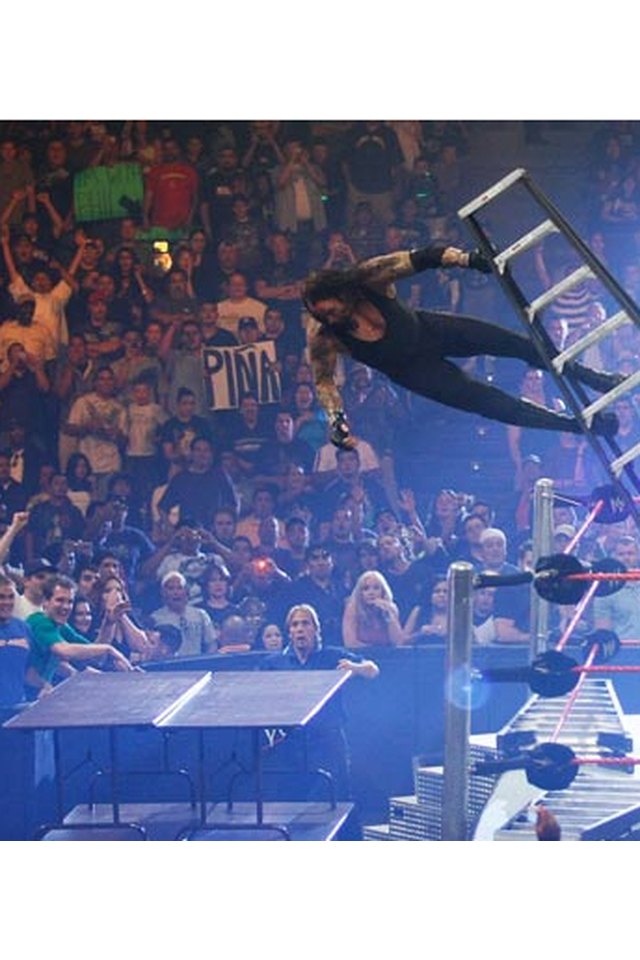
“Tables, tables, tables!” is a frequent chant that can be heard at a live WWE event. To help prevent full damage, WWE tables are specially assembled to break and support falls from WWE superstars. You can easily make a table like this for use in a WWE match.
Full Impact Table
Purchase a large piece of plywood.
Spraypaint the wood with a dark brown color to represent the color of most WWE tables.
Flip the table upside down. Screw in four wooden legs that should also be made out of plywood. Aluminum pipes would work also.
Stand the table up to make sure it is sturdy enough to stand on its own.
Use the table in the match. To make sure the table breaks correctly, have the person collide with the table in its exact center.
Easy Breakaway Table
Find a premade plywood wooden table.
Smash or cut through the center of the table without breaking off or shattering too many pieces.
Apply small areas of wood glue to the crack in the wood and put the table back together.
Slam a wrestler through the center of the table. It should break along the same line and the table can even be reused in future matches if not too damaged.
Double-check the crack in the table to make sure that there are not any loose sharp pieces if you wish to reuse the table again.
Warnings
Professional wrestling is almost certainly a scripted and choreographed event, widely considered an exhibition and not a sport. If many of the moves performed in the wrestling ring were genuine, serious injury, including paralysis, and even death probably would result. Under no circumstances should anyone attempt these moves described in these steps. These steps are meant merely to explain how the moves are performed.
Warnings
- Professional wrestling is almost certainly a scripted and choreographed event, widely considered an exhibition and not a sport. If many of the moves performed in the wrestling ring were genuine, serious injury, including paralysis, and even death probably would result. Under no circumstances should anyone attempt these moves described in these steps. These steps are meant merely to explain how the moves are performed.
Writer Bio
Alan Donahue started writing professionally in 2003. He has been published in the Norwich Free Academy "Red & White," UNLV's "Rebel Yell" and on various websites. He is an expert on wrestling, movies and television. He placed second in the NFO Screenwriting Contest and received filmmaking awards from Manchester Community College and Norwich Free Academy. He currently attends Academy of Art University.