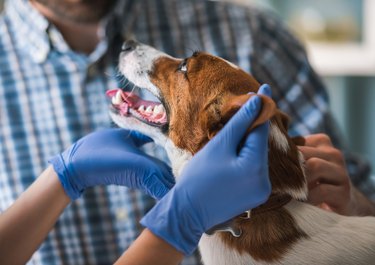
Veterinarians performing a procedure or surgery on a dog typically choose one of three types of anesthesia: local anesthesia like a dentist would use to work on a tooth, spinal anesthesia that numbs one area of the body and general anesthesia that renders the patient unconscious and unable to feel pain. There is a risk with any type of anesthesia, but the risk is very small that a serious reaction would occur. That doesn't keep dog owners from being nervous when their dog needs sedation and afterward, when they see their dog panting after surgery or any other symptom that is unusual for them.
Understand normal post-anesthesia behavior
Video of the Day
Dogs are usually kept in a quiet, semi-dark crate as they recover from surgery and begin to awaken from anesthesia. This keeps them from falling or otherwise hurting themselves or others during this semi-conscious state. If you are reunited with your dog while they are in this state, you may notice your dog making weird noises after anesthesia. Dogs aren't aware of what they're doing at this point, so this is normal, similar to making noises in their sleep.
Video of the Day
Some dogs vomit after general anesthesia, and this is not cause for alarm unless the vomited material enters their lungs, where it can cause aspiration and pneumonia. Anesthesia teams know to watch for this and methods to keep aspiration from occurring. Rare complications of anesthesia include failure of the heart, kidneys or liver. This is why patients undergo pre-operative physical exams, including blood work and x-rays, to ensure that all organ systems are working normally before surgery.
Anesthesia risks for older dogs
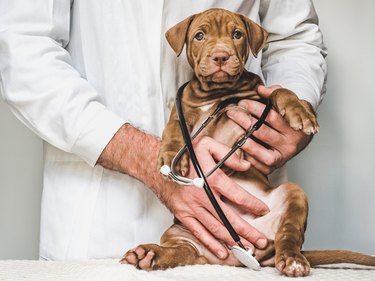
Advances in veterinary medicine mean dogs are living longer today, such that 40 percent of dogs are now considered seniors. Dogs over age 12 are at increased risk of complications or side effects from anesthesia, including the risk of death. Bodies deteriorate with age, and any senior dog risks not handling anesthesia well. The risks and benefits of surgery requiring anesthesia are important to weigh for all dogs, but especially for senior dogs. Complications that can occur during surgery include low heart rate, low blood pressure, low oxygen levels and dangerously low body temperatures that can prolong the time it takes to recover from surgery and anesthesia.
Pre- and post-op physicals reduce risks
Dogs need pre-op physicals, just as humans do, to ensure they are healthy enough for surgery and to assess risks. Underlying conditions like diabetes, dehydration, anemia, heartworm disease and others can increase the risk of surgery and anesthesia. Heart, liver and kidney diseases can cause problems as well. Your veterinarian will also give you directions for preparing your dog for surgery, such as how long before surgery to stop offering food and water. After surgery, blood work, x-rays and other tests may be done to determine the dog's post-op condition and problems to watch for during recovery.
After your dog comes home
Dogs should be watched carefully when they get home, especially looking for symptoms that are unusual for them and signs of infection like redness or swelling. If they are much quieter or much noisier than usual, that can be a sign of anxiety or pain. When you touch your dog and it calms them, that usually points to anxiety. But if they cringe or pull away from your touch, that can indicate pain. If you notice your dog panting after anesthesia, shaking or trembling, those can be signs of pain, too. Follow the home instructions you were given for pain medication, but don't hesitate to call your veterinarian or the surgery center with your concerns. Lethargy can be normal in the first hours after having anesthesia, but if your dog doesn't want to eat or drink the next day, that merits a call to your vet as well.
Always check with your veterinarian before changing your pet’s diet, medication, or physical activity routines. This information is not a substitute for a vet’s opinion.