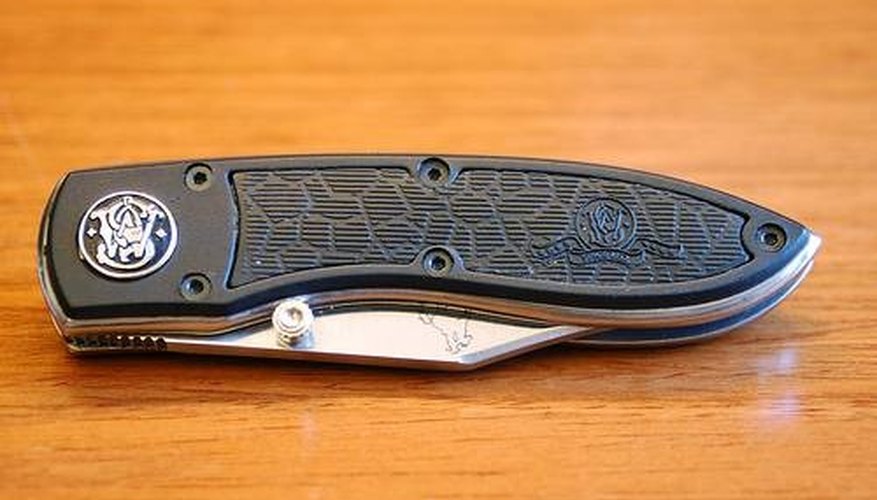

The definition of a legal knife blade can be different from state to state. For instance. the state of Texas said in an unpublished appeal (Perez v. State 1999 WL 521705) that a knife blade includes the sharpened and unsharpened parts of the blade above the knife handle. The American Knife and Tool Institute states that a knife blade should be measured from where the knife handle ends. Follow the steps below and check state laws to find out if your knife may be carried legally.
A Buck knife and a KaBar knife have different handles. Begin your measurement from the lowest possible point on a slanted handle.
Knife laws vary from state to state. Possession of a knife, even of legal blade-length, can still be illegal in certain places. For example, it is illegal to carry any knives in Pennsylvania schools. Knives labeled as "combat knives" by the manufacturer may be illegal in your state regardless of blade length.
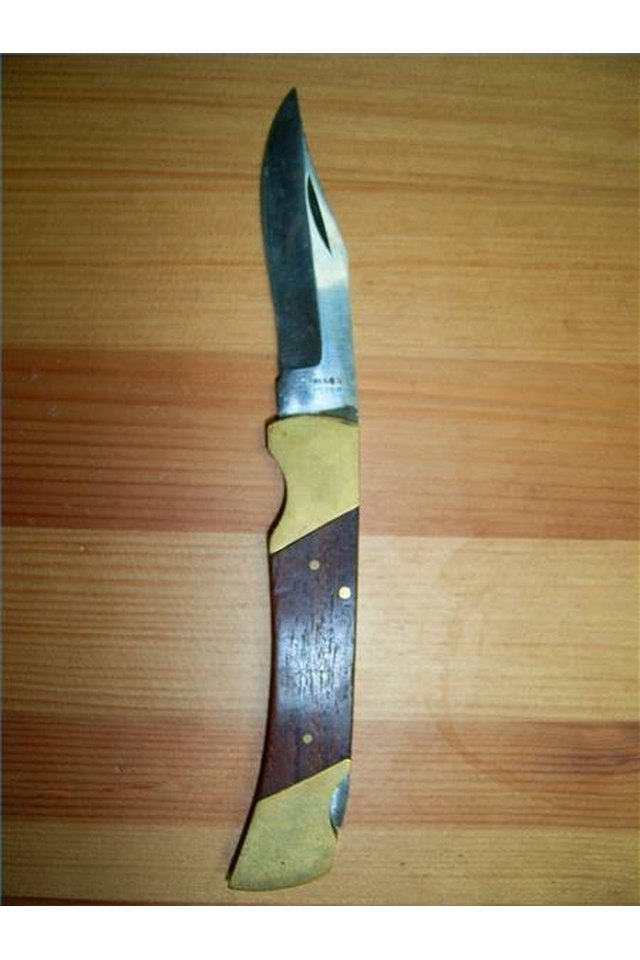
Scott Feldstein
Place the knife on a table with the blade out.

Scott Feldstein
Place the end of the measuring tape or ruler against where the blade meets the knife handle at the lowest intersection.
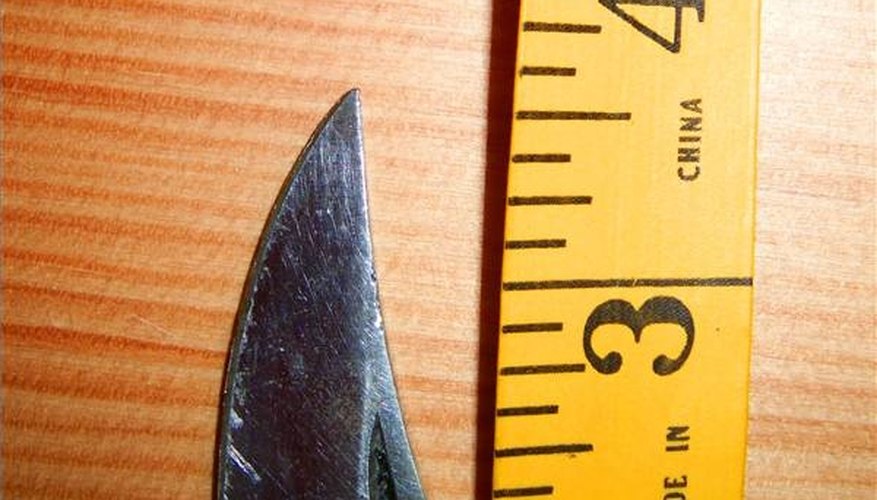
Scott Feldstein
Measure blade to its highest point at tip. This is your blade measurement.
Tips
Warnings
References
Resources
Writer Bio
This article was written by the CareerTrend team, copy edited and fact checked through a multi-point auditing system, in efforts to ensure our readers only receive the best information. To submit your questions or ideas, or to simply learn more about CareerTrend, contact us [here](http://careertrend.com/about-us).