
What Are the Three Ball Sizes That Are Used in Softball?
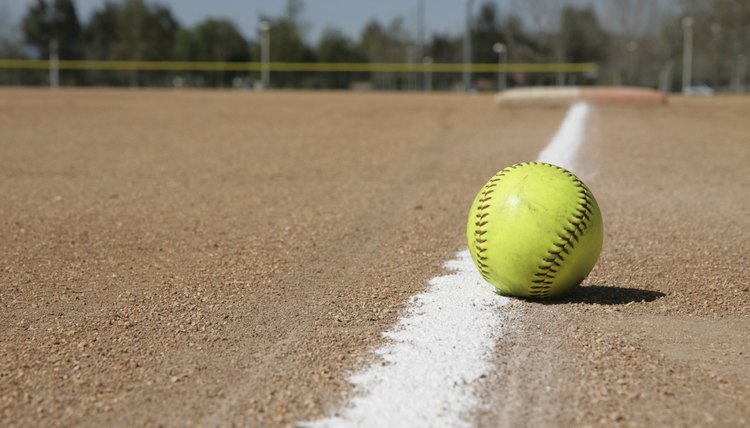
Legend has it the sport of softball began as an indoor game in Chicago in 1887. The ball used in that first game wasn't a ball at all -- it was a boxing glove wrapped into a more spherical shape and hit with a broomstick. As the game evolved, rules became formalized and the game moved outside. In addition to the 16-inch softball preferred for Chicago style, 11- and 12-inch-circumference balls are now used in softball. Here are the types of balls softball players can see when standing over home plate.
What softball size is used in Fast Pitch and Slow Pitch?
akajhoe/iStock/Getty Images
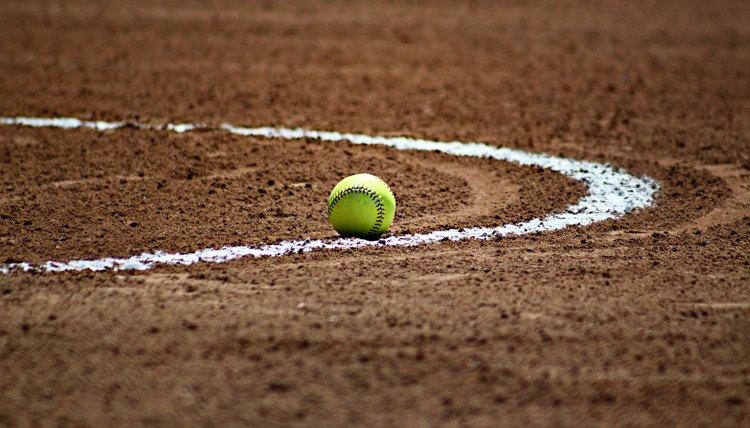
Both fast pitch softball and slow pitch softball use 11- or 12-inch softballs, depending on the size and age of the players. The different sizes were decided based on rulings from the ASA, or Amateur Softball Association, who helped regulate the game of softball. Boys' and girls' teams with players aged 10 and younger usually use the smaller 11-inch ball. This is because it is easier to throw both overhand and underhand in the infield. Some women's slow pitch leagues also use the 11-inch ball. Men's slow pitch leagues primarily use the 12-inch ball, as do both men and women playing fast pitch.
What do professional softball players use?
akajhoe/iStock/Getty Images
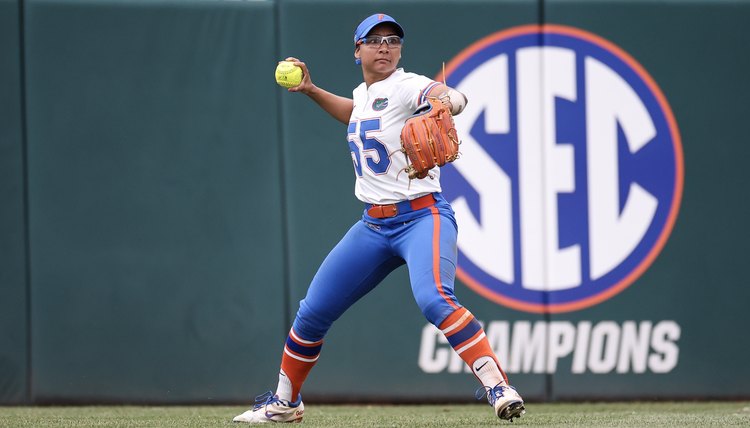
In NCAA, high school, International softball federation and Olympic games the size of the ball is standardized. In these fastpitch games, the ball must have a minimum circumference of 11 7/8 inches and a maximum circumference of 12 1/4 inches. The ball must weigh at least 6 1/2 oz. up to a maximum of 7 oz. The ball is made up of many composite materials like a polyurethane core and a leather cover. The softball bat is made up of either metal, plastic, graphite, carbon,magnesium, or a composite material. This is different from the wood bats used in Major League Baseball.
What balls are used in Chicago Style softball?
A version of slow pitch softball unique to Chicago, Illinois uses a softer 16-inch ball. The large ball doesn't travel as far when hit, which means fewer balls into the outfield and home runs. This made the game popular in the city's school parks and small neighborhood playing fields, since it solved the problem of smaller balls frequently flying out into the streets. Unlike other types of softball, fielders don't wear gloves, even the fielders at first base and third base! Many consider 16-inch softball as much a part of the Chicago's history and character as deep-dish pizza, and it has been a lettered sport in the city's public schools since 1999.
Writer Bio
Jennifer Mueller began writing and editing professionally in 1995, when she became sports editor of her university's newspaper while also writing a bi-monthly general interest column for an independent tourist publication. Mueller holds a Bachelor of Arts in political science from the University of North Carolina at Asheville and a Juris Doctor from Indiana University Maurer School of Law.