What Is Natural Tanzanite?

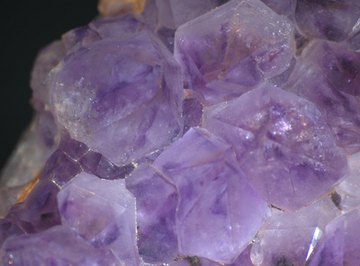
What Is Natural Tanzanite? thumbnail
Natural tanzanite set in a ring

Natural tanzanite (Ca2Al3(SiO4)(Si2O7)O(OH)), or hydrous calcium aluminum silica, is a characteristic purple/blue type of the mineral zoisite. It is renowned for its trichroic (three-colored) properties or its ability to appear as different colors when viewed from different angles/directions. It appears as burgundy, violet and sapphire blue when viewed from different crystal axes.

  1. Discovery

    • Tanzanite was discovered in 1967 near Arusha, Tanzania in Africa. It belongs to the epidate mineral group that are derived from 500 million-year-old metamorphic rocks.

    Other Names

    • Natural tanzanite is also called tanzanite blue, PDF 13-562, Anyolite-green, Thulite-red and ICSD 66924.

    Physical Properties

    • Natural tanzanite rates 6.5 on the Mohs scale of mineral hardness (the scale rates the scratch-resistant properties of various gemstones and minerals, with 1 being the softest and 10 being the hardest). Tanzanite is softer than other gemstones, such as tourmaline and topaz. It occurs in various habits, including columnar, striated and prismatic.

      Tanzanite has a specific gravity between 3.2 and 3.4 (the specific gravity of a substance is its density in comparison with the density of water) and has an orthorhombic crystal system. It is 48.67 percent oxygen, 19.71 percent silicon, 18.76 percent calcium, 12.63 percent aluminum and 0.24 percent hydrogen. The molecular weight (the sum of the individual atomic weights of its atomic components) of tanzanite is 427.38 gm and its refractive index (the ratio of the velocity of light in air and the velocity of light in a particular substance) lies between 1.69 and 1.70.

    Metaphysical Properties

    • The American Gem Trade Association lists tanzanite as a December birthstone. According to "The Encyclopedia of Crystals," tanzanite is beneficial for anxiety, depression, reducing inflammation, cell regeneration, spleen and the immune system. "The Encyclopedia of Crystals" claims that the stone influences deep meditation and evens out energy fluctuations.

    Color

    • Natural, mined tanzanite is typically reddish/orange brown. It turns into a violet blue when heated to 300 to 600 degrees Celsius (depending on the size of the crystal). Heating rearranges the atoms of tanzanite and dissociates the yellow component from its crystal matrix, leaving behind blue and purple. The heat treatment is permanent, and tanzanite retains its blue color.

    Types/Cuts

    • Natural tanzanite is cut to different shapes. Popular shapes include cushion (square shaped), marquise (drop shaped), oval, tanzanite emcut (cut to a bezel shape), round, heart, trilliant and pear.

    Jewelry

    • Tanzanite is a popular ring stone, but it is susceptible to scratches and abrasions under rough use. It is set in tie pins, pendants, bracelets and earrings.

Related Searches:

References

Resources

  • Photo Credit tanzanite ring image by Julianna Olah from Fotolia.com

Comments

You May Also Like

  • What Is Tanzanite Jewelry?

    Tanzanite is a blue variety of the gemstone zoisite. The stone was named after the country where it was found, Tanzania in...

  • What Is White Tanzanite?

    White tanzanite is a rare gemstone that varies from almost clear to light blue. It is considered a striking gemstone because it...

  • Tanzanite Facts

    Since its discovery over 40 years ago, the gemstone tanzanite has become the stuff of legends. This extremely rare and beautiful stone...

  • Difference Between Tanzanite and Sapphire

    The sapphire has long been treasured for its deep blue color. It is now being rivaled in popularity by the similarly colored...

  • Tanzanite as Compared to Diamonds

    Tanzanite is a newer gem, discovered in 1967 in Tanzania, while diamonds have been used for thousands of years. Tanzanites and diamonds...

  • Tanzanite Vs. Diamonds

    Diamonds are the world's most popular gemstone. However, tanzanite has been gaining popularity almost since its discovery and its rarity only adds...

  • How to Select a Tanzanite Engagement Ring

    Deciding on an engagement ring can be a daunting and meticulous task. While the ring's style will definitely play a large role...

  • What is Tanzanite Stone?

    Tanzanite is some of the most highly prized jewelry in the world. The rich, blue-violet color of the stones makes them a...

  • Interesting Facts About Tanzanite

    Tanzanite is a relatively new discovery compared to other types of gems. Tanzanite was discovered in 1962 in northern Tanzania in Africa,...

  • What Gems Would Go With Tanzanite?

    Tanzanite derives its name from its country of origin, Tanzania. Miners first unearthed the iris-blue crystals in 1962, but it was in...

  • What Is Green Tanzanite?

    Tanzanite was discovered near Tanzania's Mount Kilimanjaro in 1967 and has since become one of the most popular gemstones on the market....

  • Types of Blue Stones

    Types of Blue Stones. Blue stones, crystals and gemstones can be beautiful. Their color comes from the minerals located in the environment...

  • What Is a Tanzanite Gem?

    Tanzanite is a rare blue gemstone that is found in East Africa. ETanzanite.com describes it as the crystalline form of the mineral...

  • How to Tell If a Gemstone Is Real Tanzanite

    Tanzanite is a relative newcomer to the jewelry scene, having been around only since the 1960s. It was first brought to public...

  • How to Care for Tanzanite

    Tanzanite is a rare stone, named for the place where it was first found: Tanzania. The blue/violet stone became popular immediately and...

  • How to Identify Synthetic Tanzanite

    Tanzanite is the gemstone quality of zoisite and is found only in Kenya and Tanzania. This blue-violet stone sits on the Mohs...

  • How to Evaluate Tanzanite

    Tiffany & Co. first marketed tanzanite in the 1960s after its discovery in the Merelani hills of Africa. The rich blue color...

  • Five Properties of Tanzanite

    Tanzanite is a gemstone that is typically bluish-purple in color. Lesser-quality stones tend to be more blue than purple. These stones were...

  • What Is Tanzanite Quartz?

    Tanzanite quartz may be similar to tanzanite in appearance, but it is not the same gemstone. Tanzanite quartz is either clear quartz...

  • The Healing Properties of Charoite

    The Healing Properties of Charoite. Charoite is a crystal stone named after its place of origin, the Chara River in Siberia, Russia....

Related Ads

Featured