When you bring a new puppy into your home, your new furry friend will inevitably chew things. Chewing is just one of the first puppy teething symptoms you may notice as your new puppy is losing their puppy teeth and growing in their adult dog teeth. During the teething process, they will chew on whatever dog toy or puppy teething toys you offer them, but they will also chew your shoes and any other fun items they can find. Be warned: To a teething puppy, almost everything looks like a dog chew!

Video of the Day
When do puppies lose their baby teeth?
Puppies generally start to lose their baby teeth at about 12 weeks of age. The puppy teething timeline, however, starts as early as 3 weeks, with each teething stage showing new changes. Puppies are born without any teeth, and over time, they will develop 28 temporary teeth, also known as milk teeth or deciduous teeth. These typically start to come in at around 3 weeks of age. By 6 to 8 weeks, the puppy teeth have generally come in, and these teeth begin falling out at 12 weeks.
Video of the Day
The incisors usually fall out first, and then the canine teeth will fall out at around 16 weeks. The pre-molars are usually the last to go, falling out at around 24 weeks.
By 6 months of age, all of the puppy's baby teeth should have fallen out, and the permanent teeth will have erupted. The entire process can last for four to six months as adult teeth replace puppy teeth, and the dog will ultimately end up with 42 adult teeth.

Common puppy teething symptoms
Just as with human babies, teething can be uncomfortable for puppies. Unfortunately, with teething pain comes a variety of less-than-desirable behaviors that pet parents may find challenging. Chewing on everything is the most obvious symptom and the one that will likely test your patience the most, but there are other puppy teething side effects for which to watch.
Teething puppies will drool more than usual. They may have red or irritated gums and may even show gaps where teeth are missing. Small amounts of blood may be evident on the dog's chew toys. This is completely normal since the gums may bleed as the new teeth are growing in.
Because teething can be uncomfortable, puppies may act out more, becoming more irritable than usual. They may be more vocal or may act wild or grabby. They may start nipping at hands, or they may have trouble settling down. They may also become a bit more clingy, seeking comfort.
But while teething can be uncomfortable, excessive pain, soreness, or bleeding may indicate a more serious problem that requires a trip to the veterinarian.
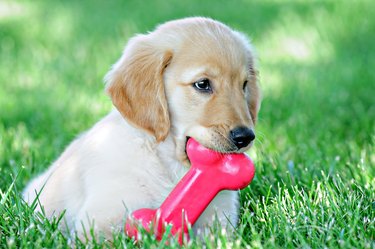
How to soothe a teething puppy
With some preparation and patience, you and your puppy can survive the teething phase. To start, be sure to puppyproof your home by keeping all tempting items out of reach, including shoes, electrical cords, wicker items, or anything with fringe or straps. It's also critical to keep items that can be chewed up and swallowed safely put away, as these can cause intestinal blockages and gastrointestinal problems.
Make sure to offer the puppy plenty of suitable puppy chew toys. The toys should be suitable for the puppy's size. A large-breed pup will need bigger and more durable toys than a small breed. Some options to consider include a Kong or other heavy-duty rubber toy, Nylabone, or puppy teething ring. Consider freezing the toys before giving them to the puppy, as gnawing on frozen toys can help to soothe sore gums.
Remember that while chewing will likely lessen once the teething stage is over, that doesn't mean the chewing will stop entirely. Continue to provide suitable chew toys and plenty of exercise and playtime to minimize chewing due to boredom. Always redirect inappropriate chewing and teach useful commands, such as "leave it" or "drop it."

What to avoid during puppy teething
Some puppies may engage in nipping behaviors as a part of play, or they may see hands as appealing chew toys. It's important to stop this behavior right away before the adult teeth grow in, as this can cause greater damage once those stronger adult teeth are in place.
Never use negative punishments to train a puppy but don't allow inappropriate behavior to continue. Instead, make a high-pitched sound, much like a puppy would make in surprise and pain. Then, offer a suitable chew toy instead.

When to contact your veterinarian
Teething is a natural process, and most puppies make it through with no major problems. However, there are times when a trip to the veterinarian may be necessary. Sometimes, a puppy may break one of their puppy teeth before it falls out, or a puppy tooth won't fall out at all when the adult tooth grows in.
A broken tooth can be painful and can lead to infection, and if a puppy tooth is retained, it can cause the adult teeth to become crowded and grow in improperly. In either case, it is important to have a veterinarian remove the offending puppy tooth.
Occasionally, a puppy's mouth will become excessively sore or painful, even to the point where they whine, refuse to eat, or seem to find chewing food difficult. This is not normal for teething and requires a visit to the veterinarian.
This could be caused by a trauma to the mouth, called malocclusion, which can be skeletal (when a dog's jaw length is abnormal, creating a misalignment of the teeth) or dental (when the dog's jaw length is normal but one or more teeth are out of alignment). This can make it difficult for the puppy to eat and chew properly and may cause pain and problems in the long term. Contact your veterinarian to determine the best course of action.
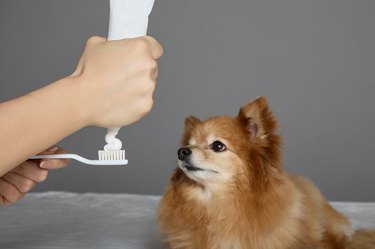
Get your dog used to toothbrushing
If you have a new puppy in the home, consider using this time when they are young to get them used to dental care. Taking care of your dog's teeth is one of the basics of pet care that can save you some trouble down the road as it can keep their teeth healthy. Getting a dog used to their mouth and teeth being handled can make checkups by your vet much easier as your dog grows.
Get a toothbrush that is made just for dogs and toothpaste made just for dogs. Avoid using human items as thee best dog dental care items will be shaped and sized for their mouths and will not have ingredients that they should not have. For instance, xylitol is common in human toothpaste but is toxic to dogs.
The bottom line
Teething is a normal process for puppies, but it can be a bit uncomfortable, causing irritability and leading to excessive chewing, drooling, or even a little bleeding. The teething stage can usually be managed by providing the puppy with plenty of chew toys and removing access to anything that should not be chewed. However, in the event of broken teeth, excessive pain, bleeding, swelling, or drooling, it's important to consult a veterinarian.