
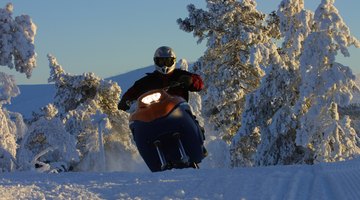

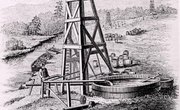
The Kohler Co. began in 1873 when John Michel Kohler and Charles Silberzahn purchased a foundry in Sheboygan, Wisconsin, and began manufacturing farm equipment. In the early days of the company, many products were manufactured including plumbing equipment, electrical power generating equipment and equipment to support the World War II effort. In 1948, Kohler Co. began manufacturing small gasoline engines for industrial uses, which led to the development of engines for snowmobiles.
Engine Development
Kohler's commitment to the industrial engine market is evidenced by the pace of technological development the company pursued. By 1951, production of an air-cooled single-cylinder engine began. The next major advance took place in 1959, when standardized mounting platforms and standardized crankshaft heights were developed so the engines could be easily interchanged. In 1965, an improved automatic compression release system was developed that made recoil easier during engine starts. All of these developments led to the introduction of the company's first two-cycle engine for snowmobiles in 1968.
Early Applications
After World War II, many companies began developing snowmobiles for racing and recreational use. The Top of the Lake Snowmobile museum in Naubinway, Michigan, has many early snowmobiles with Kohler engines on display. Some of those early machines include a 1958 machine called the Sno-Bi-Kin equipped with an 8 horsepower Kohler engine, the 1962 Polar Model 500, equipped with a 9.5 horsepower Kohler engine and the 1966 Fox Trac 412C snowmobile that used a 12 horsepower Kohler engine.
Increased Horsepower
Kohler made great strides in the development and application of snowmobile engines in the 1970s. Speedway Products Inc. used a variety of Kohler engines in its snowmobiles from 1972 through 1974, including a 440 cc free air twin cylinder engine producing 58 horsepower and a 650 cc free air triple cylinder engine, producing 90 horsepower. Free air cooling means outside air is routed across the engine as the snowmobile is operated. Free air cooling eliminates the need for flywheel driven cooling fans, increasing engine power.
Rupp Snowmobiles
From 1972 through 1975, Rupp Manufacturing Inc. used a wide variety of Kohler snowmobile engines. The 1972 Rupp Rally was equipped with a 440 cc fan-cooled Kohler engine. Rupp Nitro racing snowmobiles were equipped with either a 340 cc or 440 cc engine, including the 1975 Nitro F/A Race Sled available in either a 340 cc or 440 cc free air motor.
Latest Developments
John Deere continued using Kohler engines until the company stopped snowmobile production in the early 1980s. Although snowmobile manufacturers have used engines from other companies in recent years, Kohler continued making significant strides in small engine development. Improvements include pressurized lubrication systems and electronic ignition systems. In May 2007, Kohler acquired the Lombardini Engine Co. of Italy. Together, engineers at Lombardini and Kohler are developing diesel engines for use in ATVs and snowmobiles. Future developments may include electric powered ATV and snowmobile power plants.
Related Articles





References
Writer Bio
Kenneth Oster's leadership experience includes an Air Force career, pastoral leadership, and business ownership in the automotive repair industry. He has a MBA from Western Governors University, and is working toward a DBA degree from Northcentral University. Oster authored the book, "The Complete Guide to Preserving Meat, Fish and Game: Step-by-Step Instructions to Freezing, Canning, Curing and Smoking."