Animals & Plants in Spain

Animals & Plants in Spain thumbnail
Spain's plants and animals are incredibly diverse.

Because of Spain's diverse geography and climates, there are a lot of different types of animals and plants that call Spain home. Mediterranean and continental maritime climates are typical in peninsular Spain. The temperature varies greatly and rainfall is irregular, which affects plant life. Spain has mountains, a Mediterranean and an Atlantic coast and lots of dry terrain in between, so the animals in Spain also vary considerably because of the diverse terrains.

  1. Forest Animals

    • Spain's brown bears can still be seen in Spain, although their numbers have dwindled.
      Spain's brown bears can still be seen in Spain, although their numbers have dwindled.

      The Brown Bear is a permanent and traditional part of the animal world of Spain; however, the number of brown bears has decreased drastically. Kwintessential.com reports that there were more than 1,000 brown bears in Spain's wild at the beginning of the 20th century, but now there are about 100. Cordillera Cantabrica National Park is the best place to go to spot one of these traditional creatures of Spain.

    Vegetation: Northwest Spain

    • Galicia is a wetter region of Spain, where mixed woodlands are found.
      Galicia is a wetter region of Spain, where mixed woodlands are found.

      Peninsular Spain is about 20 percent forested, according to PlantaEuropa.org, which includes conifer plantations. In the northwest, a wetter region extending from Galicia to the Pyrenees as well as the Cantabrian coast, there are smatterings of mixed woodland where oak, beech and Scots Pine can be found.

    Vegetation: Mediterranean & Inland

    • Mediterranean areas of Spain have pines, oaks and cacti.
      Mediterranean areas of Spain have pines, oaks and cacti.

      There are two main kinds of vegetation found in the Mediterranean zone: Aleppo Pine, Stone Pine, Holm and Kermes Oak as well as cacti and century plants. Holm, Pyrenean, Portugues and Cork Oaks are found predominantly in inland Spain. You will see large areas of grassland on the southern slopes of the Pyrenees and Cantabrian Mountains, but not so much grass is seen on mountains in eastern Spain.

    Mountain Animals

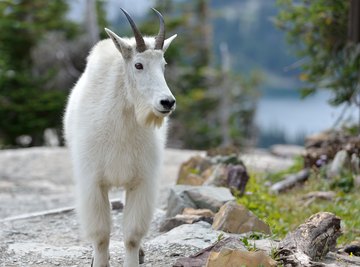
    • The Long Haired Mountain Goat is thriving in Spain.
      The Long Haired Mountain Goat is thriving in Spain.

      The Long Haired Mountain goat is very common in Spain. Kwintessential.com claims that wildlife experts say there are as many as 20,000. The male goats have incredibly long horns. This mountain goat is extremely agile and can be seen on some of the steepest mountain faces in Spain. Some hunting of the Long Haired Mountain Goat is permitted to control levels.

    Protected Animals

    • The Iberian Lynx of Spain is facing extinction.
      The Iberian Lynx of Spain is facing extinction.

      The Iberian Lynx is indigenous to Spain and it is only found there. It is just one of many species of animals in Spain that is under the threat of extinction. Kwintessential.com states that experts believe there are about 400 in Spain as of 2010. The Iberian Lynx can best be seen in Andalusia's Danona National Park in southern Spain.

    Bird Species

    • Spain's Black Vulture is the largest bird of prey indigenous to Europe.
      Spain's Black Vulture is the largest bird of prey indigenous to Europe.

      Spain is a great place if you like to bird watch. Kwintessential.com reports that there are more than 20 different species of birds of prey there; a good portion of these are indigenous; others migrate to and from Spain annually. The Egyptian and Griffin Vultures and the Golden Eagle are of particular interest to bird watchers. It is reported that there are more than 400 Black Vultures in Spain. Spain's Black Vulture is the largest bird of prey indigenous to Europe.

    Vegetation: Canary Islands

    • Vegetation varies on different Canary Islands.
      Vegetation varies on different Canary Islands.

      In Spain's Canary Islands, you will find extensive woodlands in the western and central islands; the eastern island has mostly xerophytic (plants that need very little water to survive) shrubs, which reflect the arid climate of North Africa.

Related Searches:

References

  • Photo Credit mallorca, spain image by Alison Bowden from Fotolia.com brown bear image by Marek Kosmal from Fotolia.com en la niebla image by Jose Hernaiz from Fotolia.com Mediterranean beach image by aliengel from Fotolia.com Mountain Goat image by Mat Hayward from Fotolia.com lynx image by david purday from Fotolia.com Black Vultures image by Richard McGuirk from Fotolia.com sunny pines at canary image by Julia Britvich from Fotolia.com

Comments

You May Also Like

  • What Three Ways Are Animals Important to Plants?

    Many gardeners think of animals in their gardens as pests, since many animals eat plants. In reality, some animals can be a...

  • Native Animals & Plants in Honduras

    Native Animals & Plants in Honduras. Honduras offers a vast and diverse range of flora and fauna, much of it native to...

  • Animals in the Mediterranean Forest

    Animals in the Mediterranean Forest. The Mediterranean forest is temperate, marked by mild, humid winters and hot, dry summers. The Mediterranean biome...

  • Plants & Animals in the Cordillera

    Plants & Animals in the Cordillera. The Arctic Cordillera is a Canadian ecozone spanning a frigid, and virtually inhospitable, terrain of rocky...

  • Mediterranean Animals & Plants

    Mediterranean Animals & Plants. The Mediterranean basin contains thousands of miles of coastlines and stretches across dozens of countries on three continents....

  • How to Build 3D Models of Animal and Plant Cells

    The idea of microscopic cells is a hard thing to visualize, especially for young children. The use of physical models is a...

  • Native Plants of Spain

    Native Plants of Spain. Spain occupies the majority of the Iberian Peninsula in southwest Europe, which it shares with Portugal. Its land...

  • Plants & Animals of the Quaternary Era

    The Quaternary Period began 1.8 million years ago with an ice age. Scientists refer to the era as the Age of Humans,...

  • Plant & Animal Life of Europe

    Europe is drenched in forests. Mountain ranges, open valleys, meadows, lakes, rivers and streams course through the continent. Deciduous and coniferous forests...

  • List of Temperate Rainforest Animals

    List of Temperate Rainforest Animals. The temperate rainforest covers far less area on the planet than tropical rainforests, and has many fewer...

  • Definition of a Mountain Ecosystem

    The United Nations' Environmental Program World Conservation Monitoring Center calculates that about 23 percent of the world is considered a mountain ecosystem...

  • Plants and Animals of the Kalahari Desert

    Plants and Animals of the Kalahari Desert. Though it's a desert, Africa's Kalahari is anything but barren. A slew of diverse plants...

  • The Types of Soil in Spain

    The Types of Soil in Spain. Spain, which makes up 85 percent of the Iberian Peninsula, boasts a variety of soil types,...

  • How to Grow Fruits & Vegetables in Spain

    Whether you have a Spanish villa with endless acres of land to plant, a rooftop terrace or a small balcony, Spain is...

  • Native Plants & Animals of China

    Native Plants & Animals of China. With more than 31,000 native plant species and 6,266 species of vertebrates, China is home to...

  • Customs Regulations in Spain

    The sunny beaches of Barcelona and the flamingo dancing in Madrid are just two of the many reasons thousands of visitors flock...

  • About Spain

    Spain, also known as the Kingdom of Spain, is a European country established in the fifteenth century. It is a democracy formed...

  • Plant & Animal Life on the Continental Shelf

    The continental shelf is the part of the continent that lies underwater directly off the shore. The shelf ends when it drops...

Related Ads

Featured