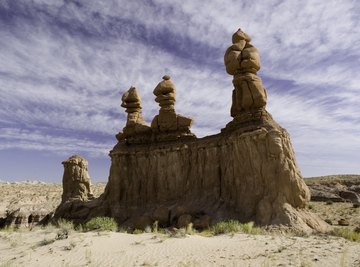
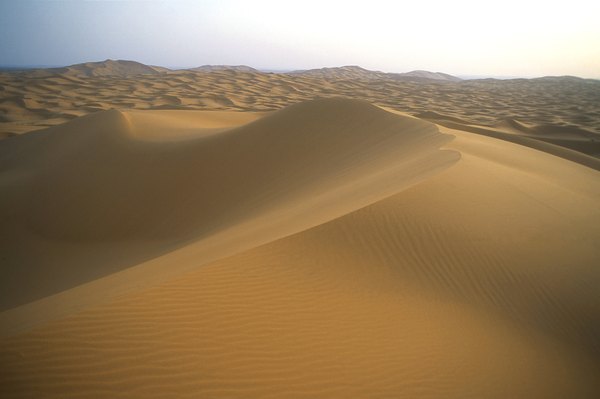
The deserts of the world receive more sunlight energy in six hours than humans use in a year. They cover one-third of the land on Earth and about one-fifth of the entire globe where rainfall is generally 10 inches or fewer per year with variations, but each year, global warming and its effects add 46,000 square miles of desert each year. Hot deserts are ecological communities with distinctive physical characteristics and climates when compared with other terrestrial biomes around the globe. Within the desert biome location, scientists classify these typically dry locales into four sub-groups: hot and dry, semiarid, coastal and cold deserts.
TL;DR (Too Long; Didn't Read)
The dictionary defines a desert as a dry area of land with little vegetation, an area of land that receives 10 or fewer inches of rain a year, a desolate or forbidding area (physically and metaphorically) or in its archaic version: a wild, unoccupied region.
Hot and Dry Deserts
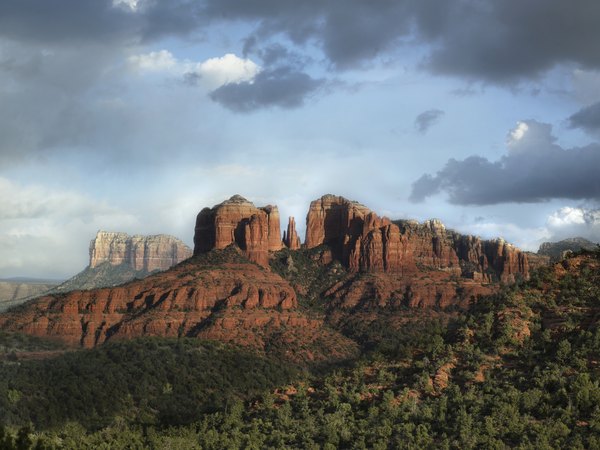
In North America there are four major hot and dry deserts: the Chihuahuan Desert, the Sonoran Desert, the Mojave Desert and the Great Basin. Hot deserts outside the U.S. include those in South and Central America and Southern Asia, as well as deserts in Africa and Australia.
Characterized by hot summers and cold winters, rainfall in these deserts ranges from just over a 1/2 inch of rain up to 11 inches per year. Average temperatures go from 68 to 77 degrees Fahrenheit with highs ranging from 110F to 120F. Most people don't know that it's not the temperatures in desert that classifies it as such, it's the amount of annual rainfall. For example, the Antarctic, a cold desert, receives about 2 inches of rain per year, which is less than the Sahara Desert receives, while parts of the Atacama Desert in Chile have never recorded rain at all.
Hot, Semiarid Deserts
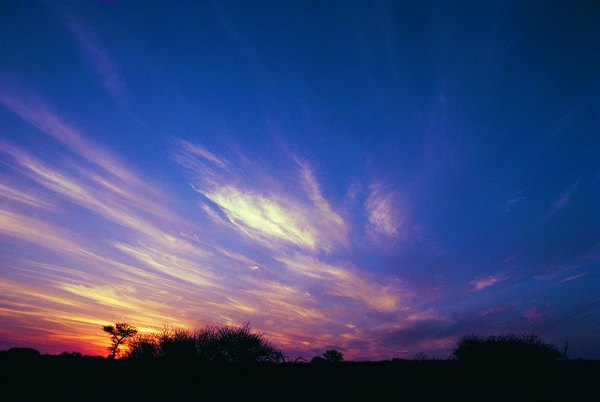
Semiarid deserts include parts of the Great Basin, Utah and Montana, parts of Europe, Greenland, Newfoundland, North America, northern Asia and Russia. Annual summer temps generally range from 69 degrees to 80 degrees and sometimes up to 100.4 degrees F with night-time lows at 50 degrees. Because semiarid deserts are not as hot, night brings much needed moisture and condensation that leads to dew, often exceeding annual rainfall amounts that generally range from just over 3/4 of an inch of rain to 1 1/2 inches of rain per year.
Desert Facts – Hottest Temps Recorded
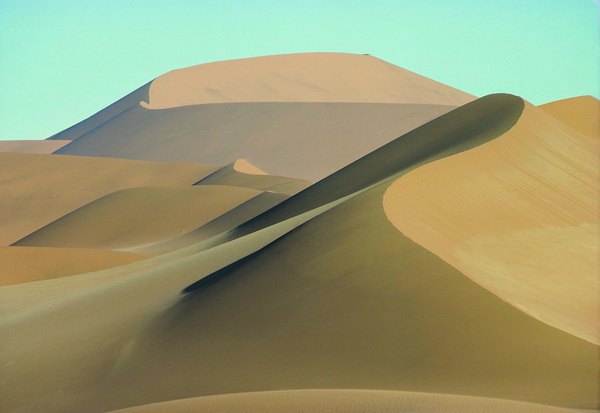
In 2005, a satellite recorded a temperature of just over 159 degrees F in Iran's Lut Desert. Winters are cold in hot and dry deserts, with temps as low as 0.4 degrees F. Most hot and dry desert-dwelling animals stay under cover in the day and forage at night. In the U.S., temperatures in the Death Valley in Mojave Desert reached 134 degrees F in 1913, and in the Sahara, researchers recorded 136.4 F. The Mojave and Sonoran Deserts in the U.S. are some of the hottest deserts in the world.
Plant and Animal Life in Hot and Dry Deserts
It took many years for plants and animals to adapt to the extreme climate of hot and dry deserts. Most animals sleep or rest during the day in the shade or in burrows and only come out during late afternoons, twilight and night to hunt. Reptiles and snakes enjoy the sun's heat, as they are cold-blooded animals that hibernate when the temperatures drop. You can often find them soaking up the heat of the roadways when day turns to night during the summer.
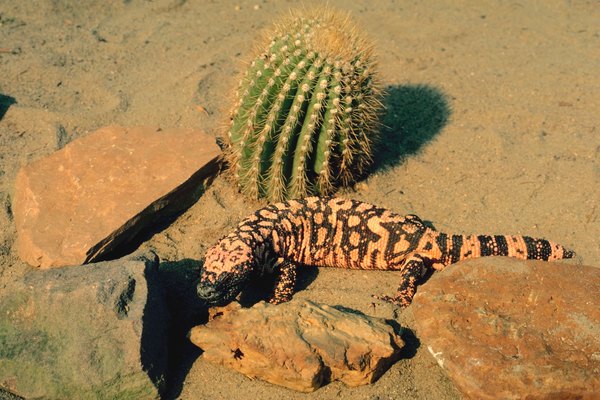
Succulents – cactus and similar plants – adapted to take advantage of every drop of rain that falls by storing water for especially dry periods in their fleshy stalks and roots. Arizona State University Cooperative Extension indicates in its "Journal" publication that the creosote bush, found in hot and dry deserts, as well as semiarid ones, may be the oldest living plant on the Earth at over 11,000 years old, even older than the bristlecone pine.
The Tallest Cacti in the World
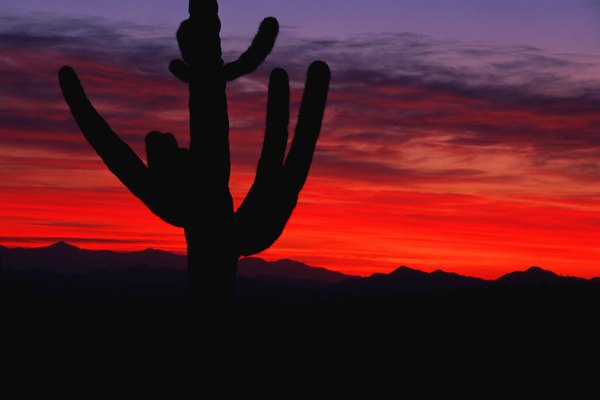
Hot deserts in the Americas serve as home to the tallest cacti in the world. These include the giant saguaro cactus (Carnegiea gigantea) and the Mexican elephant cactus (Pachycereus pringlei), also called cardon, which can grow to 60 feet tall. Indigenous to deserts of North and South America, you won't find cactus growing in Africa, Asia or other deserts of the world.
The Sahara Desert Was Once Grassland
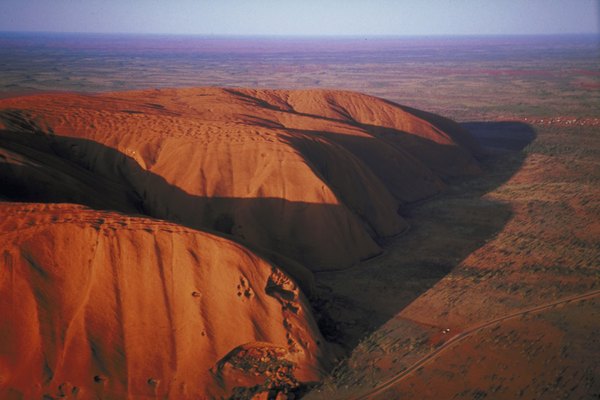
More than 6,000 years ago, grasslands covered the now-barren Sahara Desert. The Sahara used to be a very rainy place, but changes to the climate transformed the area into one of the hottest and driest places on Earth. A Texas A&M University researcher believes the Hadley circulation – air rising near the equator that affects tropical atmospheric movement – played a part in creating the grassland area far north of the equator.
References
- Utah State University: What Is the Great Basin?
- University of California, Berkeley: The Desert Biome
- Merriam-Webster: Desert
- Desert Museum: Sonoran Desert Region
- University of California, Santa Barbara: Which Is the Hottest Desert in the World?
- University of California Santa Barbara: Desert Streams: Deceptively Simple
- University of Maryland: The Sahara Desert is Expanding, According to New UMD Study
- Texas A & M: 6,000 Years Ago the Sahara Desert Was Tropical, so What Happened?
- Arizona State University: Delving Into Deserts
- Arizona State University Cooperative Extension: Sonoran Originals
- University of California, Berkeley: Saguaro and Other Towering Cacti Have a Scrambled History
About the Author
As a journalist and editor for several years, Laurie Brenner has covered many topics in her writings, but science is one of her first loves. Her stint as Manager of the California State Mining and Mineral Museum in California's gold country served to deepen her interest in science which she now fulfills by writing for online science websites. Brenner is also a published sci-fi author. She graduated from San Diego's Coleman College in 1972.
Photo Credits
Photodisc/Digital Vision/Getty Images