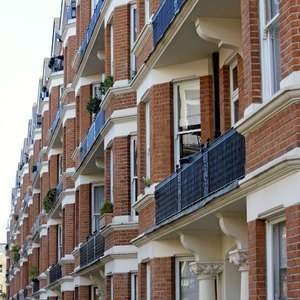


If you're approved for a unit in a cooperative apartment building, you must pay regular fees to the cooperative association. Those fees include certain types of insurance for the overall structure, but you must still purchase insurance to protect yourself. Your co-op board can recommend the types of insurance policies you should purchase. Depending on the board, specific kinds of coverage may be mandatory.
The Master Policy
Through your association dues, you help finance the master policy that covers commonly held areas. These include the roof, heating and electrical systems, walkways, hallways, wall, driveways and parking lots, along with related services such as snow plowing, lawn mowing and trash collection. Ask the board what the master policy covers in particular situations. If the roof leaks and damages your apartment, is that covered by the co-op's insurance or is it the responsibility of your insurance company?
Types of Master Policies
Find out what kind of the three types of insurance policies your board purchases. "Bare walls," the cheapest option, covers only a room's basic structure, not the fixtures in your unit. Single-entity insurance does covers fixtures, including carpeting, cabinets and appliances. The most expensive and most comprehensive master policy is "all-inclusive," which covers all but a co-op owner's personal belongings.
Co-op Coverage
While the co-op association's insurance covers the common areas and exterior of the building, your own insurance policy must cover what's inside your personal apartment. That includes not only your belongings, but the fixtures inside your unit if the master policy doesn't cover them. Your policy also covers liability, in case someone hurts himself in your apartment and requires medical treatment or if another person's property is damaged. In that sense, co-op insurance is similar to standard homeowner's insurance, but your insurer writes a policy specific to cooperative units.
Co-op Considerations
If your building is hit with a major disaster, such as a hurricane or flood, you could get caught in insurance limbo. FEMA offers flood insurance for cooperative apartments under a general property policy form, rather than the dwelling policy form that covers single-family houses and condominiums. Under this policy, you can't insure or replace permanent fixtures in your co-op apartment such as appliances and flooring if flood damage occurs. That's because, legally, you don't own your apartment, but own shares in the co-op.
References
Writer Bio
A graduate of New York University, Jane Meggitt's work has appeared in dozens of publications, including Sapling, Zack's, Financial Advisor, nj.com, LegalZoom and The Nest.