
pH Measurement
The pH scale measures the concentration of hydrogen ions and hydroxide ions to determine how basic or acidic a solution is on a scale between zero and 14. If you want to know how to calculate pH, you must understand that the higher the number, the more basic the solution. Conversely, the strongest acids have numbers closer to zero. Acidic solutions have a greater concentration of hydrogen ions, and basic solutions have a higher concentration of hydroxide ions. Because pH is based on logarithms, a decrease of one means the acid is 10 times more acidic, and an increase in one means it is 10 times more basic.
Water (H2O) can disassociate into one hydrogen ion and one hydroxide ion. Therefore, it is neither acidic nor basic and has a pH of seven. Hydrogen ions are represented as H+ and hydroxide ions are represented by OH-.
How to Calculate the pH of a Solution
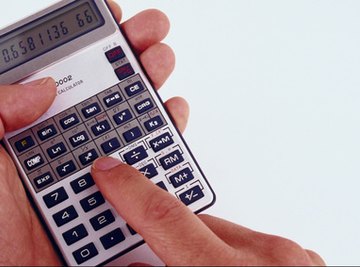
There are two ways to calculate pH of a solution. One is with hydrogen and the other is hydroxide. Calculate the concentration of hydrogen (H+) ions by dividing the molecules of hydrogen ions by the volume, in liters, of the solution. Take the negative log of this number. The result should be between zero and 14, and this is the pH. For example, if the hydrogen concentration is 0.01, the negative log is 2, or the pH. The stronger the acid, the more corrosive the solution.
Using Hydroxide Concentration to Calculate pH
The pH of a solution also can be determined by finding the pOH. Determine the concentration of the hydroxide ions by dividing the molecules of hydroxide by the volume of the solution. Take the negative log of the concentration to get the pOH. Then subtract this number from 14 to get the pH. For example, if the OH- concentration of a solution was 0.00001, take the negative log of 0.00001 and you get five. This is the pOH. Subtract five from 14 and you get nine. This is the pH.
About the Author
Mark Kennan is a writer based in the Kansas City area, specializing in personal finance and business topics. He has been writing since 2009 and has been published by "Quicken," "TurboTax," and "The Motley Fool."
Photo Credits
Calculator image by Alhazm Salemi from Fotolia.com