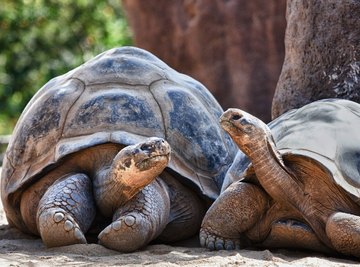
Turtles are amongst the most ancient of all the animal species on planet Earth. Turtles are believed to have originated as far back as 279 million years ago, making them a species older than even the oldest dinosaurs. The effects these venerable animals have on their ecosystems are immense, and, over millions of years of evolution they have adapted to suit many different habitats and systems.
Sea Turtles and Ocean Ecosystems
For many sea turtles, the primary source of nutrition is sea grass. Sea grass grows in thick beds on shallow ocean floors. The constant feeding by sea turtles on this grass keeps the beds trim and tidy, preventing them from growing long and unhealthy. As these sea grass beds are prime locations for small fish to breed and spawn, healthy sea grass beds are vital to the populations of small fish that live in the oceans. Without this input by sea turtles, the ocean ecosystem would slip out of balance.
Sea Turtles and Beach Ecosytems
While sea turtles spend the majority of their lives in the sea, they do come up onto the beach in order to lay their eggs. This important part of a turtle’s life also has an important impact on the ecosystem of a beach. Without plants, like beach grasses, the beach would succumb to erosion; these plants are fertilized by eggs that do not hatch and the excrement of turtles on the beach. This nutrition is vital to the survival of the beach ecosystem.
Freshwater Turtles and Tropical Ecosystems
In many tropical ecosystems, turtles are amongst the most abundant of vertebrate animals. In some areas of Australia, the biomass of turtle species -- the net mass of turtles in their environment -- has been recorded as high as 586 kilograms per hectare. In these environments, the vast numbers of these animals play an enormous role in the function of the ecosystem, not least in seed dispersal. The turtles eat the plants and deposit the seeds in their excrement, the seeds then flower. Also, the eggs of turtles are major food sources for animals, such as bandicoots, rats, snakes and lizards.
Freshwater Turtles and Ecosystem Disruption
While both freshwater and sea turtles have an immensely positive effect on natural ecosystems, these ecosystems are co-efficient mechanisms and are not propped up by one species. When external influences throw these ecosystems into imbalance, turtles can be greatly affected. A study by Stephen H. Bennett and Kurt A. Buhlmann found that the population of chicken turtles in the southeastern U.S. has been dealt a severe blow by human alteration of water ways and the building of roads. Chicken turtles have been increasingly found dead on the sides of new roads, killed by passing automobiles. Human interference is not the only ecosystem shift that has affected freshwater turtles. The colonization of freshwater sandbars by fire ants has disrupted the spawning habits of turtles, making it less likely that hatchlings will survive.
References
About the Author
Julia Salgado has been writing professionally since 2007. Her work has been published by the "Manchester Evening News" and "Q Magazine." Salgado holds a Bachelor of Arts in English from Manchester Metropolitan University.