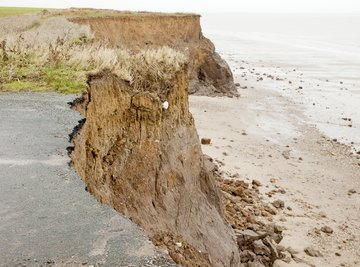
Catastrophic storms such as Hurricane Katrina, as well as general concern about global climate change, have heightened awareness of the impacts of coastal erosion. Receding shorelines have not only ecological impacts but economic ones as well.
Identification
Coastal erosion, also known as shoreline retreat, is a little-understood phenomenon in which climate changes and human activities result in the loss of shorelines.
Effects
Economic impact studies suggest erosion affects various economic sectors, including agriculture, fisheries, navigation and shipping and recreation/tourism.
Geography
A study of the impact of erosion in the Philippines said communities that depend on fisheries for their livelihoods will be especially affected by erosion.
Size
In the U.S., a study of erosion in Louisiana estimated that the Gulf Coast state has lost an average of 40 square miles a year to erosion since the 1950s.
Significance
Erosion in Louisiana and the U.S. Gulf Coast can negatively impact the nation’s economy because of the concentration of oil refineries and energy production there.
Expert Insight
In the Louisiana study, a Louisiana State University economist estimated that even a three-week disruption in oil supplies resulting from coastal erosion could cost the U.S. economy more than 30,000 jobs and more than $1 billion in earnings over a year.
References
About the Author
Shane Hall is a writer and research analyst with more than 20 years of experience. His work has appeared in "Brookings Papers on Education Policy," "Population and Development" and various Texas newspapers. Hall has a Doctor of Philosophy in political economy and is a former college instructor of economics and political science.