All living things are connected, especially when it comes to eating and being eaten. Food chains and food webs are ways of showing the food relationships between organisms in any given environment, from the African savanna to the coral reef. If one plant or animal is affected, all the others in the food web eventually will be affected as well.
Food Chain
A food chain depicts a single path as animals of a single habitat eat each other. Arrows are used to show how the relationship progresses. For example, at the bottom of a backyard food chain would be sunflower seeds, which would be eaten by a bird, which, in turn, would be eaten by a cat. A food chain always begins with a producer, or an organism that makes its own food. A plant or animal can be in more than one food chain.
Food Webs
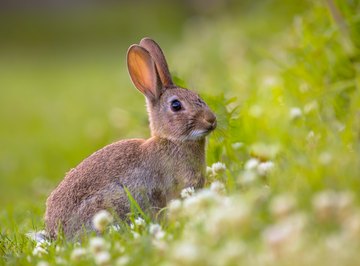
Food webs, on the other hand, show how several food chains are related. It is a more complex depiction of how the plants and animals in an ecosystem relate. A food web may begin with prairie grass, which would be eaten by insects, mice or rabbits, which would be eaten by different predators. More species are included in a food web, which uses a series of arrows to describe relationships.
Types
Food chains and webs comprise different types of consumers. A producer and its seeds or fruit are always at the lowest level, followed by primary consumers, secondary consumers and tertiary consumers. Trees and grass are producers. Examples of primary consumers, which eat producers, are mice and insects. Secondary consumers eat primary consumers. Examples are snakes and toads. Tertiary consumers, such as redtail hawks or other raptors, eat secondary consumers.
The Sun
Some food chains include the sun as a provider of energy to living things. Others include decomposers--fungi and bacteria that break down organic matter and fertilize the producers. Animals in a food chain or web often are classified as herbivores (plant-eaters), omnivores (plant- and animal-eaters), carnivores (meat-eaters), or scavengers, which feed on the remains of dead animals.
Considerations
Human activity can affect food chains and webs. For example, if a toxic insecticide is sprayed in the garden, the declining population of insects would mean less food is available for birds. The bird population would decline, affecting the animals next in line. Animals such as rabbits could also be harmed if they eat plants sprayed with the insecticide, which would in turn impact the owl population.
References
- ''Concepts & Challenges in Life Science''; Leonard Bernstein, Martin Schachter, Alan Winkler, Stanley Wolf; 1986