Batteries are portable energy supplies, capable of producing electric current from a chemical substance called an electrolyte. While wet cell batteries get their power from a liquid electrolyte, dry cell batteries generate power from a slightly moist paste. Battery manufacturers classify battery types as either primary (single-use disposables) or secondary (rechargeables).
TL;DR (Too Long; Didn't Read)
The main difference between wet- and dry-cell batteries is whether the electrolyte they use to make electricity is mostly liquid or mostly solid substance.
Dry Cell Characteristics
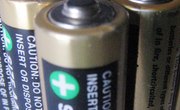
In 1887, Carl Gassner invented the dry cell battery, the more visible of the two battery types, by combining zinc and carbon. All dry cell batteries have a metal electrode or graphite rod covered by an electrolyte paste, all within in a metal container. In an acidic dry cell, the electricity-generating reduction reaction typically takes place in a paste comprised of ammonium chloride (NH4Cl) and manganese dioxide (MnO2). In a longer-lasting alkaline dry cell, potassium hydroxide (KOH) or sodium hydroxide (NaOH) reacts with manganese dioxide. Other batteries might use silver oxide (Ag2O), mercuric oxide (HgO) or nickel/cadmium. Dry cells can be either primary or secondary cells.
Wet Cell Characteristics
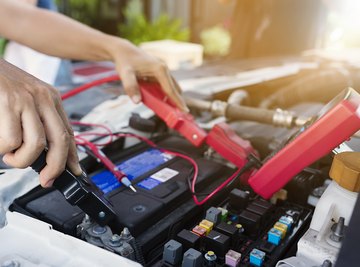
A well cell battery generates power from a pair of electrodes and a liquid electrolyte solution. Early wet batteries consisted of solution-filled glass jars and with electrodes dropped into each one. About the size of the average toaster, modern wet cells are used to start most cars and are comprised of lead plates in a solution of sulfuric acid. A sheet of insulation separates the anode (negative electrode) from the cathode (positive electrode). Wet cells can be either primary or secondary cells.
Dry Cell Advantages
Most wet cell batteries are sensitive to orientation; to prevent leaking, you must keep them upright. By contrast, dry cells can be operated in any position. Also, since dry cells are more durable, they are typically used for remote controls, flashlights and other similar handheld devices. Dry cells are typically used as primary cells, and these batteries can handle long periods of storage because they lose their charge more slowly than secondary batteries. Lithium ion batteries represent a type of dry cell battery well-suited for use in cell phones, due to its high energy density, or its power stored versus weight. This means a small compact, durable battery can deliver a large amount of power.
Wet Cell Advantages
Wet cell batteries are typically used as rechargeable secondary batteries. This makes them ideal for use in motor vehicles, where the car's alternator recharges the battery after starting. For the amount of power that they supply, and their durability, wet cell batteries are fairly affordable. If properly maintained, wet cell batteries also have a high number of charge-discharge cycles. They are also less likely than other batteries to suffer damage from overcharging.
References
About the Author
Brett Smith is a science journalist based in Buffalo, N.Y. A graduate of the State University of New York - Buffalo, he has more than seven years of experience working in a professional laboratory setting.