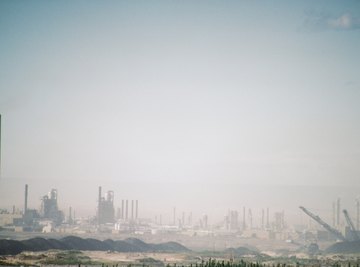

What is the greenhouse effect? The greenhouse effect occurs when greenhouse gases in the Earth's atmosphere trap the sun's energy, warming the surface of the Earth. The greenhouse effect works on Earth's surface just like a greenhouse does: The glass in a greenhouse allows the sun's heat to enter but does not allow it to leave, therefore maintaining a relatively constant warm temperature inside the greenhouse.
The greenhouse effect is actually a good thing – it is what keeps the Earth at a habitable average temperature of 58 degrees Fahrenheit (14 degrees Celsius). Without the greenhouse effect life may not exist on Earth.
Human activities have been adding greenhouse gases to the Earth's atmosphere, increasing the greenhouse effect. The results of this increase are yet to be fully understood. However, even the slightest increase in average global temperatures can have devastating effects on life as we know it here on Earth. It is crucial to reduce the greenhouse effect in order to save human lives and preserve biodiversity on our planet.
What Are Greenhouse Gases?
Greenhouse gases are a group of gases that exist in Earth's atmosphere that have the potential to trap heat energy. Greenhouse gases are the driving factors behind the greenhouse effect: When the amount or concentration of greenhouse gases increases in the atmosphere, so too does the greenhouse effect.
Greenhouse gases include water vapor, carbon dioxide, methane, ozone, nitrous oxides and fluorinated gases. Each greenhouse gas has its own unique global warming potential (GWP), which refers to the strength and overall ability of the gas to absorb heat energy and trap it in Earth's atmosphere. The global warming potential of a greenhouse gas is determined by the concentration of the gas in Earth's atmosphere, how long the gas remains in the atmosphere and how strongly it absorbs heat energy.
Measuring Carbon Dioxide
Carbon dioxide gas released through human activity is responsible for the vast majority of global greenhouse gas emissions. In 2019, 80 percent of the United States' greenhouse gas emissions were in the form of carbon dioxide gas. Since the industrial revolution, there has been a measurable increase in atmospheric concentrations of carbon dioxide – from around 280 parts per million in the mid-1700s to over 400 parts per million in 2019.
This substantial increase in atmospheric carbon dioxide is due mainly to increased human activities that require the burning of fossil fuels, mainly for energy production and transportation. When fossil fuels – such as coal, oil and natural gas – are burned, carbon dioxide is produced as a result. Other human activities that release carbon dioxide include burning of wood, clear-cutting forests and industrial processes like cement manufacturing.
How to Reduce Greenhouse Gases
There are two main objectives that must be addressed in order to reduce greenhouse gases and therefore reduce the greenhouse effect. The first objective would be to stop adding new greenhouse gases to the atmosphere – or at least reduce the amount that is being added through human activities. The second objective is to remove the excessive greenhouse gases from the air – this process is called carbon sequestration, and it happens naturally!
Sequestering Carbon
Plants of all sizes naturally take up (sequester) carbon dioxide from the air – it is necessary for them to photosynthesize. Forests and other areas where plant life is dense and more carbon is being taken up than being released are called carbon sinks. When entire forests are cut down, not only is the carbon sink removed but the carbon that was previously stored in the living biomass of the trees is subsequently released (either through burning or decomposition of the biomass).
It is crucial to preserve Earth's remaining carbon sinks through conservation efforts. One way to begin creating new carbon sinks is to plant trees, bamboo, cover crops and other types of plants that will assist in removing the excess carbon dioxide from Earth's atmosphere.
Individual Strategies to Reduce Greenhouse Gases
There are many actions that individuals can take to help reduce greenhouse gas emissions, and therefore reduce the greenhouse effect. Reducing your "carbon footprint" can involve changes in daily transportation, such as riding a bike or walking to work instead of driving. Electric cars, hybrid cars and cars that run on alternative fuels such as biodiesel are also an option that can help reduce an individual's overall greenhouse gas emissions.
Increasing your home's energy efficiency can also help to reduce the greenhouse effect. Switching to LED bulbs, energy-efficient appliances and solar power are all ways to decrease your overall energy use and carbon dioxide emissions due to electricity production. Green roofs, smart thermostats and increased insulation are also ways to increase the energy efficiency of your home.
Community Solutions
Communities can work together to find ways to reduce greenhouse gases. In urban areas, increasing public transit opportunities can help reduce greenhouse gas emissions by reducing the number of vehicles on the road. Preserving urban green spaces and creating new green spaces (such as community gardens) also can help to reduce the greenhouse effect.
Coal-burning power plants are some of the most significant industrial sources of greenhouse gases. Regulating and reducing the burning of fossil fuels – and instead relying on renewable sources of energy such as wind power and hydrothermal power – are alternatives that can help reduce the greenhouse effect on a larger scale.
References
- United States Environmental Protection Agency: Overview of Greenhouse Gases
- NASA Climate Kids: What is the Greenhouse Effect?
- University Corporation for Atmospheric Research: How Do We Reduce Greenhouse Gases?
- Center for Climate and Energy Solutions: Controlling Industrial Greenhouse Gas Emissions
- National Park Service: How You Can Help Reduce Greenhouse Gas Emissions at Home
- Center for Climate and Energy Solutions: What We Can Do
About the Author
Emily Neal is a freelance science writer and nature photographer. She has a B.A. in Environmental Science from Mount Holyoke College and has worked for many years teaching science at the middle school level. For fun and inspiration she transcribes and edits novels, writes and plays music, and forages for wild mushrooms and mineral specimens.
Photo Credits
Photos.com/Photos.com/Getty Images