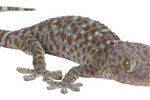
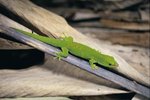
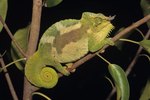
Geckos are one of the most popular lizards, and few people realize just how long these pets have been around. Scientists have found geckos preserved in amber dating back more than 100 million years ago. Unlike humans, birds and other species that have greatly changed with evolution, the geckos of today are almost identical to the way they once were.
Gecko Ancestors
The earliest gecko fossil, studied by scientists of Oregon State University and the National History Museum of London is dated to be 100 million years old. Reptiles come from the same common ancestors, and the earliest reptiles came about during the Carboniferous Period, which is 300-350 million years ago. The oldest known fossil of a reptile is hylonomus, dated by the Journal of Geological Society to be 315 million years old.
Gecko Evolution
It is unknown when geckos evolved their distinctive climbing feet. The 100 million year old fossil mentioned above showed part of the tail and feet of the gecko perfectly, and the setae, or microscopic hairlike structures on the feet, were shown even then. Other adaptations found in modern species show a divergence from their early ancestor includes defense mechanisms such as chameleon abilities and the leaf tailed gecko, famous for its dried leaf look a like tail.
Gecko's Sticky Feet Advantage
Almost all geckos have feet that stick to almost anything, and that represents a distinctive advantage when it comes to survival. They can climb up smooth surfaces for hunting or fleeing, and their feet work by an interaction called Van Der Waals. This interaction, reported in a National Academy of Sciences report, shows that geckos are able to stick to surfaces by using electrical attraction between molecules. The structure that allows their feet to do this is called setae, and there are millions of them in total. Scientists at Berkley have been synthesizing these hairs in order to make adhesives.
Different Modifications Between Gecko Species
There are five different sub families of geckos, and there are over 2,000 species currently known according to the Global Gecko Association. Coloration is one of the main variations between geckos, with some species being able to camouflage themselves into their surroundings. One fascinating variation is that some females are able to reproduce by themselves, such as the mourning geckos.
Environmental adaptations are another area in which gecko species vary. Leopard geckos are unable to climb walls, lacking the same toe structures, but they are able to burrow down to avoid harsh temperatures in their natural environment.
Attributes that All Geckos Share
The amount of variation that is seen in the gecko family shows plenty of reasons how the gecko has evolved to help make the species survive and thrive. Almost all of the geckos have those sticky feet, and all save one family also have lidless eyes. They also have a defense mechanism that releases bad smells and feces when they are attacked, deterring less driven predators. Geckos tend to have the same style of diet, feeding on small insects such as cockroaches and worms.
Resources
Photo Credits
-
gecko image by jedphoto from Fotolia.com
Writer Bio
Tiffany Garden has been a freelance writer since 2002, working in the commercial copywriting field. She has been published in a number of technical and gaming magazines, as well as on numerous websites. She also runs her own websites on a number of subjects, runs a handcrafted jewelry business and is a CompTIA A+ Certified computer technician.