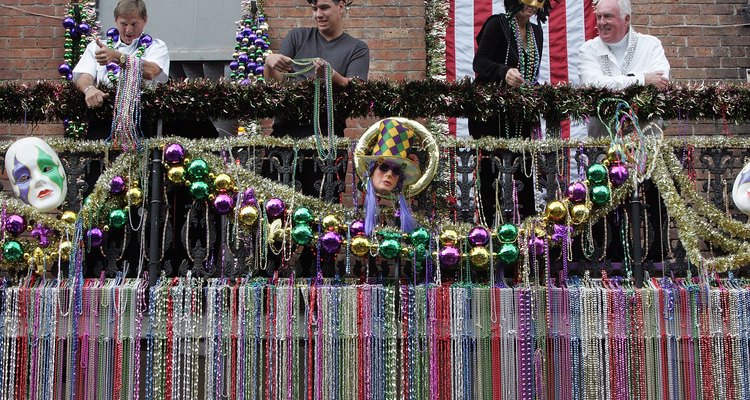
Chris Graythen/Getty Images News/Getty Images
Mardi Gras is the celebration of the beginning of the Catholic Lenten season. Mardi Gras is French for "fat Tuesday" and embodies the abandonment and indulgence that many engage in before plunging into the 40 days of Lent that immediately follow. The beads that many revelers wear and pass around during the festivities are purple, green and gold, representing not just the celebration's Catholic roots, but also an homage to a Russian czar.
Religious Ties
There is some dispute as to the exact meanings of the three official Mardi Gras colors chosen to represent the day. The colors are thought to have ties to the Catholic religion and its traditions. The generally accepted meanings are: justice, represented by the color purple; faith, represented by green; and holy power, symbolized by gold.
The Russian Connection
The three colors have a much more practical origin, too. Purple, green and gold became the recognized colors of the New Orleans Mardi Gras celebration thanks to a visit to New Orleans by the Grand Duke Alexis Romanov of Russia. The Rex or elected king of the festivities in 1872 dedicated the annual celebration to the city's distinguished visitor by naming the colors of the House of Romanov the official colors of Mardi Gras.
Related Articles

What Is Ceylon Sapphire?

What Is the Meaning of Pearls?

Names of Different Red Shades

List of the Types of Semi-Precious ...

What Are the Colors for Wedding ...

Traditional Korean Colors

What Does a Purple Iris Symbolize?

What Is the Meaning of Flag Day in the ...

How Do I Use Rit Dye to Make Turquoise ...

How to Cook Mixed Greens

French Braids History
How to Cook Yucca Root

The Five Color Diet
What Is a Slave Bracelet?
History of Mardi Gras Beads

Traditional African Wedding Attire

The Essenes Diet

Traditional Flowers & Plants for a 50th ...
Staple Foods in Greek Culture

Traditional French Easter Food
References
- Mardi Gras New Orleans: Mardi Gras Colors
- Fort Bend Herald: Beads as an Essential Element of Mardi Gras
- Yale National Initiative: Feathers and Beads: Exploring Heritage Through the Mardi Gras Indians
- Liberty Voice: The Connection Between Mardi Gras and New Orleans
- American Catholic: Catholic Roots of Mardi Gras
Writer Bio
Robert Morello has an extensive travel, marketing and business background. He graduated with a Bachelor of Arts from Columbia University in 2002 and has worked in travel as a guide, corporate senior marketing and product manager and travel consultant/expert. Morello is a professional writer and adjunct professor of travel and tourism.
Photo Credits
Chris Graythen/Getty Images News/Getty Images