
How Are Crystals Formed in Nature?

How Are Crystals Formed in Nature? thumbnail
Crystals come in many shapes and colors.

Visit any gem and mineral show, and you will see crystals in many shapes and colors. But these are only a few of the thousands of different crystals that exist in the world. Encyclopedia Britannica writes, "... the term crystal is most often used by material scientists to refer to any solid with an ordered internal arrangement..."
It takes special conditions for the kinds of crystals you see in rock shops to form.

  1. What is a Crystal?

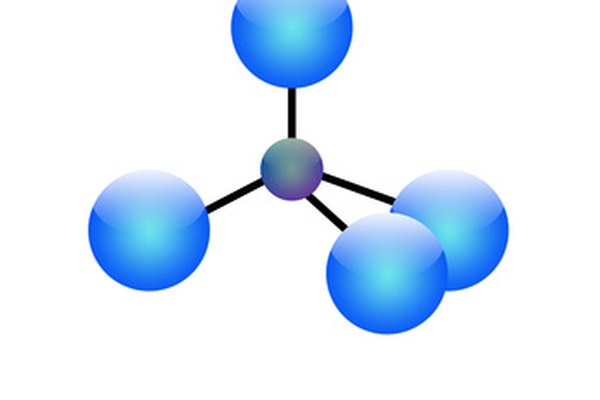
    • Crystals are formed by atoms.
      Crystals are formed by atoms.

      Like everything else in nature, crystals are formed by atoms. If a mineral has flat planes, known as crystal surfaces, and its atoms are grouped in regular patterns, then that mineral is a crystal.

      All minerals belong to six crystal systems: cubic (pyrite), hexagonal (quartz), tetragonal (Zuecon), orthorhombic (topaz), monoclinic (malacite) and triclinic (axinite).

      Chemical content and a wide range of environmental conditions determine what crystals grow in a specific area.

    Crystal Formation
    • Crystals form beneath the Earth's surface.
      Crystals form beneath the Earth's surface.

      Crystals form beneath the Earth's surface. Igneous creation occurs when minerals crystallize from melting rocks. Metamorphic creation occurs when minerals form due to excessive pressure and heat. Sedimentary minerals form from erosion and sedimentation.

      Water, temperature, pressure and good fortune all play a role in the creation of crystals.

    Surface Water
    • Surface water carry dissolved elements.
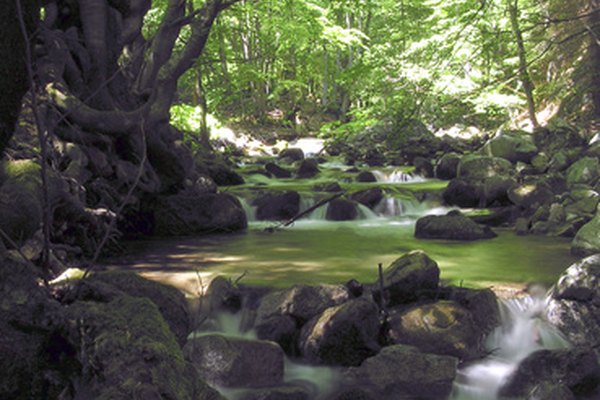
      Surface water carry dissolved elements.

      As water travels over the Earth's surface, elements dissolve creating a nutrient-rich solution. If the water then evaporates, minerals are left behind. For example, if you have a bowl of sea water and let the water evaporate, salt crystals will be left behind.

      If the water has a silica-rich solution, then quartz crystals such as amethyst may form. If the water is rich with copper, then malachite or turquoise will form.

    Hydrothermal and Pegmatites
    • Emeralds form from cooling magma.
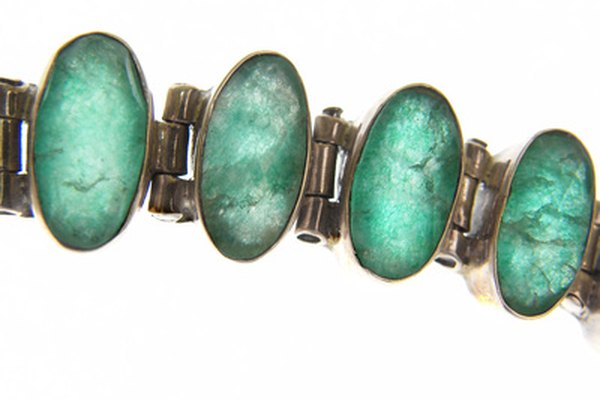
      Emeralds form from cooling magma.

      Hydrothermal deposits of minerals are created by either surface water making its way below ground or by cooling magma releasing water beneath the Earth's surface. The water finds a crack in the earth and crystals begin to grow. If the water comes from cooling magma, then tourmaline or emeralds may be found.

      Sometimes low concentrations of water become concentrated as magma cools and solidifies to form a pegmatite. If the pegamite contains beryllium, beryl crystals will form. If they are rich in boron, tourmaline will form.

    Magmatic, Metamorphic and Mantle
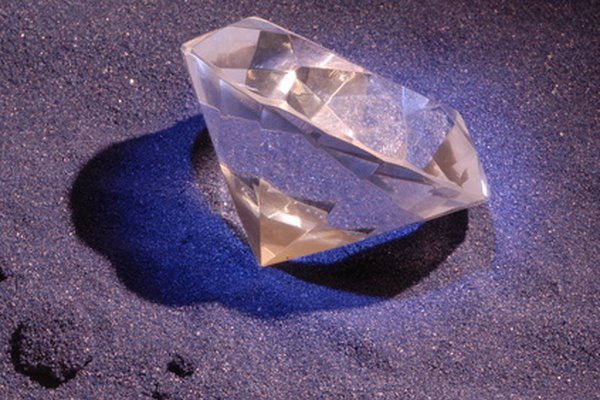
    • Diamonds are the most famous Magmatic gem.
      Diamonds are the most famous Magmatic gem.

      Magmatic gems, such as zircon, topaz and rubies, form in the holes in volcanic rocks. Others gems, such as jade, form when rocks are changed by heat, pressure and exposure to solutions. These gems are called metamorphic.

      Olivine (peridot) is the most abundant of the mantle minerals. Diamonds are the most famous of the mantle minerals. Formed 100 miles beneath the Earth's surface, violent volcanic eruptions bring them to the surface intact.

    Mine of Naica, Mexico

    • The mine of Naicia is rich with lead and silver. In order to reach these deposits, 18,000 gallons of 130 degree, nutrient-rich water is pumped out of an underground cave every minute. One thousand feet below the earth's surface grow the largest gypsum crystals in the world. Scientist believe that these crystals were formed by hytrothermal process.

Related Searches:

References

Resources

  • Photo Credit iron rust crystals image by haemengine from Fotolia.com atom image by Brett Bouwer from Fotolia.com Volcano image by wojciechhajduk from Fotolia.com stream image by Marek Kosmal from Fotolia.com bracelet emerald image by Tatyana Parfyonova from Fotolia.com diamonds 1 image by Renato Francia from Fotolia.com

Comments

You May Also Like

  • What Crystals Form in Nature?

    Crystals are natural forms made up of molecules, ions and atoms that connect together to create patterns when gas or liquid becomes...

  • How to Use Alum Crystal As Natural Deodorant

    Want a natural deodorant? Alum crystals make a good alternative to artificial antiperspirants. Known as "samsom" in Thailand, "tawas" in the Philippines...

  • How Do Crystals Form in Caves?

    Crystals can develop in a vast range of shapes and sizes, from crystals visible only under a microscope to towering giant crystals...

  • Types of Crystals in Nature

    Crystals form when a material passes from a liquid or gas state into a solid state under ideal conditions that react with...

  • How to Find Crystals

    Crystals are formed naturally by intricate processes within the Earth over millions of years. In fact, almost all minerals occur as crystals...

  • How to Get Crystals to Form on Coal

    The technique of demonstrating how to get crystals to form on coal has fascinated children for years. A classic method involving mercurochrome...

  • Learning about Crystals for Kids

    As minerals form in the Earth's crust, they sometimes grow into a particular three-dimensional geometric shape called a crystal. Each geometric shape...

  • Why Do Crystals Grow in Sugar Water?

    The formation of sugar crystals in water is captivating, with the wondrous patterns sugar makes. Scientists and students conduct experiments studying sugar...

  • The History of Shannon Crystal Design of Ireland

    Ireland is home to some of the world's most impressive crystal design, among them Shannon Crystal. The craft of Irish crystal making...

  • How Gemstones Are Formed

    Gemstones are minerals, formed from repeating patterns of individual elements or simple molecules. These stones form naturally inside the Earth in a...

  • Formation of Crystals

    Crystal formation begins with a liquid solution comprised of the material that will form the crystal suspended in a liquid, such as...

  • How Do Crystals Form?

    Crystals form very slowly in a cavity of liquid, and solids form from the liquid into geometric patterns. Understand the formation of...

  • How Do Natural Pearls Form?

    Natural pearls form when mollusks such as oysters secrete layers of a hard, shell-like insulation around a foreign body. Over time these...

  • How Are Crystals Formed (for Kids)?

    Kids are attracted to crystals for their wide variety of aesthetically pleasing shapes and bright, pretty colors. Natural rock crystals take thousands...

  • How do I Clean Rust on Porcelain?

    As iron and other metals corrode from exposure to moisture and oxygen, the metal's surface breaks down. These fine particles that result...

  • Why Do Metals Form Crystals?

    Some metals can form crystals, such as gold, silver and copper, which means that they create regular patterns in their makeup. Discover...

  • How to Grow Mineral Crystals

    Growing mineral crystals is a simple science project. To make these crystals, a supersaturated solution is necessary. This is made by dissolving...

Related Ads

Featured