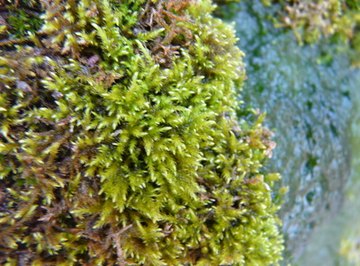
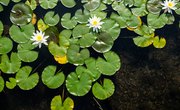
Nonvascular plants are a group of primitive plants that don't contain vascular tissues. Nonvascular plants are also known as bryophytes. Examples of nonvascular plants include mosses, hornworts and liverworts. These small plants typically spend their lives in moist environments where they are able to absorb water and nutrients directly through the surface of the plant.
Non-Vascular Plants: Bryophytes
Nonvascular plants, or bryophytes, are a group of small, simple plants that live on land. Bryophytes are characterized by their lack of conducting tissue, or vascular tissue. These types of plants are very primitive; their lack of specialized plant tissue limits them in terms of size and structure.
Bryophytes may have evolved over 500 million years ago from green algae. Just like other types of plants, bryophyte cells contain chloroplasts, which the plant uses for photosynthesis. Bryophytes tend to be small, humble plants that thrive in moist environments.
The reason they require moisture in their environment is because they need to absorb water and nutrients directly through the surface of the plant. Unlike vascular plants, bryophytes lack structures such as roots, stems and leaves, which aid vascular plants in water and nutrient uptake and distribution throughout the plant.
Vascular Plants: Examples
Examples of vascular plants include ferns, trees and flowering plants. Vascular plants contain vascular tissue, which is specialized plant tissue that transports water and nutrients throughout the plant. The term vascular in fact means "small vessel."
Xylem is a type of vascular tissue that transports water upwards from the roots of the plant. Phloem is another type of vascular tissue, specialized for distributing minerals and nutrients throughout the plant.
Vascular plants have the advantage of being able to grow larger due to the presence of specialized tissues. Vascular plants form true roots, stems and leaves, which enable the plant to grow parts that are physically farther away from the plant's water source. The plant can actively take water in through its roots and transport it to the rest of the plant – even if the water has to travel hundreds of feet, in the case of the world's tallest trees.
Bryophytes Absorb Water
Bryophytes absorb water and nutrients directly through the surface of the plant. Because they don't have vascular tissue, the absorbed water and nutrients are only available to the parts of the plant that are adjacent to the point of absorption. Water is available immediately to cells in the area it was absorbed, but is not available to the rest of the plant.
Bryophytes do not have roots. Instead, some nonvascular plants have root-like structures called rhizoids. Rhizoids may look like roots, but they function slightly differently. They anchor the plant to the substrate (surface) that it is living on but do not actively extract water from the plant's environment like true roots. The tissues of rhizoids can absorb water directly just like the other tissues of nonvascular plants.
Some types of bryophytes have leaf-like structures that aid in the process of photosynthesis. These leaf-like structures absorb water and nutrients directly from the plant's environment, just like a sponge. The more surface area is exposed, the more water the plant can absorb. Some types of nonvascular plants have rudimentary internal structures used for conducting water throughout the plant, but they are in no way as complex as the xylem and phloem of vascular plants.
Adaptation: Conserving Water
Nonvascular plants have a plethora of adaptations that help them survive when water is not available in their environment. While the majority of bryophytes do prefer moist environments, nonvascular plants can be found in just about any climate, including extremely dry or cold environments.
Many bryophytes have the ability to become dormant when there is little or no water available. Sometimes only a drop of water is needed to reactivate dormant bryophytes; morning dew can be enough to wake desert bryophytes at least for a portion of the day. Desert bryophytes can curl up during the heat of the day to reduce the amount of surface area exposed to extremely arid conditions and therefore prevent water loss.
Individual moss plants can protect themselves from harsh conditions by growing in a colony. These dense, cushion-like colonies protect the individual plants within them from being exposed to extremes. Some species of bryophytes can undergo a molecular change in the structure of their chlorophyll, making them less susceptible to drying out, and some have natural "anti-freeze" chemicals to prevent the tiny plants from freezing in extremely cold conditions.
Bryophytes as Flood Control
Bryophyte mats can help with water conservation and runoff management within an ecosystem. Mosses and other bryophytes have the spongelike capability of absorbing large amounts of water very quickly. Sphagnum moss, for example, can hold up to 20 times its weight in water. In a rain event, bryophytes can absorb excess water that would otherwise become runoff, and then release it slowly back into the soil. This aids with controlling flash floods, helps with soil stabilization, and can assist in regulation of moisture content within an ecosystem.
References
About the Author
Emily Neal is a freelance science writer and nature photographer. She has a B.A. in Environmental Science from Mount Holyoke College and has worked for many years teaching science at the middle school level. For fun and inspiration she transcribes and edits novels, writes and plays music, and forages for wild mushrooms and mineral specimens.
Photo Credits
Moss image by Yaroslav Knish from Fotolia.com