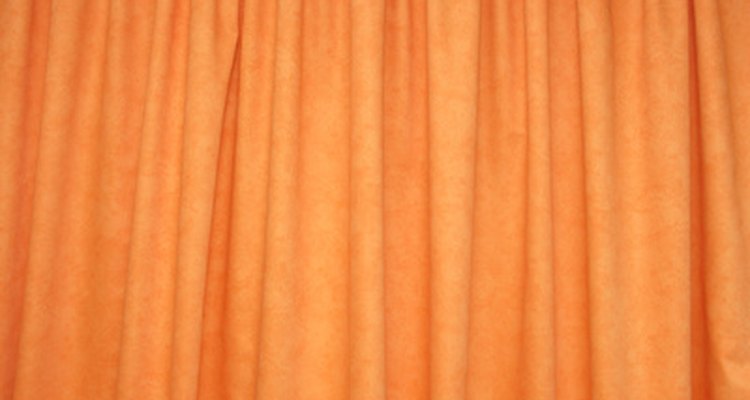
The mere mention of the word polyester can make people cringe. Even though the synthetic fiber has come a long way since its Brady Bunch days, people associate it with cheap and gaudy clothing, according to the Peter Schwartz Polyester site. That was not always the case, nor will that necessarily stay the case in the future.
History
Polyester is a group of polymers formed by combining carboxyl acids with alcohols, according to Peter Schwartz’s Polyester site. DuPont employee W.H. Carothers originally discovered this phenomenon but put the idea aside when he came up with nylon. A group of scientists from England took over the polyester project and in 1941 came up with Terylene, the first polyester fabric. DuPont bought out all polyester rights in 1946 and developed their version, called Dacron. The American public was first exposed to polyester in 1951.
Marketing
Polyester was hailed as a magic fiber, a miracle fiber, according to both Peter Schwartz and the Orlando Sentinel websites. It needs no ironing, never wrinkles and washes well. Polyester marketers claimed it could be worn for 68 days in a row and still look good. Another key selling point was the price. Polyester was cheap. It was none too difficult to make, either, and a number of companies started churning out inexpensive polyester clothes. A brief attempt at a polyester revival in the early 1980s failed.
Heyday
Polyester had its American heyday in the 1960s, then fell from fashion grace. Folks were clamoring for the fabric soon after its 1950s arrival, according to Peter Schwartz’s Polyester site. What began as a highly popular fabric worn by such notable TV stars as the Brady Bunch soon became scorned. Thanks to the creation of polyester’s double-knit fabric, Schwartz said, polyester declined in popularity. The dozens of factories churning out chintzy polyester items didn’t help, either.
Trends
Polyester fell further out of American favor by folks who chose to wear only natural fibers, such as cotton and linen, according to an article in the Orlando Sentinel. While the current eco-movement may ensure folks will continue to scoff at polyester, some could not tell the difference between polyester and some natural fibers. A Hoechst Fibers Industries series of touch tests in the early 1980s concluded that 89 percent of those tested were unable to differentiate between polyester and wool, silk, cotton and flax.
Continued Use
Although polyester’s reputation as a fashionable fabric was marred, folks are still buying polyester, according to a pie chart on Schwartz’s site. In the 1990s, American customers snapped up a number of polyester items, including clothing. In fact, 39 percent of polyester sales were for clothing items, such as underwear and pajamas, followed by 38 percent for industrial and consumer textiles, such as upholstery and laundry bags. Nearly 17 percent of sales were for household, institutional and interior textiles, such as curtains, sheets and towels, while 5 percent went for polyester rugs and carpets.
Related Articles

Spandex vs. Polyester

History of the Ecko Logo
The Difference in Lycra & Cotton

How to Shrink a Baseball Jersey

History & Background of Nike

Fabrics Used for Civil War Clothing
Characteristics of Polyester & Cotton

Uses of Cotton Fabric

The Difference Between Wrinkle-Free & ...

Advantages & Disadvantages of Natural ...
Letterman Jackets in the '50s

The Mayan Diet

Traditional Clothing in Hawaiian Culture

How Much of the World's Clothing Is ...

The History of Bamboo Fabric

How to Shrink Acrylic Sweaters
History of Arrow Shirts
The Difference Between Polartec and ...
What Is the Durability of Bamboo Fabric?
The History of Tweed Perfume