
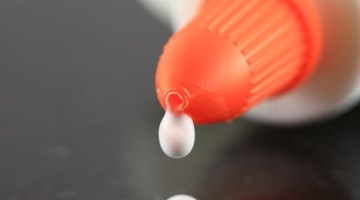


It all started with a lipstick. Tacky, portable, convenient and safe, glue sticks have been a household item since their invention in 1969. The original designers came up with a base recipe that was nontoxic and easy to use.
History of the Glue Stick
The design of lipstick tubes led the German company Henkel to create the same twist-up type of product for quick, easy and mess-free application of glue for home use.
The hard part for the designers wasn’t the delivery system but the ingredients. They needed a sticky product that wouldn’t dry out or ooze out of the carefully designed container. After many hits and misses, the company debuted its glue stick to the world in 1969.
The convenient and tidy little glue tube became a popular craft and household-use product. The original Pritt stick ingredients that made the glue sticks were soon copied by many major companies, including 3M and Elmer’s.
Glue Stick Ingredients
Many glue stick companies’ exact mix of ingredients and quantities of polymers and emulsifiers are proprietary. Typically, a glue stick contains the following ingredients in varying measurements.
- Acrylic Polymer – These are used to solidify dried glue.
- Sodium Stearate – This soap assists in emulsifying the polymer and gives the glue its lubricating qualities so that it goes on smooth.
- Polyethylene Glycol – A touch of this keeps dried glue moist and flexible enough to apply smoothly without drying out in the dispenser.
- Sodium Hydroxide – A trace amount of this alkali keeps the pH of the stick above 10.
- 2-amino Isobutanol – The pH buffer neutralizes acid.
- N-Vinylpyrrolidone – This polymerizes as the glue dries on the item.
- Polyoxyethylene Monooctylphhenyl Ether – This works as an emulsifier.
Pritt stick ingredients for the company’s popular glue sticks include caprolactam, hydrogen peroxide solution and sodium hydroxide.
Uses for Glue Sticks
Glue sticks come in a wide variety of sizes, from the slender, kid-friendly 8-gram glue stick to the wide and functional 40-gram variety.
The portable sticks are nontoxic, safe, quick to dry, roll on smoothly and can be used just about anywhere. The tubes of glue are typically used for paper craft projects, other crafts and artwork. The fact that the glue easily washes off clothes, skin, tables, chairs and walls makes it a handy product for many types of projects.
Always check the product to which you are applying the glue if you are worried about damage, particularly for any fabrics, furniture or walls. Glue sticks can safely be used on:
- Fabric
- Photo paper
- Poster board
- Painted walls
- Concrete
- Vellum
- Felt squares
- Foam board
- Cardboard
- Laminated paper
Hot Glue Sticks for Home Use
Hot glue is slightly different than the original tacky glue sticks. Hot glue gun sticks provide more opportunities to craft, create and build than the ready-to-use tubes. The hot glue gun that is electrically powered requires more safety precautions and can be significantly messier than the original glue sticks that Henkel invented.
The glue gun is ready to go within 45 seconds of being plugged in and loaded. It melts the solid stick to thick, gelatinous goo for easy application that can be relatively precise.
You have more control over the hot glue with a good glue gun. It is designed to deliver pearls of glue or long, narrow and uninterrupted lines of adhesive in varying degrees of thickness along the surface of your craft.
Types of Hot Glue Sticks
Since hitting the market in the early 1970s, the types of hot glue sticks have expanded from the original opaque lengths of adhesive that were loaded into heavy hot glue guns that were almost industrial in design.
The glue guns of today are lightweight and easy to load with dry sticks of adhesive in a rainbow of colors. From neon to pastel, the types of glue gun sticks available to make your creation strong and unique are abundant.
Related Articles





References
Writer Bio
Kimberley McGee is an award-winning journalist with 20+ years of experience writing about education, jobs, business trends and more for The New York Times, Las Vegas Review-Journal, Today’s Parent and other publications. She graduated with a B.A. in Journalism from UNLV. Her full bio and clips can be seen at www.vegaswriter.com.