Deer Tick Removal on Dogs

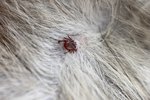
The deer tick, or L. Scapularis, is infamous for being one of the carriers of Lyme disease as well as a lesser known Tick Paralysis. The deer tick is smaller than the common dog tick. Their range is in the north central and northern portion of the U.S. One of the difficulties in dealing with this tick is its small size. The engorged adults are almost 1/2 inch large, with the earlier stages, such as nymph and larvae, even smaller. The deer tick has the readily identifiable round, flat body common to ticks. The color of the adult is dark, with a lighter-brown color around the outer edges. Deer tick removal on dogs is something that takes care to do, for it must be done properly as well as completely.

  1. Inspection

    • Carefully inspect your dog every time it comes in from the outside. The swollen abdomen of the tick will make it easier to spot, since it will be engorged with blood.

    Soap Method

    • Soak a cotton ball with water and liquid soap. Place the soap- and water-soaked cotton ball over the deer tick and hold it in place for up to 20 seconds. Carefully lift up the cotton ball. The deer tick will be adhered to it.

    Petroleum Jelly

    • This is another method of deer tick removal: coat a cotton ball with petroleum jelly. Hold the cotton ball over the tick for several seconds, then remove it. The tick will be stuck against the cotton ball.

    Tweezers

    • This is perhaps the most effective method for removing deer ticks. However, you need to take great care when doing so. Part the hair of the dog so that you can see the tick more clearly. You want to grasp the tick as near its head and as close to the skin of the dog as possible. Carefully grasp the tick's head and a portion of its body and gently and slowly pull the tick away from the dog. You may find you need to rock the tweezers a little as you do so. If you do this slowly, you should be able to dislodge the tick from the dog. Do not squeeze the body of the tick for the tick could regurgitate bacteria that's harmful back into the dog.

    Inspect for the Head

    • It is possible to remove the tick from the dog but still leave the head of the tick embedded in the dog's skin. If you do see the head, remove it from the dog with the tweezers.

Related Searches:

References

Comments

You May Also Like

  • Deer Tick Prevention for Dogs

    According to the University of Wisconsin deer ticks feed only three times in their two-year lives. If your dog, however, provides only...

  • How to Spray your Yard for Dog Ticks or Deer Ticks

    Deer ticks and the 800 other species of ticks around the globe can spread numerous diseases, such as Rocky Mountain spotted fever...

  • How to Avoid Deer Ticks

    Deer ticks or black-legged ticks inhabit the northeastern and north central areas of the United States. The deer tick can carry Lyme...

  • Deer Tick Removal on Rabbits

    While rabbits usually don't get infected with ticks, infections can occur when you have other pets such as dogs or cats. Outdoor...

  • How to Remove a Deer Tick From Skin

    The deer tick is a parasite that embeds itself into the skin of its host and sucks blood. It sounds disgusting and...

  • Deer Ticks in Bushes

    The deer tick -- also known as black-legged ticks or Ixodes scapularis -- often carries germs that can cause potentially serious human...

  • How to Identify Ticks on Your Dog

    Ticks are arachnids, like spiders, mites and scorpions. Unlike insects, they have four pairs of legs and no antennae. Ticks are disease...

  • How to Remove a Deer Tick From a Cat

    Deer ticks are small ticks, starting out the size of a typed period and growing to the size of a sesame seed....

  • How to Treat a Deer Tick Bite

    Deer ticks, unlike other types of ticks, carry Lyme disease, a disease that causes flu-like symptoms, fatigue, joint pain, and can evolve...

  • Tick Removal in Dogs

    Ticks are small mites that are frequently found in tall grasses and wooded areas, particularly in regions with large deer populations. Ticks...

  • How to Get a Deer Tick Head Out

    Deer ticks, unlike their larger counterparts, hide easily on clothes or pets. The small pests carry Lyme or other diseases and pass...

  • Deer Tick Repellent

    Tiny deer ticks can be infected with Lyme disease, which they spread to humans through tick bites. Insect repellents are available to...

  • How to Remove a Deer Tick

    Even if you take every precaution to prevent it from happening, you may one day find that you've been bitten by a...

  • Tick Removal Techniques on Dogs

    Tick season can be a frightful time for dog owners. Even dogs who do not go out often are still at risk...

  • Tick Removal in Cats

    Two major frustrations for pet owners are fleas and ticks. Both of these little parasites gain their sustenance from drinking the blood...

  • Natural Homeopathic Remedies for Tick Removal for Dogs

    Natural Homeopathic Remedies for Tick Removal for Dogs. Ticks are small parasites that are responsible for transmitting serious diseases such as Lyme...

  • Information on Dog Tick Spray

    Ticks can transmit numerous diseases to dogs. The four most commonly seen dog diseases spread by ticks are Lyme disease, Rocky Mountain...

  • Tick Removal Tricks

    Ticks are external parasites that need the blood of animals and humans to survive. The tiny creatures go through three transformative stages...

  • Find Ticks on Your Dog

    Identifying the different types of ticks and where they reside on your dog is discussed in this free video .

Related Ads

Featured