Why Did the Poppy Flower Become a Symbol of Veterans Day?

Why Did the Poppy Flower Become a Symbol of Veterans Day? thumbnail
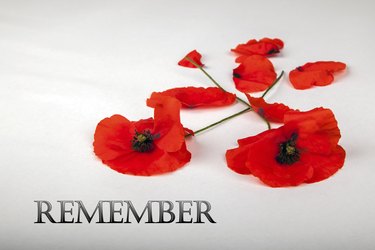
The poppy is a symbol of Veterans Day as a result of a poem.

After World War I, the needs of veterans were often ignored around the world, particularly in Britain, where there was deep economic trouble. But poppies---and a poem---helped change that, as well as ensure that soldiers who die in battle are not forgotten. Poppies are more associated with Remembrance Days, as they are known in Canada, England and other countries, than in the United States. However, in addition to Veterans Day, they have also been associated with Memorial Day in the United States.

  1. Famous Poem

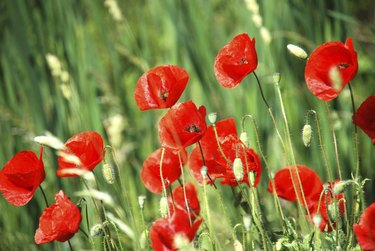
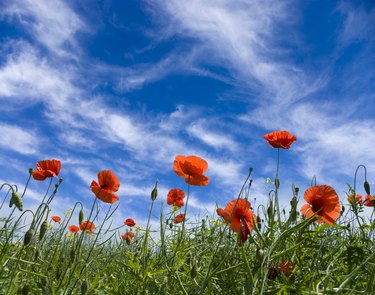
    • Before World War I, few poppies grew in Flanders, an area spanning parts of present-day Belgium, France and Netherlands. But due to the heavy bombing during the war, the chalk soils became rich in lime from rubble, and poppies began to flourish. When the war ended, the lime was quickly absorbed and the poppies disappeared once again.

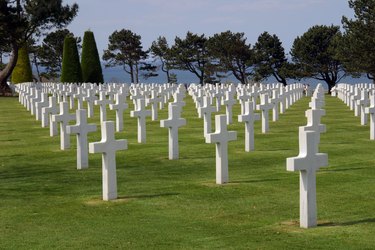
      Cemeteries were established in Flanders for fallen soldiers. The first person responsible for the adoption of the poppy flower as a symbol of remembrance was Lieutenant-Colonel John McCrae, a Canadian medical officer during the war. In 1915, he wrote "In Flanders Fields," a poem published in "Punch" magazine that begins:

      In Flanders Fields the poppies blow
      Between the crosses, row on row
      That mark our place; and in the sky
      The larks, still bravely singing, fly
      Scarce heard amid the guns below.

    Remembrance

    • A field of poppies can symbolize blood.
      A field of poppies can symbolize blood.

      By 1918, the poem was well known throughout much of the world. That year, Moina Michael, an American teacher, was working at the YMCA Overseas War Secretaries' headquarters in New York City, and read McCrae's poem. In reply, she wrote a poem of her own, titled "We Shall Keep the Faith."

      We cherish too, the Poppy red
      That grows on fields where valor led,
      It seems to signal to the skies
      That blood of heroes never dies.

      Moina Michael pledged to always wear a red poppy as a sign of remembrance and began a campaign to get the flower named a national symbol of remembrance. During a 1920 visit to the United States, Madame Guerin, from France, found out about the tradition and decided, once she returned to France, to use handmade poppies to raise funds for children in war-torn parts of France.

    Raising Funds

    • After World War I, Earl Haig, Commander in Chief of the British Army, decided to organize the British Legion to help the thousands of men who had served under him in the war, but were left to struggle on their own as veterans, many of whom were physically maimed or psychologically damaged or unemployed. Their needs were massive. In 1921, a group of French widows visited Haig at British Legion Headquarters, carrying poppies they'd made. They suggested that selling them could be a means to raise money.

    Poppies Spread

    • In 1921, both Britain and Australia adopted poppies as symbols of remembrance (and ways to raise funds). In 1922, New Zealand followed and, in 1925, Canada held its first Poppy Day---all in an effort for people to remember veterans, fallen soldiers and those they've left behind, and to raise funds.

    Symbolism

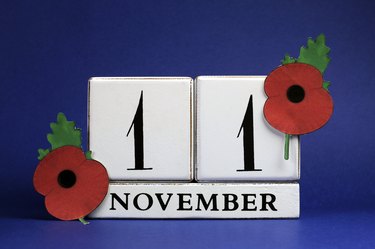
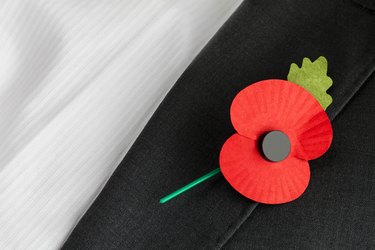
    • Because Flanders had heavy fighting during the war, the flourishing poppies symbolized the blood that was shed. Today, artificial paper poppies are sold by veteran organizations and worn on clothing. The British Royal Family is always shown wearing poppies on Remembrance Day. The flowers are also sometimes used to decorate graves. Most Remembrance Days around the world are held on November 11, including Veterans Day in the United States.

Related Searches:

References

Resources

  • Photo Credit poppy image by Mirek Hejnicki from Fotolia.com poppy field image by Alistair Dick from Fotolia.com

Comments

You May Also Like

Related Ads

Featured