
How Do Cottontail Rabbits Build a Nest for Giving Birth?

How Do Cottontail Rabbits Build a Nest for Giving Birth? thumbnail
Cottontail rabbit

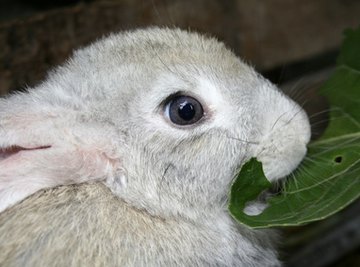
Eight species of cottontail rabbits live in the United States. Although they are cute creatures with long ears and puffy white tails, they are a popular game animal. Hunters are only half the battle for rabbits. Natural predators such as foxes, coyotes, snakes and wolves find them delectable and easy to catch. Being so low on the food chain makes effective nest building even more important.

  1. Importance of Nests

    • Most cottontail rabbits do not survive the first year of life. They fall prey to animals, hunters, disease and injury. In species with high mortality rates, frequent reproduction is vital to the species survival. Mating pairs can produce nearly 40 rabbits a year. It is up to the doe to build the nests and feed the young. With an average litter size of five bunnies, nest building requires significant planning, building and maintaining.

    Excavation

    • During the final days of gestation, the doe begins to look for nest building sites. Nests are dug into the ground. They take on a cup-shaped appearance. Unlike the long underground holes rabbits dig to escape predators, the nests are dug independently and are much shallower. They do not connect directly to other underground rabbit trails. Often dug under brush or grassy areas, the nests are cleverly disguised and well hidden.

    Lining with Vegetation

    • The female rabbit spends days gathering vegetation to spread across the bottom of the nest. The vegetation serves as a decoy for the nest, making it difficult for predators to see. Soft grasses and rough shrubs typically serve as the nest's foundation. Any type of ground covering will do including wildflowers or prickly thorns.

    Lining with Fur

    • Bunnies are born without fur, which makes the warmth of the nest critical. During the final stages of nest building, the doe will use its own fur as nest lining. It plucks fur from all parts of its body, except the abdomen and uses the fur throughout the nest. According to David A. Casteel, author of "Nest Building...in the Cottontail Rabbit," there is no correlation between the size of the nest and the size of the litter. Nests are built similarly during every pregnancy; the doe has no way of knowing how much vegetation or fur it will need so it builds a nest large enough for many offspring.

    Nest Maintenance

    • Since the mating pair do not stay together, the female is solely responsible for taking care of the young as well as providing for its own nutritional needs. The nest is covered with grass while the rabbit goes in search of food. Only during times of nursing is the doe in the nest. During the night it sleeps in tunnels near the nest to keep watch over its young. The nest is used for about two weeks until the bunnies are able to survive on their own and leave the nest.

Related Searches:

References

  • Photo Credit rabbit image by Piter Pkruger from Fotolia.com

Comments

You May Also Like

  • Cottontail Life Cycle

    Seventeen species make up the Sylvilagus genus, all referred to as cottontail rabbits. These species include the swamp rabbit of the southern...

  • How to Tell the Age of a Cottontail Rabbit

    Cottontail rabbits look like many other gray rabbits, until you look at the tail. It's distinguished by the stubby ball of fur...

  • How to Make a Rabbit Nest Box

    As the name implies, a nest box is basically a rabbit's equivalent of a bird's nest, with the obvious difference being that...

  • How to Breed Rabbits for Fur Nests

    Breeding rabbits for fur nests is a relatively simple task once you see it happen once. You can breed rabbits as pets...

  • How to Build a Rabbit's Nest

    Nests provide security and comfort to both domestic and wild rabbits. Nests are especially important to does (adult female rabbits) who are...

  • About Cottontail Rabbits

    Cottontail rabbits are small, furry rodents that are widely known for a variety of reasons. Not only are they a popular game...

  • How to Raise Cottontail Rabbits

    It is important to remember cottontail rabbits are wild animals. As they grow to maturity they will not behave like domesticated bunnies....

  • How to Make a Small Rabbit Nest Box

    Rabbits are favorite pets for children. They are soft, cuddly and fairly intelligent animals. Both male and female rabbits need a place...

  • How to Build a Rabbit Hutch

    Used to house domesticated game animals, a hutch is usually built out of plywood and wire, and propped up off the ground...

  • Do Rabbits Live in Holes in the Ground?

    A rabbit's habitat consists of many variables depending on the rabbit's environment. It is essential that rabbits have a place to hide...

  • Information About Cottontail Rabbits

    The cottontail rabbit species living in North America are part of the family called Leporidae, which includes the rabbits and the hares....

  • How to Feed Baby Cottontail Rabbits

    Baby cottontail rabbits are incredibly cute, and it is tempting to want to feed them. You might be doing so because you...

  • What Do Underground Ant Nests Look Like?

    Underground ant nests consist of different kinds of underground chambers, which may include tunnels that lead to a water table. Discover how...

  • Nesting Habits of Wild Rabbits

    Unlike domestic rabbits, which can vary in size from 2 to 20 lbs. and bear fur in a wide range of colors...

  • Habitat of Eastern Cottontail Rabbits

    The eastern cottontail rabbit has the largest geographic range of all the cottontail species in North America, living across a large chunk...

  • Food Web of the Deciduous Forest

    Deciduous forests are dominated by broad-leaved trees that annually drop their foliage for part of the year, whether cold winter or parched...

  • How to Make Warm Rabbit Nest Boxes

    If you keep your rabbits outside, a nesting box is an essential item so the mother can keep the babies warm. The...

  • How to Give a Rabbit a Bath

    Most of the time, pet rabbits bathe themselves by licking their fur the way a cat would. Occasionally, they end up sitting...

Related Ads

Featured