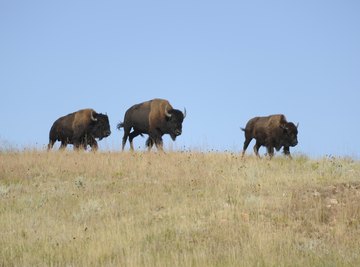
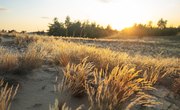
The Great Plains of North America occupy a quarter of the North American continent and are home to the prairie grassland ecosystem. Prior to European settlement, they were the continent's largest continuous ecosystem and supported a rich diversity of plant and animal life. The dominant plants are grasses and forbs (also known as herbs, wildflowers or weeds), with very few woody trees or shrubs.
The prairie grasslands supported vast herds of grazing animals and their predators. The prairies have evolved in response to pressures such as grazing and fire. They now require these processes to maintain a healthy state. However, the plowing of the prairie for agriculture has destroyed the vast majority of this ecosystem, which has led to significant environmental issues.
Characteristics of Prairie Grasslands
Prairies in North America exist in areas in which there is too much rain to be called desert and not enough rain to support trees, woodlands or forests. Prairies are dominated by deep-rooted, perennial native grasses. There are three distinct types of prairies.
In the western areas, where a ‘rain shadow’ is created by the Rocky Mountains, you'll find shortgrass prairies with grasses, wildflowers and other vegetation growing to about ankle height. In the east, which receives plentiful rainfall, grow tallgrass prairies in which vegetation can grow to over eight feet tall. In between grow mixed-grass prairies with a variety of grass species and heights depending on the landscape characteristics.
Prairie Plants
The most abundant plant in the prairie are grasses, of which there are many different species. Tallgrass prairies are dominated by big bluestem (Andropogon gerardi), Indian grass (Sorghastrum nutans) and switch grass (Panicum virgatum). In more arid areas you'll find shorter species such as blue grama (Bouteloua gracilis) and buffalo grass (B. dactyloides).
Prairie grasses typically have very deep, fibrous root systems. This allows the plant to access deep reserves of water and to store energy in its roots. When grasses are grazed or burnt, these roots enable the plant to grow new leaf material and recover rapidly. The deep roots also create excellent soil structure and prevent the topsoil from being lost to erosion.
The prairies also contain diverse wildflowers, with over 300 flowering species recorded. These plants provide crucial habitat to a variety of organisms (insects, for example) which rely on the leaves or flowers for food.
Prairie Animals
Historically, the most numerous plains animals in the prairie ecosystem were grazing herbivores such as bison (one of the most famous animals native to North America), elk, deer and pronghorn antelope. These animals, most notably bison, moved in vast herds numbering in the millions. These prey species were hunted by predators such as grizzly bears and wolves.
Smaller prairie creatures include gophers, rabbits and grasslands birds such as prairie-chickens, grouse, meadowlarks and buntings. These also have their own predators, including black-footed ferrets, rattlesnakes and raptors like the Prairie Falcon and the Burrowing Owl.
Prairie Ecosystem Processes: Fire
Fire has been an element of prairie grassland ecology for thousands of years. Fire can promote new grass growth by removing dead and decaying material, which releases nutrients into the soil and creates space and light for grasses to grow into. Fires kill young shrubs and trees, helping to maintain the open grassland vegetation. However, excessive fires caused by human activity can expose soil to erosion.
Prairie Ecosystem Processes: Grazing
Overgrazing can damage and degrade grassland ecosystems, yet the prairie was able to support many millions of grazing animals. This was possible due to the presence of predators, which encouraged herds to bunch tightly and be constantly on the move. Therefore, after a particular area has been grazed, the herbivores move on and the grasslands can recover, helped by the nutrients left in the dung and urine of the grazing animals. Modern prairie management uses controlled grazing as a way to mimic this natural process and improve prairie health.
Human Impact
Humans started farming the prairies in the 1800s, plowing up the native grassland to grow crops. Prairie soils include some of the richest soils on the planet and are able to produce huge amounts of corn, soybeans and other crops. The vast majority of prairie grasslands and the animals, plants and communities that lived there were lost, with only four percent to 13 percent remaining in fragmented patches.
The removal of the native grasslands also exposed the soil to erosion, which is particularly problematic in the poorer, more fragile soils in the arid western areas. The conversion of prairie to agriculture is blamed for the Dust Bowl of the 1930s, where a drought and strong winds combined to strip topsoil from the surface into the air. This created giant dust storms that killed people and livestock and smothered farmland, leading to widespread crop failures. It is considered to be the greatest environmental tragedy in modern American history.
References
About the Author
Born and raised in Western Australia, I have been fascinated by the natural world for as long as I can remember. I studied Conservation Biology at Murdoch University before working as a government field researcher, project leader for community-led bushland regeneration programs, private botanical consultant and environmental educator. Although fascinated by all things ecological, a particular interest is regenerative agriculture and its potential to help transform our entire relationship with the natural world in which we depend.
Photo Credits
centrill/iStock/Getty Images