
Getty Images/Westend61
Staying positive can be a challenge, especially when you're living with a chronic condition and have zero energy. And while reminding yourself to "think positive" is a good start, actually keeping that goal front-of-mind and putting it into action is much harder. That's when having a took-kit of techniques handy can help you actively shift your thinking.
One helpful tool for breaking away from repetitive, pessimistic thoughts is to practice positive thinking games. And if simply reading the word "games" made you tired just now, don't worry! We're not about to suggest you break out the "Bop It". The following exercises are more like strategies you can employ to "trick" your brain into thinking more positively. So the next time you catch yourself slipping into a pool of negative thoughts, give these positive thinking exercises a try.
1. Visit Your Happy Place
When you're feeling overwhelmed by sadness or anger, tap into what psychologists call an "anchoring experience" to help shake negative thoughts. Basically, this is a "happy place" you can mentally visit when you're overwhelmed, says psychologist, author and breast cancer survivor Paulette Sherman, Psy.D.
Your anchoring experience can take any form — maybe it's an actual place you traveled to or a happy memory with loved ones or even a fictional daydream — so long as it makes you feel happy when you think about it. The best part is that you can return to your anchoring experience whenever you want to think about something positive that makes you feel happy and safe, Dr. Sherman says.

Westend61/Westend61/GettyImages
2. Keep a Gratitude Journal
A gratitude journal is different from a daily journal. For starters, the act of recording what you're grateful for needs to be an easy, uplifting experience, not something that you feel obligated to do. The thoughts you write down in this journal should help you focus on what's good in your life. Why? Because all these good vibes are good for your health! A 2013 study from Personality and Individual Differences found that grateful people experience fewer aches and pains and report feeling healthier than others.
Find a pretty journal that makes you happy and dedicate it solely to your notes of gratitude. It's ideal to write in it daily, but in order to avoid it becoming a chore, give yourself the freedom to write in it when you please — just make sure you do actually use it! When you're feeling blue and negative, pull out your journal and write down two or three things that you're thankful for. And on days when life sends a lot of positive vibes your way, spend even more time in your journal. Feeling down but can't think of a single thing to write? Reread your journal to remind yourself of all the positive things you've encountered in your life.
3. Make a List of Your Go-To Pleasant Experiences
If you spend a lot of time thinking about the worst possible outcome for every situation, you’re not alone. Life can be overwhelming, and sometimes trying to redirect your thoughts isn't going to be enough to get you out of a negative rut. What can work, however, is distracting yourself from those thoughts in the first place by focusing your attention on creating positive experiences.
Write down a list of all the activities and experiences that make you feel good, happy, and/or calm. Maybe it's indulging on a chunk of fancy chocolate, going for a walk with a friend, taking a long, spa-like bath, listening to your favorite album, watching your favorite comedian, reading a new book, doodling on a notepad, or even just snuggling with a loved one or furry friend on the couch. Whatever it is, add it to your list and then put the list somewhere you can easily see it.
From there, try to experience at least one thing from your list every day (but don't beat yourself up if you miss days sometime). When you're feeling especially down or exhausted, refer to your list to remind yourself of the things that can help bring you out of this mindset, pick one, do it and try to be truly present for the experience. At the end of the day, write down what brought you joy from that experience (you can use your gratitude journal from above!) and plan the next day’s activity.
4. Keep a Jar of Accomplishments
It feels good when someone notices your hard work. So why not use the power of words on yourself to help you think more positively? Licensed clinical social worker LaQuista Erinna suggests writing down daily accomplishments on a small piece of paper and collecting them in a jar.
Complete a challenging task? Put it in the jar! Make a new friend? Jar time! Finish your Sudoku in record time? Jar! Face down a lifelong fear of public speaking? You guessed it: jar! Then, the next time you need some encouragement, pick one or two of the pieces of paper out of the jar and read them aloud. This simple-yet-powerful positive thinking exercise can help you recognize and acknowledge all of the things — big and small — you accomplish.
Stocksy/Lauren Naefe
5. Surround Yourself With Positive Affirmations
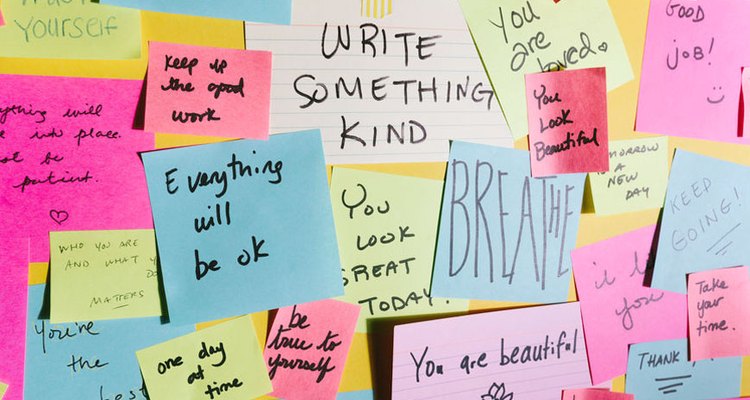
Practicing positive affirmations is an effective strategy to use in a variety of difficult situations. Grab a stack of sticky notes and a pen and write down some of your favorite motivational quotes, positive affirmations, or traits you like about yourself. Dr. Sherman says one of the best ways to get started is to create positive affirmations specific to you. And if you have trouble thinking of something, ask family and friends to describe you, Erinna says.
Once you've written down 10 to 15 notes, repeat the statements out loud (perhaps while looking in a mirror) to program them into your mind. To make this a more powerful positive thinking game, Dr. Sherman recommends saying your affirmations in the present tense. For example, “I am vibrant and radiant.”
Some other powerful affirmations to boost your self-esteem include, "I am more than enough," "I have the power to achieve my dreams," and "I accept and love myself just as I am."
Finally, place the notes around your home in places you'll see them regularly, such as on a mirror, the fridge, next to your reading lamp, or even on your computer keyboard. "These will be daily reminders of just how awesome you are," Erinna says.

Attia-Fotografie/Cultura/GettyImages
6. Pretend You're Talking to a Loved One
When you’re stuck on a negative thought about yourself, Dr. Sherman suggests imagining that there's a small child inside of you that is being told those negative things, then practice comforting the child. What would you say to a child or loved one if someone spoke to them that way? Just as you wouldn't want anyone saying hurtful things to a child or your best friend, you shouldn't let yourself trash talk yourself.
“Normally the thoughts or inner words that you say to someone else will be kind, comforting and compassionate, which helps you talk to yourself more that way,” Dr. Sherman says.
Related Articles

Inscription Ideas for Inside a Journal ...

How Can I Stop Feeling Insecure About ...

How to Distance Yourself From a ...

Nice Things to Write to Someone Who Has ...

Things to Do in Your Room When You're ...

How to Stop Acting Nervous When Someone ...

How to Get Closure After Someone's Death

How to Improve Your Self-Concept

How to Cheer Yourself Up

How to Live in Harmony with Others
Tips for Writing Belated Thank You Cards

How to Make Small Talk

How to Get Over Being Extremely Shy ...

How to Get Over a Deep Hurt

How to Overcome Mind Control & ...

How to Stop Craving Love
How to Tell Someone They're Arrogant

How to Stop Thinking About Someone ...

Sayings to Cheer Someone Up Who Has ...
How to Make a Grandparent Survival Kit
References
Writer Bio
Sara Lindberg, B.S., M.Ed., is a freelance health and fitness writer. She holds a Bachelor’s of Science degree in exercise science and a Master's degree in counseling. She’s spent her life educating people on the importance of health, wellness, mindset and mental health. She specializes in the mind-body connection, with a focus on how our mental and emotional wellbeing impact our physical fitness and health.