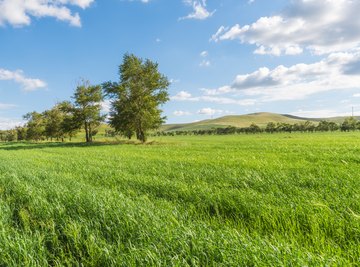
The grassland biome is an area of land covered by dominantly grasses. There are very few large shrubs or trees in this hot and dry climate. Grasslands are thought to have initially developed as a result of ancient forests dying out.
There are several dangers and threats to grasslands and the ecosystems within them that threaten the existence of animals and plants native to this area.
Fire and Other Natural Disasters in the Grasslands
While fire is necessary to the health of the grassland biome, it can be a danger to people living nearby. Without fires occurring at certain times of the year, tall-grass prairies would develop into deciduous woodlands. Fires usually happen during the dry season and benefit animal like birds, who can then feed on beetles, mice and lizards that were killed by the fire.
Fires also benefit the ground because roots that survive store nutrients and have the space to grow. Fire is a danger for people living close to grassland areas; a fire can spread to houses on the edge of the biome, and the smoke from a fire can cause health problems.
Besides fire, not many other classic natural disasters affect grasslands thanks to the flat, arid and hot climate. However, this hot and dry climate can produce severe windstorms. Windstorms can stir up dust that can choke animals living in that area. These strong wind gusts can rip up plant roots, disturb small organisms like insects and birds and cause significant damage to the ecosystem overall.
Global Warming
The change in the weather patterns due to global warming endangers the stability of the grassland biome. What separates a grassland biome from a desert one is its rainfall. Grasslands get up to 40 inches of rainfall a year; deserts get less than half that amount. Scholars believe that if the world’s temperature rises any further and rainfall changes, agricultural grasslands will become deserts.
Overgrazing and Crop Clearing
Another danger to the grassland environment is overgrazing and crop clearing. The natural grazing of animals helps the biome; grazing animals remove competitive plants and allow a diverse ecosystem. However, cattle from farms on grassland overgraze the land. They destroy the vegetation and the ground does not have enough time to recover.
Another danger to land is crop clearing. Grasslands are usually flat plains and are ideal for agriculture. Clearing too much of the land’s natural vegetation takes out the good nutrients in the soil.
Agriculture in Temperate Grasslands
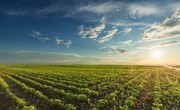
Grassland biomes are an ideal place for agriculture. Agriculture in temperate grasslands is particularly common. The soil holds a lot of nutrients and makes a good place for crops to grow. Having only one crop in a field at one time damages the soil; it needs a balance of nutrients.
This is also called monocropping. Planting a single monocrop aka one type of plant only will deplete the soil of nutrients that that plant takes up. Instead of those nutrients being balanced and replenished by other types of plants and organisms, they'll be continually used up and will over time deplete the soil entirely.
Farmers must then use damaging chemical fertilizers to replenish the soil. If farmers instead planted a natural variety of crops, they wouldn't need to disturb the environment with unnatural chemicals that are found in most fertilizers.
Pest infestation is another problem. In a natural grassland habitat, the pest population is low since there is little areas of vegetation and many predators. In agriculture grassland, the crops play host to pests, some of which carry diseases. Pesticides have to be used, which can cause an imbalance in the soil's nutrients.