Basic Parts of a Bulldozer & Its Functions
by Rick CarltonUpdated March 16, 2018
Bulldozers are large tracked vehicles, typically used in heavy construction. The name bulldozer comes from the name for 1800s field overseers who managed their men by applying a "dose of the bull," meaning in this case, the "bull" or whip. Over the years, the phrase was colloquialized in order to create the word bulldozer.
The Tractor

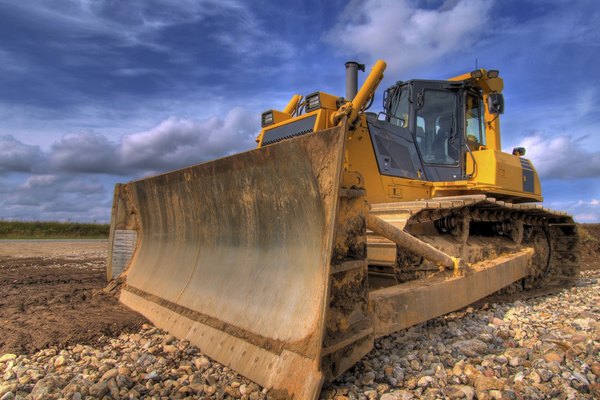
The tractor is the body of the bulldozer. It encompasses the cab where the controls are located. The controls are of the "stick" variety; these control the right and left track, along with various other similar controls that lift and/or articulate the blade and the ripper.
The Engine
Bulldozers are always high-powered diesels, mainly because of the torque necessary to move through very rough terrain.
The Tracks

Located on either side of the body, the tracks are made of heavy metal links that create powerful traction. The individual tracks are very wide, and added to the already large footprint of the body, a Bulldozer can move in, over, or through nearly any obstruction.
The Blade

The blade is located at the front of the tractor, and is able to lift up and down via hydraulic arms that are commanded from inside the cab.
The Ripper

The ripper is actually an option, as bulldozers don't typically come with this construction appliance. The name ripper describes what it does, which is to create enormous tears in the ground by clawing itself across the ground. This system is particularly useful for laying long lengths of underground pipe.
References
Writer Bio
Since 1984, Rick Carlton has authored more than 450 articles on the principles, application, analysis and deployment of interoperable enterprise technologies. Additionally, he has written more than 150 feature articles on aviation, auto and motorsports topics including work for The Auto Channel, "Automobile," "Flight Training" and "On-Track" magazine. He holds a Bachelor of Fine Arts in music from the University of Missouri at Kansas City.


