Shingles & Chest Pain
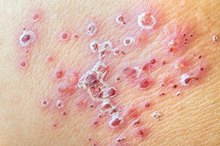
Shingles’ link with chest pain is in the initial stages of the disease, according to the Mayo Clinic staff. Shingles begins with a red, painful rash or series of blisters, often in a band from the back to the chest wall. Before the rash appears patients may feel pain, burning, numbness or tingling in that area.The pain can be intense and if it’s in the chest it can be mistaken for a heart-related condition, say clinic staff.
Virus
The shingles virus is the same as the chickenpox virus, the varicella-zoster virus. So anyone who has had chickenpox can develop shingles. It can lie dormant for years and activate when immune systems are low, from age, illness or medication, say Mayo Clinic staff.
Confusion
Shingles & Chest Pain
Learn More
Patients can confuse the onset of shingles with a heart attack because pain is usually the first symptom of the viral disease. It can be intense and if it is in the chest area, patients might think it’s part of a problem with the heart, or lungs or kidneys, according to the Mayo Clinic. “Some people experience shingles pain without ever developing the rash,” staff say.
Contagious
Shingles is one of the non-cardiac causes of chest pain the Mayo Clinic outlines (reference 2) and is contagious. The virus can pass to anyone who has not had chickenpox, usually from direct contact with the open sores. They will not get shingles as a result of that contact, say staff, just chickenpox.Once sores heal the patient is no longer contagious. Even so, warns the Mayo Clinic, chickenpox can be dangerous for newborns, pregnant women and anyone with a weak immune system and shingles patients should avoid them.
Considerations
Armpit Shingles
Learn More
Other non-cardiac causes of chest pain are heartburn–a burning sensation behind the breastbone (sternum) which usually follows a meal and lasts for several hours; pleurisy–an inflammation of the chest-cavity membrane which produces sharp chest pain, especially when coughing or inhaling; and costochondritis or the inflamed cartilage of the ribcage–pain may be sudden and intense and make patients think it’s a heart attack, although heart attack pain is usually more widespread.
Symptoms
Apart from the pain, shingles symptoms are fevers and chills, general aches, headache and tiredness.The Mayo Clinic recommends you contact a doctor if you even suspect shingles. Do not hesitate if the pain or rash is near the eyes. Not treating an infection there could mean permanent eye damage. If you, or someone in your family, has a weakened immune system, see a doctor at once, especially if the rash is widespread and painful, in the chest or not.
Related Articles

Shingles & Chest Pain
Learn More
Armpit Shingles
Learn More

Early Stages of Shingles
Learn More
The Side Effects of Shingles in the Elderly
Learn More

Pain in Lymph Nodes Shingles
Learn More

Shingles Symptoms: Nausea
Learn More

Back Pain From Shingles
Learn More

Symptoms of Head Shingles
Learn More
What Is the Incubation Period for Shingles?
Learn More
Can Shingles Be on Both Sides of the Body?
Learn More
References
Writer Bio
Geoffrey Darling has been writing since 1980. In 2007, he received an Ohio Senate award for contribution to the arts, recognizing his work performing in Ohio prisons. Darling also worked for the New Zealand government as the Minister of Energy's press secretary and edited three small community newspapers.