
Catastrophe Theory and Sports Psychology
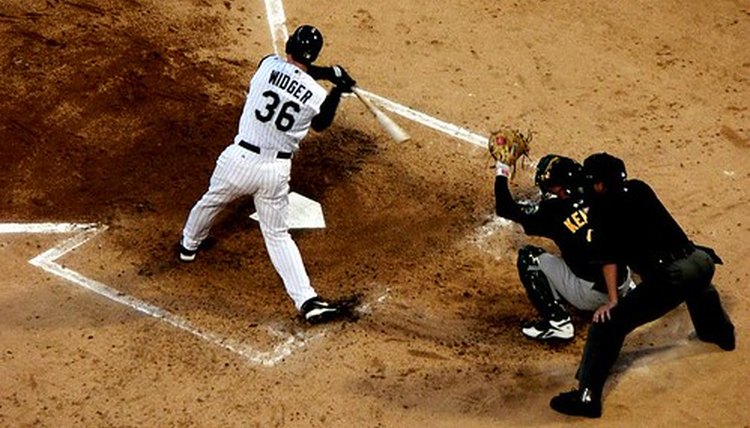
With the game tied in the bottom of the ninth inning, full count and bases loaded, the batter focuses on the pitch, ready to swing away … As the clock winds down, the kicker concentrates on the football, imagining it spiraling through the air between the two goal posts and scoring the winning field goal … Behind one stroke, she repositions her feet on the green and adjusts her grip on the club. She taps the golf ball, hoping to sink the putt on the 18th hole for the birdie and the win … But instead of victory, what happens to these athletes? Failure. The pressure seems insurmountable and they fall victim to what sports psychologists call the catastrophe theory.
Inverted U-Theory
To better understand the catastrophe theory, the inverted U-theory must be referenced first. Often credited to R.M. Yerkes and J.D. Dodson, the inverted U-theory explores the complex relationship between arousal and performance. It delves into the various factors and stimuli affecting a desired outcome. The theory indicates that an increase in arousal produces a positive effect on performance up to a certain point. If pushed beyond the acceptable boundaries a detrimental effect in performance occurs; the outcome depends on the intensity level of arousal. Sports psychologists apply the theory to the amount of stress and anxiety in athletes during competitions
Facts
The catastrophe theory proposes a relationship between the multiple levels of stress (arousal) that develop into anxiety within an athlete, and their influence during competition. According to J.G. Jones and L. Hardy in the Journal of Sports Sciences, when an athlete realizes that his capability will not meet his desired expectations and demands, or those of his team, anxiety occurs, thus dramatically affecting his performance. The catastrophe theory suggests that because the athlete went beyond the optimal point, his dramatic decline in performance, “the catastrophe,” is difficult to recover from, contributing to his continuing failure. However, Jones and Hardy state that “the original level of performance can only be regained if stress levels are considerably reduced to the point where the original performance curve was highest, that is, when the task was performed and capably handled.”
Types
Two types of anxiety-based models exist within the catastrophe theory: cognitive and somatic. The cognitive type of anxiety refers to worry, particularly an athlete’s concerns, expectations, negative inner dialogue or pessimistic visualizations. Somatic anxiety is characterized as the emotional component, with manifestations such as nervousness, or tension. The importance of understanding the stress models assists in evaluating and assessing the intervention process for a troubled athlete. According to Jones and Hardy, cognitive anxiety usually subsides with a cognitive approach, just as a somatic approach deals with somatic anxiety. But if both are present, the intervention strategy should focus on the more dominant issue.
Effects
The anxiety level within an athlete skyrockets at different points during competition, thus creating an imbalance, sometimes involving both cognitive and somatic states. Cognitive anxiety affects the mental component of performance. A typical action that was initially second nature to an athlete, such as shooting a free throw or striking a ball with a club, bat or racket, becomes increasingly difficult as the mind games negatively alter his rudimentary skills. Somatic anxiety affects physical performance by manifesting itself through biological symptoms such as increased heart rate, shortness of breath or “butterflies in the stomach.” Thus the errors in judgment during competition do not occur because he is overanalyzing his technique, but because he cannot physically perform the task at that time and is more concerned with consequences or injury.
Prevention/Solution
Sports psychologists create specific improvement strategies addressing the cognitive or somatic anxiety that hampers an athlete’s peak performance. In diagnosing the problem, psychologists consider performance, history, personal background, physical condition and other outside variables negatively affecting him during competition. Cognitive approaches include altering the athlete’s state of mind and shifting the negative thoughts and beliefs toward a more positive and realistic outlook. According to Applied Sport Psychology: Personal Growth to Peak Performance Cognitive Techniques for Building Confidence and Enhancing Performance, by N. Zinsser, L. Bunker and J.M. Williams in 2001, modifying the thought process restores the balance, thus enhancing performance and allowing athletes to recover from the “catastrophe.” The somatic approach uses relaxation techniques, such as deep breathing and meditation, to ease tension and lessen the effects of physiological stressors.
References
- Journal of Comparative Neurology and Psychology. The Relation of Stimulus to Rapidity of Habit Formation; R.M. Yerkes and J.D. Dodson; 1908
- Journal of Sports Sciences. Stress and Cognitive Functioning in Sport; L. Hardy and J.G. Jones; 1989
- Competitive Anxiety in Sport. R. Martens, R.S. Vealy, and D. Burton; 1990
Writer Bio
Anel Laj began her professional writing career more than 10 years ago as a sports journalist for the Los Angeles Daily News. Currently, she is a freelance writer based in Los Angeles. Laj received her Bachelor of Arts in mass communications from UC Berkeley. She earned her Master's in Professional Writing from the University of Southern California.