Although mold and fungus are related – the former is actually a subset of the latter – the terms cannot be used interchangeably. Each has its own distinct characteristics, features and functions. Despite the many dangers associated with molds and fungi, each also offer a surprising number of benefits to humans and ecosystems.
Features
Fungus is a microscopic substance that exists in the air around us all the time. It is neither plant nor animal, nor a type of bacteria – it's a separate type of living organism that occupies its own kingdom of classification.
Mold is one type of fungus. It can measure from two to 10 microns in diameter, making it virtually invisible to the naked eye. When multiple mold spores grow close together they become visible as they spread rapidly across a surface.
Types
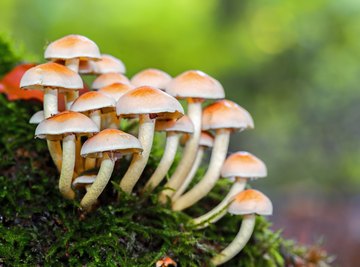
There are well over 200,000 species of fungi, including mold, yeast, mushrooms, lichen and truffles. Depending on the weather and moisture levels, a single type of fungus may be able to morph into different species, or take on characteristics from multiple types.
More than 100,000 mold species have been identified by scientists. Molds are generally categorized in one of three ways. Mold may be allergenic, which means it is unlikely to cause illness (though it may aggravate mild allergies); pathogenic, which means it can cause infection in those with compromised immune systems; or toxigenic, which means it is toxic to all who come in contact with it.
Growth
Fungus spores may look like plants, but they cannot produce their own food by performing photosynthesis. Instead, they absorb moisture and nutrients from other sources in order to survive and reproduce. Contrary to popular belief, fungi can grow and thrive in a wide range of temperatures, light levels and humidity levels.
Mold growth begins when a single spore of fungus lands on an organic surface. This includes all biodegradable materials, ranging from paper to leather. As the mold absorbs moisture in the air, it swells in size to form a thin thread known as a hyphae. The hyphae quickly spread and extend across the surface, assuming conditions are sufficient for growth. Mold grows best in dark, damp conditions.
Benefits
Fungi and molds offer many benefits to humans and other organisms. They are responsible for breaking down biodegradable products to return usable nutrients to the earth or the food chain. They also form symbiotic relationships with many plants and insects that are critical for the survival of many species.
Fungi and molds are also instrumental in making many foods: mushrooms are fungi, and fungi are responsible for beer, cheeses and even chocolate. In the case of chocolate, the fungi are used to ferment cacao beans to make them sweeter and more palatable to humans. Finally, molds and fungi are used to make modern medicines, most notably penicillin, which is made from mold.
Drawbacks
While these organisms offer many benefits, they can also cause problems for humans and ecosystems. Both mold and fungus can be parasitic to food supplies and some types of plants. Fungus can cause illness and disease in humans and animals, and are often associated with infections in the skin, hands and feet. Of all 100,000 species of mold, only about 80 are considered harmful to humans. These 80 species are linked to many different allergies and respiratory problems, however. Mold growth can also damage buildings, discolor possessions, and cause a musty, unpleasant odor.
References
About the Author
Emily Beach works in the commercial construction industry in Maryland. She received her LEED accreditation from the U.S. Green Building Council in 2008 and is in the process of working towards an Architectural Hardware Consultant certification from the Door and Hardware Institute. She received a bachelor's degree in economics and management from Goucher College in Towson, Maryland.