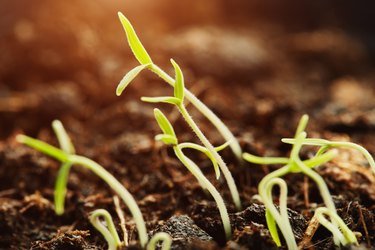
A rose is a rose by any other name, but does it grow by seeds or some other way? Some plants reproduce by seeds, while others are seedless. Some seeds travel on the wind unassisted, and other seeds need help from animals, humans, and other living carriers to hitch a ride by attaching to fur or fabric, or utilizing other ways that assist the tiny seeds in traveling to places far away. Seedless plants have devised many atypical and interesting ways to continue the species. It's the reproduction methods that make the difference in seedless versus seed plants.
What Are Seed Plants?
Video of the Day
Seed plants reproduce sexually by seeds that are produced from fertilized flowers. A flower is successfully fertilized when it's pollinated by the wind or living pollinators such as bees, bats, butterflies, and other living agents. Seed-bearing plants differ from seedless plants because they do not require water for fertilization to occur, although they do need water to germinate (sprout). Some seeds can last for many years before sprouting, making them a viable resource to carry and sow in other regions long after they have left the parent plant.
Video of the Day
Many seed plants can also reproduce asexually -- no seeds needed -- through numerous methods, some of which are cuttings, division, rhizomes, and layering. In asexual reproduction, the resulting plant is a clone of the parent plant. When plants reproduce sexually, the resulting second-generation plants that grow from seeds are not clones of their parent plants and may exhibit different characteristics.
What Are Seedless Plants?
Seedless plants produce spores instead of seeds, and they can be vascular, meaning they retain water in the tissue of the plant, or they can be non-vascular. Non-vascular seedless plants include mosses, hornworts, and liverworts. Non-vascular plants require water to thrive because they don't have the means to retain water on their own. Many of these plants grow well in water or near water, and they propagate quickly. In home gardens, they are often placed in containers or put in containers before being planted in the landscape in order to keep their spreading growth under control.
Vascular seedless plants include ferns, horsetails (also called Indian puzzle plant) and clubmosses. Horsetails essentially are above-ground stems that grow from rhizomes, which are modified underground stems. Vascular seedless plants differ from non-vascular seedless plants because they have an internal transport system that allows the movement of water and nutrients through the plant.