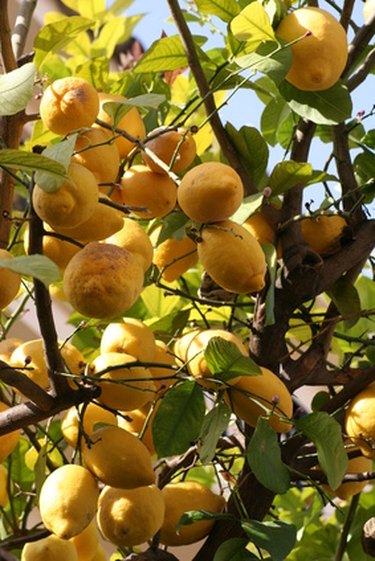
Citrus trees are susceptible to a wide variety of pests. Fortunately, you do not need to rely on harsh chemicals to effectively protect against these harmful insects. Start with the least harmful techniques; you always have the option later of moving your way up to more stringent methods to rid your citrus trees of pests, if needed.
Good Orchard Hygiene
Video of the Day
Maintaining a hygienic orchard means picking up dropped fruit before it rots and keeping yard waste away from your citrus trees. This behavior ensures that pests cannot feed on dead leaves and other debris. Once they find the dead fruits, pests move on to the healthy fruit still on the citrus trees. Keep the grass around your citrus trees short so the bugs and pests do not have any place to live and hide.
Video of the Day
Beneficial Insects
While many of the bugs in your citrus orchard want to eat your fruits, there are some beneficial insects. Ladybugs, for example, eat mealybugs, scale and aphids, all of which are harmful to your citrus trees. Praying mantis eats grasshoppers. Allow these insects to do their work, which means less work for you in ridding your citrus trees of pests.
Remove by Hand
Some pests that feed on citrus trees are large enough to be removed by hand. The orange dog caterpillar, for example, loves to feed on citrus trees but can be easily plucked from them. As part of maintaining good orchard hygiene, monitor the trees carefully. Make removing larger pests part of your routine.
Garlic
Many pests do not like the scent or taste of garlic,which works as an effective repellent of aphids and other harmful insects. Bury cloves of garlic around the base of your trees, or make a garlic spray. To make a garlic spray, add three garlic bulbs to half a blender of water and liquefy. Strain the mixture and add enough water to make 1 gallon of concentrate. Add 1/4 cup of garlic concentrate to a bucket and add enough water to make 1 gallon of garlic spray. Spray on the affected trees. Be careful when using a garlic spray, as you can burn your citrus trees if you use too much.
Insecticidal Soap
Insecticidal soap is a refined version of regular liquid soap. It is effective as a wash for sooty mold and other debris that can build up on citrus trees. Mix 1 to 2 ounces with enough water to fill a 1-gallon sprayer, and spray your citrus trees. Make sure to coat all surfaces of the tree, leaves and fruit. Allow the soap to stand on the trees for 30 minutes, and then spray the trees again with clean water. It is best to spray insecticidal soap early in the day to give the trees time to dry.