
How to Measure Body Fat Using a Tape Measure
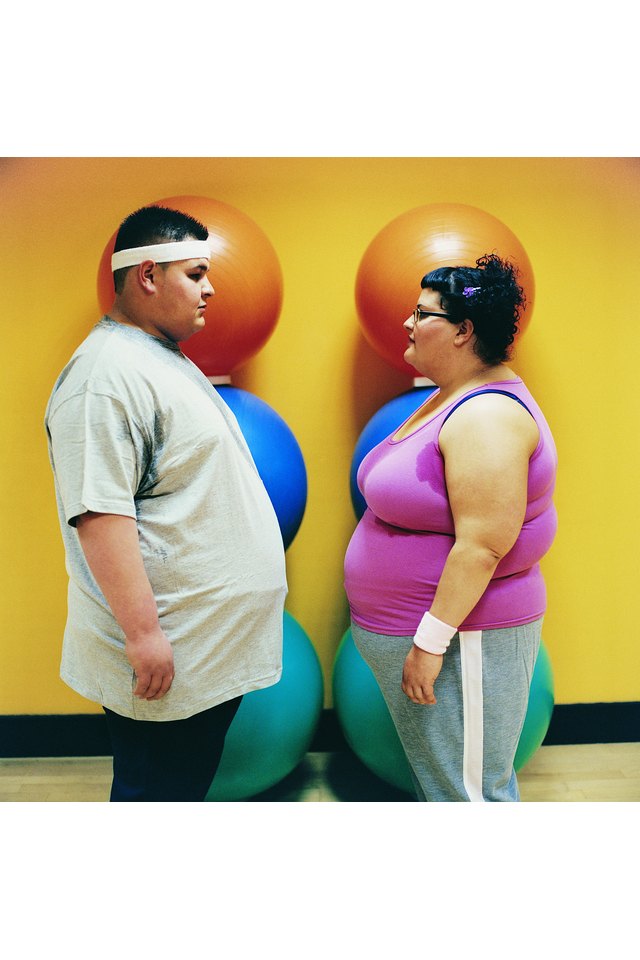
Percent body fat measures the amount of your body weight that includes fatty deposits. This metric is commonly used to measure obesity, because it separates weight into fat and lean mass. A certain level of body fat is healthy and necessary, because it provides insulation and emergency fuel for the body. However, more than 31 percent body fat for women and 24 percent for men is considered unhealthy, according to the American Council on Exercise. Among the many methods of measuring body fat, one of the most accessible involves using a tape measure.
Women
Measure your body weight using a weight scale and record the result; for example, 140 pounds.
Wrap a cloth tape measure around your wrist at its thickest point and record the girth; for example, 7 inches.
Wrap the tape measure around your waist, level with your navel and record the result; for example, 28 inches.
Measure around your hips at the widest point and record the result; for example, 38 inches.
Measure around your forearm at the fullest point and record that number; for example, 10 inches.
Enter your measurements in the following formula to calculate fat mass:
Fat Mass = Weight - [(Weight x 0.732) + 8.987 + (Wrist / 3.14) + (Waist x 0.157) + (Hip x 0.249) + (Forearm x 0.434)]
In the example, the formula would break down as follows:
Fat Mass = 140 - [(140 x 0.732) + 8.987 + (7 / 3.14) - (28 x 0.157) - (39 x 0.249) + (10 x 0.434)] Fat Mass = 140 - [102.48 + 8.99 + 2.23 - 4.4 - 9.71 + 4.34] Fat Mass = 140 - 103.93 Fat Mass = 36.07
Divide your fat mass by your body weight and multiply by 100 to calculate percent body fat. In the example, 36.07 divided by 140 times 100 calculates a percent body fat of 25.76 percent.
Men
Weigh yourself on a weight scale and record the result; for example, 220 pounds.
Wrap a tape measure around your waist and record the amount; for example, 44 inches.
Enter the results in the following formula to calculate fat mass:
Fat Mass = Weight - [(Weight x 1.082) + 94.42 - (Waist x 4.15)]
In the example, this formula calculates fat mass as follows:
Fat Mass = 220 - [238.04 + 94.42 - 182.6] Fat Mass = 220 - 149.86 Fat Mass = 70.14
Divide your fat mass by your body weight. Multiply by 100 to calculate percent body fat. In the example, 70.14 divided by 220 times 100 calculates a percent body fat of 31.88 percent.
References
Writer Bio
C. Taylor embarked on a professional writing career in 2009 and frequently writes about technology, science, business, finance, martial arts and the great outdoors. He writes for both online and offline publications, including the Journal of Asian Martial Arts, Samsung, Radio Shack, Motley Fool, Chron, Synonym and more. He received a Master of Science degree in wildlife biology from Clemson University and a Bachelor of Arts in biological sciences at College of Charleston. He also holds minors in statistics, physics and visual arts.