Types of Ice-Skating Blades

Types of Ice-Skating Blades thumbnail
Types of Ice-Skating Blades

Ice skating was invented in Finland in 3000 B.C., According to National Geographic. The first ice skates were long, thin bones tied to the skater's feet with leather strips. These rudimentary skates helped the Finnish people to conserve energy as they crossed the many ice-covered lakes in their country.

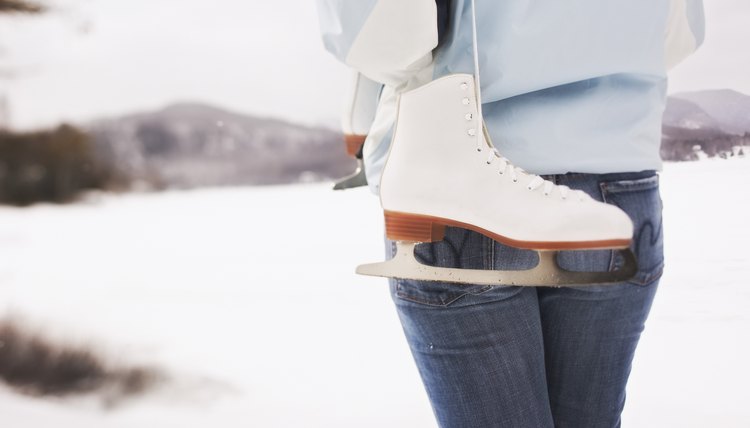
Modern ice skates consist of a stiff leather boot attached to a blade made from carbon or stainless steel. The type of blade that you would use depends on the type of ice skating that you plan on participating in.

  1. How They Work

    • When you step on the ice with skates on, the metal in the blade causes the ice to melt slightly. This allows the blade to glide on the water, which quickly turns back to ice. The size and configuration of an ice skate blade has a direct impact on how fast you can move and how well you can maneuver on the ice. Longer blades create more water, which allows you to move faster.

    Figure Skating Blades

    • Figure skating blades are wide with a crescent-shaped hollow ground into the bottom of them. If you run your finger along the blade, you can feel the two edges on either side of the hollow called the "inside edge" and the "outside edge." These edges help the blade to grab the ice when performing intricate movements.

      They also have a gentle contour on the bottom called the "rocker." Figure skating blades have a notched toe on them called the "pick" or "toe pick," which allow you to perform jumps like the flip or the Lutz where the pick is dug into the ice and used to propel you upwards.

      There are two figure skating blade configurations called "freestyle" and "dance" or "patch" skates. Freestyle skates have a higher, sturdier boot to support your ankle when performing jumps. The blades are slightly longer than the boot at the heel and the pick is larger and more pronounced.

      Dance skates are used in both ice skating dances, such as the Waltz or the Tango, as well as patch. Patch is an ice skating session where you perform many kinds of figure eights on the ice. It received its name because before each session, the ice rink is sectioned off into approximately 20 patches intended for use by one skater each.

      Dance or patch boots are cut slightly lower than freestyle boots and are made of thinner leather. This allows the ankle to bend more during the intricate dance movements. The hollow on the bottom of the blade is more pronounced, allowing you to take deeper edges, and the pick is much smaller.

    Hockey Blades

    • Hockey blades are thinner than figure skating blades, are flat on the bottom and curved at the ends. The flat bottom allows you to move faster since more metal is making contact with the ice, thereby producing more water. Hockey skate blades are the same length as the boot, but have no picks.

      Goalie skates are made specifically to help you keep a low center of gravity and to protect your ankles from the force of a flying hockey puck. The boots are normally encased in a hard plastic around the ankle, toe and heel. The blades have less of a contour to them, are slightly longer than normal hockey skates and are set closer to the boot.

    Speed Skates

    • Speed skates are also known as racing skates. Unlike figure skating blades, there is no hollow. The bottom is set perfectly flat and level so that they do not cut into the ice. Since racers need to get as up as much speed as they can, speed skate blades are normally several inches longer than the boot. These longer blades create more water when coming in contact with the ice allowing you to move much faster. Speed skate blades have no toe pick.

    Touring Skates

    • Touring skates are also known as Nordic skates. Like speed skate blades, they are much longer than your foot, have no toe pick and no hollow, but they do have a slight contour or rocker.

      Unlike other types of skates, these blades are not attached to skating boots. They come with bindings that you would attach to your ski boots. This allows them to be taken on and off easily when you switch from skating across a frozen lake to skiing on the snow.

Related Searches:

References

  • Photo Credit Photograph by Lena_Ni/Flickr.com

Comments

You May Also Like

  • Types of Stretches Before Figure Skating

    When we view a professional figure skater, we are often mesmerized by the grace and poetry that is displayed. The music, costuming...

  • The Types of Skate Sharpeners

    The Types of Skate Sharpeners. Skate sharpening is an important part of preparing to hit the ice. There are different ways to...

  • Different Types of Riedell Ice Skates

    Different Types of Riedell Ice Skates. Riedell provides an entire catalogue of its skates. The company categorizes its skates into five lines:...

  • Types of Replacement Hockey Blades

    Types of Replacement Hockey Blades. The blade is the bottom of the hockey stick that you use to control and shoot the...

  • How to Remove Rust From an Ice Skate Blade
    Prevent rust from forming on your ice skate blades. Carefully remove snow with your hands or rag and then wipe down the...

  • Ski Blades Vs. Skis

    In addition to the many types of "traditional" skis--alpine, freestyle and parabolic, just to name a few--skiers today also have the option...

  • Types of Roller Blades for Skate Parks

    Feel like a change in your life is needed? Or maybe you are just an adrenaline junkie looking for new adventures to...

  • Types of Roller Blades

    Types of Roller Blades. Roller blades --- also known as in-line skates --- represent the new generation of roller skates, used for...

  • About Ice Skates

    Ice skates are boots made of leather, plastic or sometimes nylon with sharpened metal blades attached to the bottom. They have been...

  • How to Replace Skate Blades

    Blades that are in poor condition can slow your skill progression and take the fun out of ice skating. Worn or damaged...

  • How to Hollow-Grind Clipper Blades

    Hollow-grinding blades is a different process from simply sharpening or honing them. Most knives have wedge-shaped edges, but grinding produces a concave...

  • How to Profile Hockey Skate Blades

    Hockey skate blade profiling or contouring shapes the rocker profile of the skate blade to suit the preferences of the skater. A...

  • Hockey Vs. Figure Skates

    Hockey players need to be able to stop, start and turn quickly and in a tight area. Because of this, the blades...

  • What Materials Are Used to Make Hockey Skates?

    What Materials Are Used to Make Hockey Skates?. The first ice skates were made from the bones of animals, a metal spike,...

  • Facts About Ice Skating

    Ice skating is a popular recreational and sporting activity that involves movement over ice through the use of ice skates. A number...

  • How to Draw Roller Skates

    Though the first actual roller skate was likely invented in 1760, it did not include brakes, and its inventor, Joseph Merlin of...

  • How to Sharpen Ice Skate Blades

    Skating is a classic winter pastime for kids and adults alike. There's nothing like lacing up a pair of skates and gliding...

  • Ice Skate Sharpening Tools

    Ice Skate Sharpening Tools. Speed skates, hockey skates and figure skates all must be sharpened occasionally to provide the best performance. Keeping...

  • How to Protect Skate Blades

    There's nothing quite like the sound of a blade cutting across a rink, throwing ice dust in its wake. Ice skaters understand...

  • How to Rollerblade With Nordic Walking Sticks

    Nordic walking sticks are a great inclusion into an exercise routine to achieve a full body workout with ease. They especially are...

Related Ads

Featured