
Role of Nucleic Acids

Role of Nucleic Acids thumbnail
Role of Nucleic Acids

Nucleic acids, more commonly known as DNA and RNA, are the genetic information banks of the cell. They are involved in repair processes and in the reproduction processes of a cell. The codes contained inside these materials are responsible for maintaining the life of an organism, as well as in supporting its daily functions.

  1. Identification

    • The primary roles of nucleic acids are to store a cell's genetic information and transfer this information to other areas of the cell. This transfer of information is what directs a cell to manufacture the proteins needed for it to function. DNA and RNA molecules provide a way to code this information within their structures as well as provide decoding instructions for the cell's use. Once this information is decoded, certain organisms within the cell translate the protein synthesis instructions needed for cell repair and maintenance. In addition, DNA molecules provide a means for replicating or duplicating their structures for cell division purposes.

    RNA Roles

    • RNA nucleic acid roles are designed to implement the genetic instructions contained in the DNA materials. To do this, RNA molecules are positioned in strategic areas throughout the cell's cytoplasm, while DNA molecules reside in the cell's nucleus. Three different types of RNA--mRNA, rRNA, and tRNA--coordinate the process of converting genetic instructions into actual cell processes. The nucleic acids also help with coordinating the protein synthesis processes that provide the cell with energy and nutrients.

    DNA Roles

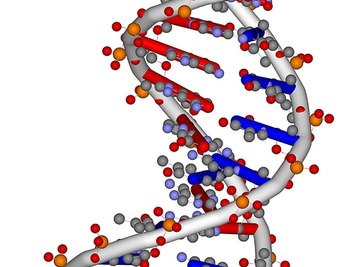
    • DNA nucleic acids have a well-defined structure made up of two strands connected by nucleotides and hydrogen bonds. The nucleotides have their own chemical structure, with each containing a sugar, a phosphate group and a base material. The order in which nucleotides are arranged on a DNA strand determines the code for that strand. In the process of dividing, each strand is copied individually after the DNA molecule splits in half. The result is two daughter cells with identical genetic information. This process is called "DNA replication."

    Communication Roles

    • In the process of replicating new strands, DNA molecules also manufacture corresponding RNA strands. The mRNA, or messenger RNA strands, are created to carry the cell's genetic instructions. The rRNA, or ribosomal RNA strands, situated in the cell's cytoplasm, receive these instructions and then translates them into cell processes. The tRNA, or transfer RNA strands, then carry out the actual instructions contained in the DNA code through protein synthesis. The making of proteins requires tRNA to regulate a series of chemical processes using the cell's amino acid materials.

    Protein Synthesis

    • The protein synthesis process uses the coded information provided by the nucleotides to assemble different forms of protein out of amino acid materials. There are 20 different amino acids present in the body. Based on the information contained in the tRNA molecules, amino acid chains are manufactured according to the genetic instructions for the cell. Each amino acid chain represents a type of protein molecule. As cell types can vary depending on the part of the body, the genetic instructions are designed to provide a cell with the instructions and materials it needs to maintain its specific area of the body.

Related Searches:

References

Resources

  • Photo Credit Ghutchis/flickr.com

Comments

You May Also Like

  • Role of Covalent Bonds in Nucleic Acids

    Deoxyribonucleic acid, or DNA, is a long and complex molecule but a stable one, held together by covalent bonds--the sharing of electrons...

  • Definition of Nucleic Acids

    Nucleic acids are some of the most significant molecules found in living organisms. Their role is to store and transmit genetic information...

  • Sources of Nucleic Acid

    Nucleic acid---and ribonucleic acid (abbreviated RNA) in particular---is an important part of your body's chemical makeup. RNA has regulatory and immune-enhancing ...

  • Structure & Function of Nucleic Acids

    The two natural types of nucleic acids are deoxyribonucleic acid (DNA) and ribonucleic acid (RNA). In animals, DNA forms a double helix...

  • Structure of Nucleic Acids

    Nucleic acids are polymers (chains) of nucleotides. The most common nucleic acid chains are RNA and DNA. These structures are the essential...

  • Nucleic Acid Facts

    Comments. You May Also Like. Proteins, Carbohydrates, Lipids & Nucleic Acids Information. Proteins, carbohydrates, lipids and nucleic acids are important components of...

  • Nucleic Acid Functions

    Nucleic acid is the chemical compounds that make up a cell's genetic information. Deoxribonucleic acid (DNA) and ribonucleic acid (RNA) are the...

  • What Is Protein Purification?

    Protein purification is the term for a series of processes carried out in a laboratory that isolate a single type of protein...

  • Nucleic Acids in Human Body Systems

    The nucleic acids most prominent within the human body system are DNA and RNA. These materials are responsible for maintaining and reproducing...

  • Foods That Contain Nucleic Acids

    Foods That Contain Nucleic Acids. Nucleic acids are complex organic substances---comprised of chains of nucleotides---that occur in all living cells. Two of...

  • Nucleic Acid Metabolism

    The human body's most basic metabolism processes take place at the cellular level. Nucleic acids hold the fundamental blueprints on how these...

  • Role of Kidney in Acid Base Balance

    The acidity or alkalinity of our cells and fluids govern what metabolic activities take place inside our bodies and determine how effectively...

  • What Are Examples of Nucleic Acids?

    What Are Examples of Nucleic Acids?. Johann Friedrich Miescher discovered DNA in the nineteenth century. He called it nuclein because he found...

  • Nucleic Acid Tutorial

    Nucleic acids are one of the main building blocks of human and animal life. They exist in all living things. Discovered by...

  • What Is the Importance of Nucleic Acids?

    Nucleic acids are vital for cell functioning, and therefore for life. There are two types of nucleic acids, DNA and RNA. Together,...

  • Use of Nucleic Acid

    According to the History of Nucleic Acids, nucleic acids (the main players in the protein synthesis in living organisms) were first discovered...

  • Biological Importance of Nucleic Acids

    Nucleic acids carry genetic information within their structure. All living things have some form of nucleic acids, which allow for the translation...

  • Components of Nucleic Acids

    Components of Nucleic Acids. Nucleic acids are often called "the building blocks of life." It's an apt title considering that DNA contains...

Related Ads

Featured