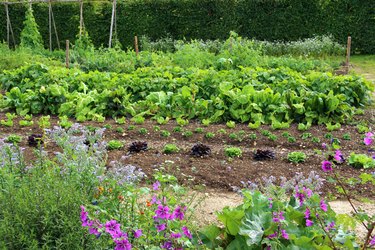
Knowing when to plant your vegetable garden ensures a healthy growth cycle and harvest no matter where you live. Different areas have much different planting times. Michigan gardeners, for example, have cold winters and sometimes late springs, depending on which part of the state they live in. Timing for warm-season, cool-season, and tender crops in a Michigan vegetable garden varies greatly and relies heavily on soil temperature and frost dates.
Tip
Cool-season crops can be planted at the end of March or beginning of April in Michigan. Warm-season crops should wait until all threat of frost has passed with Memorial Day being a safe planting date.
Video of the Day
Warm-Season vs. Cool-Season Crops
Not all vegetable crops require the same season or temperatures to grow vigorously, nor are they all equally tolerant of frost, shade, heat, or snow. Warm-season crops are those that grow best during the warmer parts of the season. These include sweet corn (Zea mays var. saccharata), cucumbers (Cucumis sativa), tomatoes (Solanum lycopersicum), peppers (Capsicum spp.), and melons (Cucumis melo). All of these are tender crops that are susceptible to frost damage or even death by frost.
Video of the Day
Cool-season vegetables, on the other hand, prefer the cooler temperatures of fall and spring. Many are frost-tolerant, some to temperatures as low as 20 degrees Fahrenheit. Onions (Allium sepa), peas (Pisum sativum), spinach (Spinacia oleracea), leafy lettuces (Lactuca sativa), and cole crops (Brassica oleracea) are all cool-season vegetables. Cole crops include kale (Brassica oleracea var. sabellica), broccoli (Brassica oleracea var. italica), cauliflower (Brassica oleracea var. botrytis), kohlrabi (Brassica oleracea gongylodes group), and cabbage (Brassica oleracea var. capitata). Cool-season vegetables tend to bolt, become tough or woody, or have otherwise adverse flavors or textures when they're grown in summer.
Last Frost Dates
Many cool-season vegetables can handle planting times as early as the soil thaws and is workable, usually late March through early April in southern Michigan and three weeks later in the most northern parts. Tender, warm-season crops, however, require much warmer soil temperatures and must wait until the danger of frost has passed. Planting on Memorial Day is a good rule of thumb, but frost dangers occur frequently throughout much of Michigan in spring. If you plant around mid to late May, keep an eye on the weather forecast and cover your seedlings or transplants with row covers if temperatures will fall below 40 degrees F.
Checking Soil Temperature
Checking the soil temperature helps ensure your ground is ready for various types of seeds. Different crops grow best at different soil temperatures. Purchase a soil thermometer from your local hardware store or garden center. You can also use any thermometer that has the capability of reading temperatures at different depths.
Many tender warm-season crops require a soil temperature of between 64 and 75 degrees F, while tomato plants and corn grow well when planted at around 55 degrees F. Cold-tolerant crops will germinate and grow at a soil temperature of around 45 degrees F.
Days to Harvest
For fall planting, knowing the days to harvest, sometimes called days to maturity, of each crop will help you determine when to plant the seeds. The days-to-harvest timeframe is listed on each seed packet and determines how many days a seed takes to mature and produce harvest-ready fruit. For warm-season crops with short growing times, you can often plant twice during the summer. Subtract the days to harvest from your last average fall frost date to give you a planting date for frost-tender vegetables.
- Texas A&M AgriLife Extension: Check Soil Temperature
- Today's Homeowner: How to Measure Soil Temperature for Planting
- Michigan State University: How to Plant Vegetables Tip Sheet
- Michigan State University: Gardening in Michigan: Vegetable Gardening -- Getting Started
- Michigan State University: Gardening in Michigan: MSU Extension’s Plant and Grow Tips
- Michigan State University Extension: Garden Calendar Tip Sheet