Jupiterimages/Comstock/Getty Images
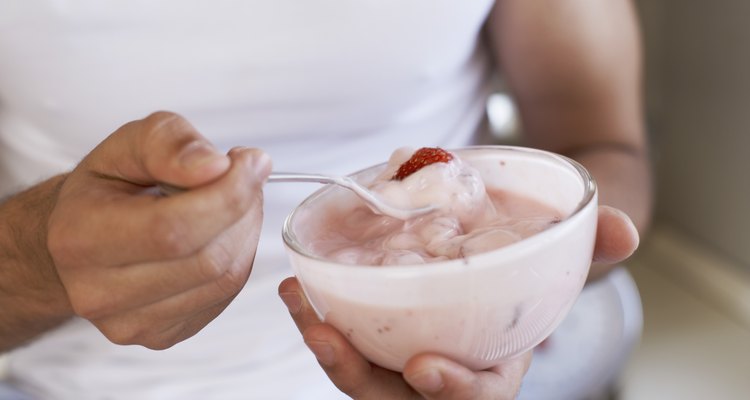
Because of their diversity and similar origins, yogurt and curd are commonly mistaken as one and the same. This pair of milk-born gastronomical delights diverges in composition. Both appear around the globe—as health foods, cuisine staples, desserts, drinks and even beauty products.
The Facts

Jupiterimages/Comstock/Getty Images
Yogurt and curd are dairy products. Yogurt, though, results from milk fermentation—converting a substance into acid under anaerobic conditions—whereas curdling, or coagulation, is when milk sours or is treated with either enzymes or edible acids like lemon juice. Lactose, the sugar in milk, becomes lactic acid when it ferments. Lactic acid gives yogurt its distinct tangy flavor. Yogurt’s health benefits enhance its popularity. Curd makers often employ the enzyme rennet, other bacteria or the acid vinegar.
Types

Jupiterimages/Photos.com/Getty Images
Many yogurts are made with homogenized milk. Homogenization breaks up the fat in milk, ensuring the fat (aka cream) distributes evenly throughout. Nonhomogenized yogurts form a cream that rises to the top and are aptly dubbed cream-top yogurts. Strain yogurt through a filter to remove the liquid (whey) and make thicker varieties. One strained version, French- or Swiss-style yogurt, is synonymous with custard-style. Yogurts with active strains contain probiotics. Health enthusiasts indulge in frozen yogurts, and across the globe, yogurt lovers drink it in beverage form.
With curds, you generally drain off the whey. In some cases, notably cottage cheese, you leave some of the whey in the mix. So Little Miss Muffet may have been munching on cottage cheese when that spider paid her a visit. Curds made of buffalo milk have a higher fat content, are thicker and are traditionally used in desserts. Proper curds, in some regions, squeak against your teeth when you eat them.
If you’re lactose intolerant, you don’t have to skip yogurts—or curds, technically. Soy yogurt, made from soy milk, is nondairy. Consistency defines curds; so, with a modifier, the term can be applied to other products altogether. Common examples include curdled eggs, bean curds and lemon curds.
Geography
Jupiterimages/Photos.com/Getty Images
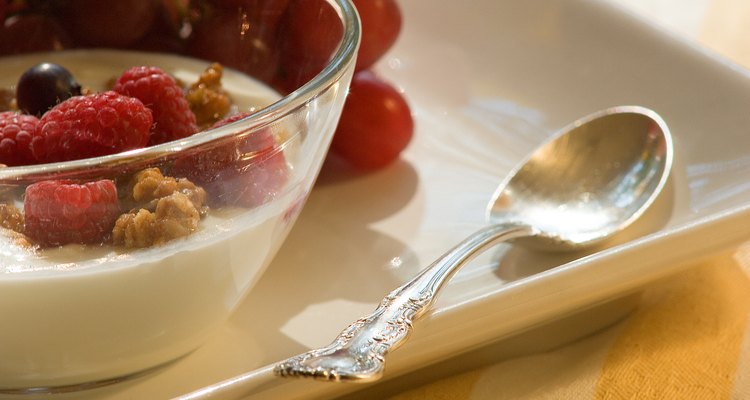
Visit most grocery stores in North America and you'll find a dairy aisle brimming with myriad yogurt flavors. Take a global view and discover yogurts in most every variety your palate can conjure. Typical North American producers feature yogurt flavored with fruit or jam to offset its tart taste. In Arab countries, a strained yogurt called labneh is used on cucumber and olive sandwiches or cured into a salty cheese called shankleesh, particularly popular in Lebanese cuisine. Mishti dahi, an East Indian dessert, features a thick, sweet yogurt. Yogurt popular in Greece is triple-strained. This thick variety is a main ingredient in tzadziki, a dip served with gyros. The Caucasus gave the world kefir, authentically a slightly alcoholic beverage, which can be a milk replacement. Drink cold ayran in Turkey. Find juju dahu in Nepal, zabady in Egypt, raita in southern Asia and a salty yogurt called jameed in Jordan.
Curd, too, is geographically diverse. Soft, white and unsalted, quark hails from Eastern Europe, where it’s served fresh on sandwiches and salads. Paneer, an un-aged Persian cheese that doesn’t melt, is popular in Indian gastronomy and found throughout South Asia and the Middle East. Curd enjoys popularity in France, Sweden, French-speaking regions in Canada and the northern United States, especially Wisconsin.
Health Benefits

Digital Vision./Photodisc/Getty Images
Among yogurt’s health benefits, varieties of yogurt with active cultures provide bacteria good for the digestive system and reduce the risk of vaginal infections. Look for the collective term probiotics. In the intestinal tract, the same bacteria promote healthy cell turnover and prevent harmful organisms from growing. Health practitioners encourage yogurt for those with irritable bowel syndrome, constipation, inflammatory bowel disease, colon cancer and diarrhea. Yogurt offers a combination of vitamin D and calcium that makes it great for bone health and a possible preventer of osteoporosis. Recent studies have found a correlation between low-fat milk intake and reduced risk of high blood pressure. Health experts tout both curd and yogurt as immune system boosters and beneficial for those seeking lower cholesterol. Paneer is particularly rich in protein. And yogurt isn’t just for consumption; women in India use it to condition and promote silky, healthy hair.
Misconceptions
Eising/Photodisc/Getty Images
Many sources allege the only difference between yogurt and curd is nominal—what’s called curd in India is yogurt elsewhere. This facet holds that plain curd will work as a substitute in recipes that call for plain yogurt. Not so. Here’s where the confusion lies: In India, curds is used to mean yogurt, a common meal finisher, along with buttermilk. A closer substitute would be sour cream. Sour cream, however, is much fattier and doesn’t offer the same health benefits. Another misconception holds that the difference depends on milk type, the belief being that curd comes from buffalo milk. Buffalo milk is used in some parts of India to make curds.
Related Articles

Sources of Calcium in Indian Food
Top 10 Best Tasting Protein Shakes

Cheeses Similar to Feta
What is Healthier: Greek Yogurt or ...
Facts About Yoplait Yogurt
What Is Animal Rennet?
Substitute for Curd

Kefir Substitute
Whole Milk Vs. Lactaid Milk

A Substitute for Sour Cream in Chicken ...
Feta Cheese Nutrition
How Much Fat Is in Feta Cheese?

Aged Cheeses That Do Not Melt
Is Allantoin a Relative of the Lanolin ...
What Makes Cream Liqueur Curdle in ...

Substitute for Heavy Whipping Cream in ...

Greek Yogurt as a Replacement for Sour ...

Can I Substitute Vanilla Yogurt for ...
How to Freeze Greek Yogurt

Can You Eat the Skin on Muenster Cheese?
References
Writer Bio
Holly Starley has been writing and editing since 2002. As a news reporter for Jackson Newspapers, she won three AP awards. She holds a Bachelor of Arts in English, and pre-nursing training informs her healthy living articles. She also writes essays and reviews. See her work in Review Revue, Film Catcher, and eHow.
Photo Credits
Jupiterimages/Comstock/Getty Images