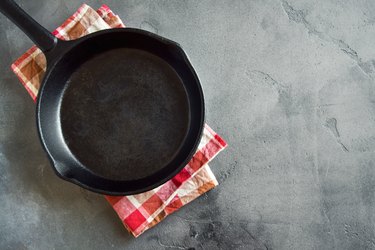
Cast iron cookware has quite a following. People who use these black, heavy and quick-to-heat pans recognize that cast iron offers many advantages over other materials for skillets, fryers and pans. But what about cast aluminum? Although less well-known than its iron counterpart, cast aluminum cookware has a lot to offer home and professional chefs alike. If you like cast iron, you might just love cast aluminum.
Both Need to be Seasoned
Video of the Day
Whether you choose cast iron or cast aluminum, these pans and skillets don't require traditional cleaning. In fact, scrubbing cast iron in particular with soap and water can cause it to rust or corrode. Instead, cookware made of either metal is meant to be seasoned with oil and spices to form a protective, non-stick coating, and food particles can be scraped out into the trash between uses.
Video of the Day
To season either a cast iron or cast aluminum pan, use a soft cloth to simply apply a coat of vegetable oil to the inside of the pan. Then, set your oven to "bake" and let the pan sit in the oven for at least two hours. The more you use your pan, the more oil will naturally build up inside. But if you notice that food does start to stick to the pan, season it again.
If you own a restaurant or the idea of not soaping down your cookware between each use seems practically apocalyptic, consider an enameled cast iron or cast aluminum pan instead. The enamel coating takes the place of the seasoning process, allowing it to be put into a dishwasher without a problem.
Cast Aluminum Pans are Lighter
There's a reason old movies and TV shows sometimes depicted characters knocking out a villain with a cast iron skillet: they are incredibly heavy! They're also versatile, which means you can easily put them in the oven, as well as use them on the stove. But transferring cast iron cookware to and from the oven isn't for the weak-armed. If your strength isn't the best, cooking with cast iron might pose a safety problem.
Fortunately, cast aluminum Dutch oven or other cookware are much lighter than cast iron. You can get similar versatility from a cast aluminum pan, but without the potential of dropping a too-heavy skillet on its way to and from the oven. Just remember that lightweight cookware is also prone to accidentally falling off the counter and spilling hot food if an errant elbow hits the handle. Both cast iron and cast aluminum have their pros and cons, but many choose cast aluminum thanks to its lightweight material.
Differences in Holding Heat and Heat Time
It's always frustrating to notice that one part of your pan cooks faster than the other. A desire for even heat distribution is one common reason why people seek out cast iron or cast aluminum cookware in the first place. And both metals not only distribute heat well, but also hold onto heat with little persuasion.
However, cast iron comes out the winner in terms of holding onto heat, thanks to its heavier mass. You can count on the pan to still stay hot even as you add cold or room-temperature food to the pan. Aluminum pans might have to reheat for a minute or two if you do this.
A pan with great heat retention also means you can turn off the burner and food will continue to cook for a little while longer. But iron and aluminum don't initially heat up at the same rate. Cast iron pans take just a smidge more time to get hot than cast aluminum pans. Some people don't mind the difference, but for busy folks who want to get dinner on the table as fast as possible, not having to wait even one extra minute can be a godsend. Thus, that particular advantage goes to cast aluminum.
Cast Iron Has a Longer Lifespan
If you've ever walked through a flea market full of antiques, you may be surprised to see the amount of cast iron cookware available. Although they might be decades old, those pans are often still serviceable. Cast iron can be handed down through the family in excellent condition, but you're unlikely to find its cousin cast aluminum in an antique shop.
Foods naturally contain acids that react with aluminum, and even though those acids are relatively mild, frequent use still puts cast aluminum cookware out of commission in a matter of years, not decades like its cast iron counterpart. Aluminum is also more susceptible to scratches due to sharp utensils.
However, it's cheaper to replace cast aluminum pans than it is to buy new cast iron cookware. So, the difference in longevity balances out when you consider the investment you sink into cast aluminum vs. cast iron. Still, if you prefer cast iron but want to get a good deal, skip over the newer models with colored enamel and opt for a plain version to save some money. Keep an eye out at those thrift stores for deals, too.
Do Aluminum Cookware Dangers Exist?
Aluminum does not have the greatest reputation in some circles, with concerns about exposure to aluminum linked to ailments like Alzheimer's disease. It's important to understand exactly what kind of aluminum cookware you have in order to understand how to best use it.
Untreated aluminum cookware can leech small amounts of aluminum into foods during the cooking process. If this concerns you and you have untreated aluminum cookware, do not use it for cooking acidic foods like tomatoes, as the acid is what reacts with the aluminum unfavorably. Some people also say it gives food a bland metallic taste. If you want to avoid that altogether, purchase aluminum cookware that has a stainless steel coating or that is anodized, which means it's non-reactive.
In terms of any iron getting into your food, you can consider that a nutritional supplement. Iron is necessary for a healthy diet, and any that might get into your body from a cast iron pan should not cause undue harm.
Summary: Cast Aluminum vs. Cast Iron
To recap, here are the pros and cons of cast aluminum vs. cast iron:
- Cast aluminum: lightweight, heats up faster, does not hold heat as well, has a shorter longevity, is typically cheaper.
- Cast iron: heavier, heats up a little slower, holds heat better, lasts longer, is typically more expensive but easy to find.
Both need to be seasoned to become non-stick pans and should not go in the dishwasher, unless you buy an enameled variety. If you're not already solidly in one camp or another for the cast aluminum vs. cast iron debate, you simply have to give them each a try and see what you think.