
The History of Airline Industry

The History of Airline Industry thumbnail
The History of Airline Industry

Over the past century, the airline industry has grown from an experimental mode of transportation to a major part of the world's transportation system, carrying an estimated 1.5 billion passengers annually. Following rapid growth in the years after World War II, the airline industry in the U.S. changed dramatically when it was deregulated in 1978. Over the next 30 years, major airlines merged, failed, and filed for bankruptcy, and some smaller airline companies emerged as strong competitors for domestic travel. At the same time, many airlines have purchased bigger aircraft to accommodate the surge of passengers.

  1. Early Years

    • The world did not embrace flight following Wilbur and Orville Wright's historic flight at Kitty Hawk in 1903, perceiving air travel as too dangerous. World War I helped popularize the aircraft as military vehicles, with heroic tales of American, British and German fighter pilots. But it wasn't until after Charles Lindbergh's 1927 transatlantic flight that the commercial possibilities of air travel were recognized, according to an article about the airline industry by Lydia Boyd of Duke University Library.

    The 1930s

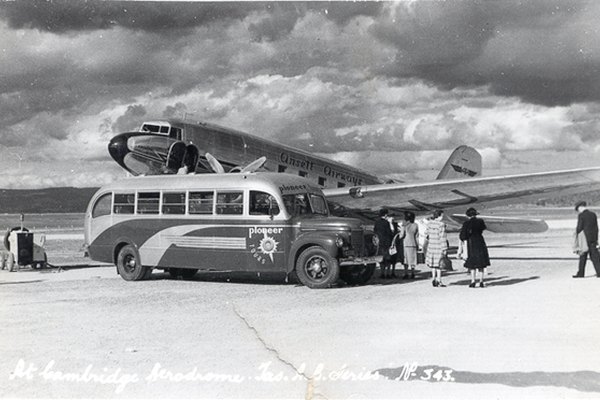
    • Air traffic regulations were passed in 1926, which were followed by the development of an extensive airmail system that flourished in the 1930s. In 1938, the Civil Aeronautics Authority was created to regulate the transportation of both mail and passengers. During that period, the DC-3 aircraft was developed to carry up to 21 passengers, according to Boyd at Duke and Stanford University's online library.

    Early Postwar Era

    • A 1953 DC-54 freight aircraft.

      The air-travel industry bloomed after World War II, with major airlines flying passengers an estimated 3.3 billion miles worldwide in 1945-1946. The development of the Lockheed Constellation pioneered the four-engine commercial airliner. In 1958, the Federal Aviation Administration was founded to develop an air-traffic control system, following a spate of mid-air collisions, according to the Duke University's Boyd and Stanford's library.

    Deregulation

    • An Etihad Boeing 777 in Jakarta.

      The U.S. government deregulated the airline industry in 1978. Europe followed in 1997. The deregulated market allowed airline companies to fly in other markets that were once off-limits. Deregulation ignited a fierce competition among airline companies that resulted in many mergers and failures, according to Boyd and Stanford's library.

    The 1990s

    • An Airbus A300 prepares to land.

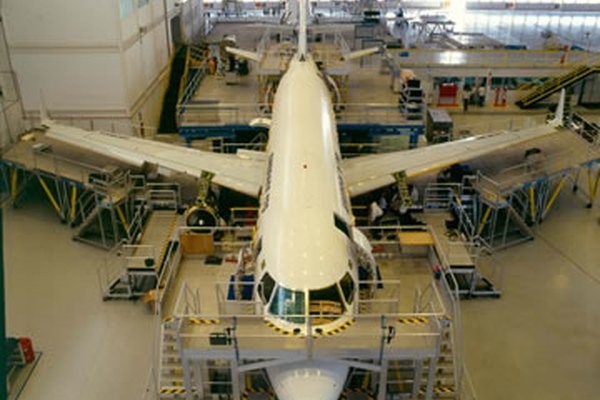
      The economic boom of the 1980s spelled trouble for some airlines in the 1990s, after companies had ordered too many aircraft, and exceeded the demand of international passengers. Cumulative losses were estimated at more than $20 billion from 1990-1994, according to Standard University. The once popular airlines Pan American and Eastern failed. Continental Airlines and TWA filed for bankruptcy at that time as well, according to Stanford's library.

    Growth

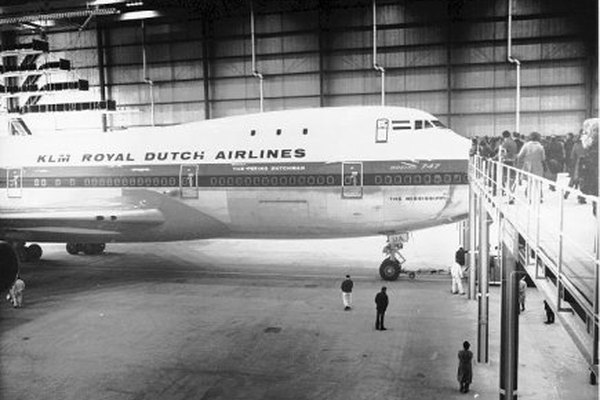
    • Up until the 2008-2009 recession, air travel had grown by about 7 percent annually over 10 years, with an estimated 1.5 billion passengers taking to the air last year. The Asia/Pacific region has witnessed the fastest growth by climbing 9 percent a year in the last decade, according to Boyd and Stanford's library.

    Today

    • Most airlines today have entered alliances to share the burden of operating costs. Low-cost carriers, such as JetBlue, Aer Lingus and EasyJet, have made significant inroads into the market. Airlines were expected in 2009 to carry 180 million fewer passengers compared to 2008 due to the weakened global economy, according to the Financial Post.

Related Searches:

References

  • Photo Credit AperturePriority/Flickr.com; uwebkk/flickr.com; virtualpilot88/flickr.com; nasa.gov

Comments

You May Also Like

  • The US Airline Industry History

    The world's first airplane was built in the United States by the Wright Brothers in 1903. Within 20 years, the United States...

  • The History of Sahara Airlines

    Sahara Airlines was a pioneer in India's private airline industry. It survived repeated price wars and ever-changing competition to become one of...

  • History of Commercial Air Travel

    Commercial air travel began in 1909 with the founding of the German Airship Company, a partially government-funded air service that used Zeppelin...

  • History of the Printing Industry

    Printing in the West began with Johannes Gutenberg and has undergone heavy technological change since then, with methods becoming cheaper and more...

  • British Airline History

    The British airline industry blossomed in the post-World War I era, but severe competition between fledgling companies made the carriers financially weak....

  • The History of Air Ambulances

    Air ambulances have been in effect since the early days of World War I. Advances in technology, including the advent of the...

  • History of the American Airlines Logo

    The American Airlines logo is one of the most recognized logos in the airline industry, as it adorns the tail section of...

  • History of Ukrainian Airlines

    There have been many Ukrainian airlines since the breakup of the Soviet Union. Most appeared in the1990s, when Soviet infrastructure was dismantled....

  • Competition & Regulation in the Airline Industry

    Airline competition and regulation has changed significantly since the first airline formed in the 1920s. The U.S. government strictly regulated airlines for...

  • What Is the Airline Industry?

    The airline industry is a global market based around the transport of goods or passengers by air. Airline corporations range in size...

  • History of Delta Airlines

    Delta Airlines is, as of 2009, the largest airline in the world. From its humble roots as a crop dusting firm, Delta...

  • The History of the Trucking Industry

    The modern trucking industry began with the advent of the motorized truck at the turn of the twentieth century, slowly taking over...

  • Information Technology in the Airline Industry

    While the U.S. airline industry was an early pioneer of information technology, it has struggled in the early 21st century to upgrade...

  • WW2 Air Games

    The Second World War has proven to be a fertile ground for ideas for movies, books and games. Although most media inspired...

  • The History of Air Compressor

    Air compressors are not new, even to this century, for they have been around for thousands of years. Ancient man used a...

  • The Advantages of eCommerce in the Airline Industry

    The Advantages of eCommerce in the Airline Industry. Airlines rely on eCommerce for many purposes. One primary benefit is it reduces the...

  • United Airlines History

    Since the days when a plane carried only a pilot and traveled about 100 mph, United Airlines got its start long before...

  • Air Travel & Tourism

    Air travel and tourism are affected by a number of factors, such as the cost of gas, price of tickets, disposable income,...

Related Ads

Featured