
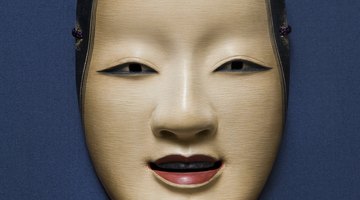


Wearing elaborate masks to celebrate Japan’s ancient gods evolved over the centuries into the use of theatrical masks as entertainment. The animistic gods of legend and lore were innumerable and notoriously difficult to list, as their names and definitions shifted constantly. They are known as Kami, or collectively, “yaoyorozu-no-kamigami,” the Eight Million. No wonder, then, that they formed such a fertile basis for Japan's imaginative masks and the arts associated with them.
Early Japanese Masks
The history of wearing masks in Japan for religious rituals is estimated to date back to the country’s Jomon period, an era spanning 10,000 B.C. to 300 B.C. Crude masks made from shells and simple pottery evolved into masks with more elaborate faces during the Kofun period, from the 4th through 6th centuries. Following the introduction of Buddhism and Korean influences in the 6th century, masks were also used for secular purposes. Gigaku masks, which covered the entire head, were used in dance performances, but their popularity died out by the end of the Edo period in 1868. Kagura dance performances, on the other hand, in which masks cover only the face, have survived and are still being carried on today.
Japan's Noh Masks
The best-known masks of modern Japan are “Noh” masks, lightweight wooden face coverings carved and painted with subtle expressions to make it appear that they change expressions with the movements of the actors. Noh theater performances date back to the 13th century. Sarugaki theater is a type of Noh theater that first appeared during the 14th century. Elaborate costumes are still worn with Noh masks today. Along with the dramas performed at Noh theaters, Kyogen performances, entertainment more comical in nature, evolved in tandem with Noh. Noh theatrical presentations often include Kyogen performances between acts.
At Mid-Winter Festivals
Today, Kagura performances are celebrated throughout the country at midwinter festivals. Masks are worn to celebrate the ancient Kami. In the Takachiho district of Kyushu, for example, a Kagura dance festival is held from November until February. The Noh masks worn at these performances are designed to represent characteristics of the ancient male and female deities.
On New Year's Eve
On New Year’s Eve, residents of some Japanese towns, such as Oga, visit their neighbors' homes wearing large masks and straw raincoats. As part of a tradition dating back centuries, they wear red masks to represent male ogres and blue masks to represent female ogres, and ask if children inside are misbehaving. If the masked visitors are offered food and drink by the residents, they bless the family with a promise of good health and fortune, then move along to the next house.
Related Articles





References
Writer Bio
S.R. Haines is a veteran writer whose work has been published by newspapers, magazines, international news wire services and nonprofit publications on topics ranging from breaking news and politics to travel, parenting, education, business and technology. She earned a Bachelor of Journalism from the University of Texas at Austin.