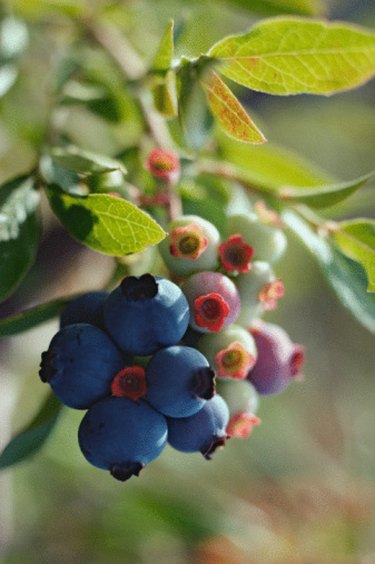
Berry Plant Identification

Identifying wild plants and berries is a fun pastime for hikers, berry growers, science lovers, and people who love to eat berries. Knowing your berries could actually save your life in a survival situation, but most likely you'll just want to know what you can pick and eat when out in the woods. Many people learn about locally grown berries, or learn from many different field guides. Does this Spark an idea?

  1. Field Guides

    • The best guides will have color pictures, notes on identification, warnings, and maybe a list of similar berries. You'll also do much better if the book specializes in your state or region. Here are three good books to consider:
      1. "Peterson's Field Guide to Edible Wild Plants" has different books that are specific to a region of North America.
      2. "Identifying and Harvesting Edible and Medicine Plants in the Wild," by Steve Brill.
      3. "The Rocky Mountain Berry Book," by Bob Krumm.

      Often, you can purchase a short guide from a visitor's center if you go hiking, or buy one ahead of time at a local bookstore or off Amazon.

    Common Berries

    • The most common berry in the U.S. is the blackberry. The berries grow on large, thorny bushes all over the U.S. and produce large, bumpy black berries that are very sweet. Wild strawberries look like their store-bought counterpart, but usually much smaller. The edible strawberries come from white flowers, not pink.

      Most wild berries will look like the domestic bush, so if you're familiar with blueberry bushes, you can probably identify a wild one. Look through your field guide before hiking for wild strawberries, blueberries, raspberries, and even cranberries and rose hips. Rose hips are the fruit formed on a rose bush if you don't deadhead. They're hard and packed with vitamin C, so you might want to harvest them for drying and making tea.

    Identification

    • Field guides will show you a picture and describe parts of the plant to look at, such as the shape of the leaf, color, size, the vine or branch, and some unique features. Look at both the berry and the plant.

      If you're not sure about the berry, or any kind of plant found in the wild, don't eat it. This especially applies to roots and mushrooms, but some berries might cause a reaction in your mouth or make you sick. (See Section 4, "Poisonous Berries.") This sure-fire rule will keep you out of trouble, but it's not hard to identify berries with some experience and an identification guide.

    Poisonous Berries

    • There are poisonous berries in the U.S., but they tend to be small, hard berries that don't look good to eat. These also don't taste very good, so if you get something that tastes off or bad, spit it out. The only berry that will make you sick from just tasting is the poison ivy berry---so look that one up before hiking! In general, avoid white berries. It's usually small children who consume harmful berries out of curiosity. These include the holly tree, and its red berries, and mistletoe, both of which are used for decoration in the house.

    Children

    • To avoid an allergic reaction, children under two shouldn't eat strawberries. Check with your doctor about small children eating wild berries, and read through your field guide to see if there are any warnings.

    Herbicides

    • Lastly, watch out for bushes sprayed with herbicide if you're in a park area or near country roads. The bush will be dying or turning yellow. Instead look for healthy bushes with plump, juicy berries.

Related Searches:

References

Comments

You May Also Like

  • Berry Leaf Shrub Identification

    Knowing how to identify berry leaf shrubs is important, especially when using them in landscaping or in the wild. The most common...

  • How to Identify Berry Plants

    There are many reasons why you should be able to identify different types of berries. Whether you are in the wild or...

  • Identification of the Leaf of a Berry Plant or Bush

    There are hundreds of species of berry plants and bushes, all which have unique leaf anatomy. When trying to identify a berry...

  • How to Identify Poisonous Berries

    While berry bushes offer colorful variations for your garden or yard, they may be toxic if ingested. Unfortunately, poisonous berry bushes vary...

  • How to Identify Wild Berries

    If you go backpacking into the wilderness, then it's important to learn many survival skills, including foraging for food. You may get...

  • Juniper Berry Identification

    The juniper berry is the seed of the juniper shrub, commonly found in North America. In recent years, it has grown in...

  • Michigan Wild Berry Plant Identification

    Michigan has one of the best temperate zones for growing fruit. While the majority of the fruit grown in Michigan comes from...

  • Annual Berry Plant Identification

    Most berries grow on woody plants, such as shrubs, trees and vines, which grow as perennials, not annuals. In the United States,...

  • The Identification of the Leaves of a Berry Plant or Bush

    There are hundreds of berry plants and bushes. Some grow naturally while others are purchased in nurseries and planting centers. Berry plants...

  • How to Identify a Red Currant Bush

    Red currants are a favorite fruit for making jams, jellies, tarts and other sweet treats. According to the Botanical website, wild red...

  • Bush Leaf Identification

    Knowing the identity of a bush growing in your landscape may ease your curiosity, but it also provides you with the basic...

  • Berry Tree Leaves Identification

    Whether you're growing the trees for ornamental use or want to take advantage of their edible fruits, berry trees are a beneficial...

  • Shrub Identification

    Shrubs make decorative additions to the landscape due to their appealing colors and berries or flowers. When you plan a garden, identify...

  • Plant Identification

    There are a number of factors that go into identifying a particular plant. Some good things to keep in mind when researching...

  • Wild Plant Identification

    Wild plants are all around us, even in highly urbanized areas. Maybe you liked to climb trees when you were little, or...

  • Hawthorn Berry Identification

    The Hawthorn berry is the pinnatifida species within the Crataegus genus, which is within the Rosaceae (rose) family. The hawthorn originated in...

  • Plant Leaf Identification

    Plants can often be identified based on their leaves. Although it is not always possible to determine the exact species, it may...

  • Where Can I Purchase Goji Berry Plants?

    Although goji berries have long been used in China and Tibet to help boost the immune system, the antioxidant-rich fruit is relatively...

  • Blueberry Plant Identification

    The blueberry belongs to the family Ericaceaa. You identify blueberry patches by noting the distinctive twigs and characteristic leaves. Berries ripen between...

Related Ads

Featured