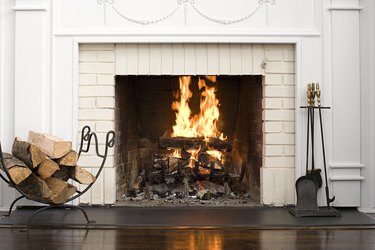
For many people today, burning firewood has disadvantages, but rising energy costs mean it remains a primary heat source for many homeowners. If you're researching pine as a wood to burn in your fireplace, you've probably heard how bad it's supposed to be. Like most myths, pine's "poor firewood" reputation begins with a grain of truth since it's a resinous softwood that's quick to light and burns faster than hardwoods, but that's the trouble with half truths — they're half wrong. Sometimes, burning pine is the right way to go.
Tip
You can burn pine, but its softwood nature means it burns much faster and produces much less heat than some popular hardwoods do. Sometimes, though, a quick burn is what you want.
Video of the Day
Know Your Woods
Hardwoods and softwoods have different densities and water content levels. Hardwoods are best for long, steady burning — but good luck starting fires with these slow-to-catch, dense woods. Meanwhile, pine's abundant sap and soft wood means it's a quick-lighting wood that is ideal for kindling.
Video of the Day
Masters in the art of stoking fires will tell you that the perfect fire management system includes both hard and soft woods. When a fire's dying, a pine log thrown in along with a hardwood log means producing quicker, higher flames as the pine catches and then flames out, ensuring the hardwood's flame is soon well established for a fire to smolder for a long while yet.
When burning things generate heat, it's measured in BTUs. The higher the BTU, the higher the heat and energy output created. BTUs vary widely on types of wood, even within the dozens of types of pine available in North America, but across the board, the BTUs of pine are considerably lower than many other types of wood.
Understanding Pinewood's BTU Rating
A cord of firewood is 128 cubic feet, which is the volume experts measure for wood's burning capacity. Some hardwoods provide more than double the heat of softer pine, like the controversial eucalyptus, which produces 34.1 million BTUs per firewood cord. Dozens of pine species in the U.S. tend to range from the low end of the Eastern white pine at 14.1 million BTUs up to around 17.1 million BTUs per cord with Jack pine and Norway pine.
So, you'll need to burn twice as much Jack pine as eucalyptus to keep a home at the same temperature, which means more smoke, more work, and more chimney maintenance. Does that mean you shouldn't use pine? Not at all — but understand that it's the lower efficiency coupled with the abundance of pine in North American forests that makes it among the most affordable firewood per cord. (Affordable, however, doesn't equal cost effective.)
Characteristics of Pine Fires
Pinewood typically creates a crackling ambiance that people love. The drier it is, the faster it burns, which is why folks enjoy pine for campfires. In the home, the lower BTU and smoky, quick fire from pines make it notable for producing creosote. The abundance of resin in pine is often blamed for pine's creosote production, but studies by the University of Georgia College of Agricultural & Environmental Sciences found that burning wood at lower temperatures is what produces creosote.
Another culprit for creosote, which builds up inside chimneys, making creosote itself a fire hazard, is poorly seasoned firewood. Seasoning refers to drying out firewood. When properly seasoned, pine burns extremely fast. While most hardwoods are dried to the 20 percent moisture threshold that is ideal for controlling smoke and burn rates, people often will not dry pine to that point, so it doesn't burn quite as quickly. Unfortunately, additional moisture makes pine less efficient and smokier, hence many people's negative experiences with the softwood.
Splitting Your Own Pine
With pinewood being among the most abundant wood sources in the U.S., splitting a cord or two might be in your future. If so, wear work clothes because the sap is notorious for transferring to clothing. A hydraulic splitter makes an easy day of pine splitting, but for those busting out an axe to swing, splitting pine is a grueling day's work, thanks to the abundant knots.
Once split, pine or any other wood should be stored off the ground and under cover so it can dry out. Some hardwoods take two years to properly season, but pinewood's softer core means one dry summer is often enough to make it burnable. A digital moisture meter can help you ascertain if you're in the 20 to 25 percent moisture range that's ideal for household firewood. Remember that experts advise using a mix of hard and soft woods for optimal fire management.