Define the Glasgow Coma Scale
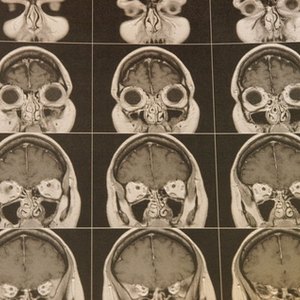
The Glasgow Coma Scale was created in 1974 to attempt to objectively assess injuries to the head or the brain. Through a series of tests that measure a patient's reaction to various types of stimuli, and the numerical scores those reactions carry, a doctor can assess the severity of a head injury and whether the patient is in a coma, in a near-coma or conscious.
-
The Score
-
The Glasgow Score ranges on a scale from 3 to 15, with 3 being the most severe head injury and 15 being the least severe head injury. Doctors measure a patient's reaction to three different stimulus, award points based on the reactions and add the points together to determine the patient's Glasgow score. The score is used by emergency medical personnel, emergency room physicians and on-call doctors during the patient's acute recovery phase.
Visual Reaction
-
Patients are awarded points on a scale of 1 to 4 based on their reactions to visual stimulation. A score of 4 means the patient opened his eyes spontaneously and blinked. A score of 3 indicates the patient could open his eyes upon a verbal command. A score of 2 says the patient opens his eyes when he feels pain. A score of one means the patient has no reaction to verbal commands or pain.
-
Verbal Response
-
Patients are awarded a score on a scale of 1 to 5 based on their reactions to verbal commands. A score of 5 indicates the patient is oriented and responds to all questions and commands. A score of 4 shows the patient can answer questions, but may be confused by the conversation. A score of 3 finds the patient able to speak, but making incorrect or inappropriate responses to questions. A score of 2 says the patient is speaking, but isn't making sense. A score of 1 means the patient is not speaking.
Motor Response
-
Patients are awarded a score on a scale of 1 to 6 based on their motor reactions to stimulus. A score of 6 means the patient can respond to all commands for movement. A score of 5 means the patient can move, but only when exposed to painful stimulation. A score of 4 finds the patient able to move, but backing away from pain. A score of 3 says the patient is having a spastic response to motor stimulation or is flexing their arms, hands and wrists together across the chest. A score of 2 means the patient is having a rigid response to motor stimulation or is responding with extended elbows or an arched back.
Verbal Responses For Kids
-
For children of a certain age, the verbal part of the scale must be adjusted, mainly because children under 5 may be unable to respond appropriately to verbal commands. In this case, the scale is amended to reflect appropriate words, smiling or cooing (5); inappropriate words, crying that's consolable (4); persistent crying, inappropriate crying or screaming (3); grunting, agitation or restlessness (2); or no response (1).
-