
This Season
 

Air Travel History

Air Travel Historythumbnail
Air Travel History

Mankind dreamed of flying for thousands of years. People have looked to the sky and pondered the possibilities of soaring above the earth since the beginning of human history. These dreams became reality in the 20th century. From humble beginnings, air travel has developed into the most popular form of long distance travel in the world.

Related Searches:
    1. The First Flight

      • The first airplane flight took place in North Carolina in 1903. Orville and Wilbur Wright were innovative brothers who hoped to pilot a flying machine for the first time in history. They did just that on a fateful December morning when the brothers succeeded in taking off in their airplane and flying it for 120 feet. Orville was at the controls for this 12 second flight. It was to be the foundation for a century of aviation innovation.

      World War I

      • Airplane designs improved as World War I approached. Tractor biplanes with more powerful engines and propellers were developed. Airplanes were flown in combat as bombers, skirmishers and scouts. Legendary dogfights took place in the skies with characters, such as the infamous Red Baron, adding to the intrigue of air travel.

      Crossing the Atlantic

      • Charles Lindbergh changed the conception of air travel permanently in 1927 when he became the first man to cross the Atlantic Ocean in an airplane. This transatlantic flight in the Spirit of St. Louis airplane took 33 hours. He made it from New York City to Paris. Lindbergh's feat established airplanes as a legitimate mode of transportation for long-distance travel between countries and continents.

      World War II and Commercial Aviation

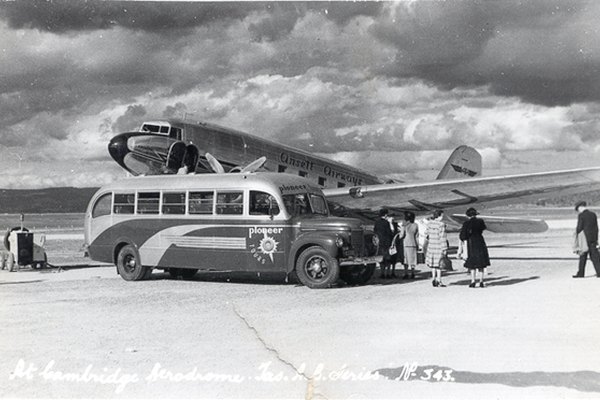
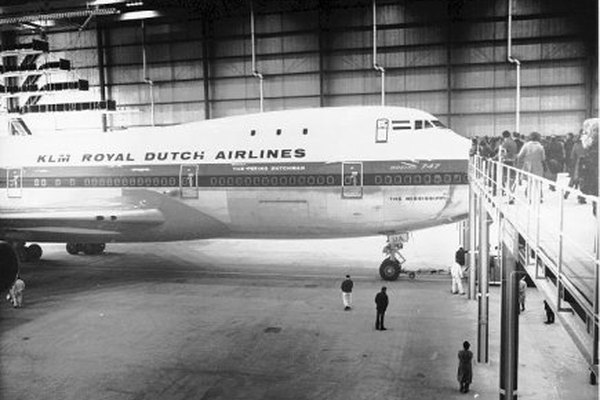
      • Commercial air travel first appeared in the 1930s as airplanes became more sophisticated and comfortable for passengers. However, airfare was too expensive for the average person. Only wealthy businessmen could afford to fly. Passenger numbers increased greatly after World War II. Many of the military airfields built for the war were sold to cities and private investors. Douglas and Boeing emerged as the two most successful airplane manufacturers at this time. They developed pressurized and heated cabins, making it possible for planes to carry passengers through bad weather and over mountain ranges. Advances continued to be made in the 1950s and '60s, but air travel was still too expensive for most people. The federal government regulated fares, keeping prices high to appease airline moguls and unions.

      Deregulation and Modern Air Travel

      • After decades of high fares, President Jimmy Carter and Congress deregulated air travel in 1978. Airlines began to establish their own routes and ticket prices. Many smaller companies started to chip away at the monopoly prices of larger carriers by charging reasonable fares for domestic flights. Deregulation made airplanes the most popular way to travel long distances. Only 205 million Americans had flown in 1975, before deregulation. This number increased to roughly 638 million by the year 2000. While the prestige of flying has been greatly diminished by large crowds at terminals and packed cabins in planes, air travel remains one of mankind's most important innovations to date.

    Related Searches

    References

    • Photo Credit Gabriella Fabbri: sxc.hu

    Read Next:

    Comments

    You May Also Like

    • History of Commercial Air Travel

      Commercial air travel began in 1909 with the founding of the German Airship Company, a partially government-funded air service that used Zeppelin...

    • History of Ukrainian Airlines

      There have been many Ukrainian airlines since the breakup of the Soviet Union. Most appeared in the1990s, when Soviet infrastructure was dismantled....

    • The History of Sahara Airlines

      Sahara Airlines was a pioneer in India's private airline industry. It survived repeated price wars and ever-changing competition to become one of...

    • The History of Airline Industry

      Over the past century, the airline industry has grown from an experimental mode of transportation to a major part of the world's...

    • History of New Zealand Airlines

      New Zealand's airlines were slower to get off the ground than most. Te Ara, The Encyclopedia of New Zealand online, tells of...

    • History & Information on the Travel Agency Business

      Travel agencies first started in the United Kingdom, originally catering for only very wealthy people. With the advent of aviation technology and...

    • Commercial Air Travel in the 1950s

      Commercial aviation started in the 1920s, when many World War I pilots were looking for a way to still fly. However, it...

    • Pros & Cons of Air Travel

      When popularized in the 1960s, jet travel heralded a glamorous, exciting new age of travel filled with customer service, passenger comfort and...

    • Travel in the 21st Century

      Travel in the 21st century is not too different than travel in the late 20th century, at least as far as the...

    • List of the Most Important Inventions of the 20th Century

      The 20th century was a beehive of inventive activity. Some inventions improved on 19th century developments, such as moving pictures, gasoline-powered automobiles...

    • Domestic Air Travel in Canada

      Canada is home to nearly 1,500 airports, many of which serve domestic travelers. While air travel within Canada is easy to navigate,...

    • Importance of Air Travel

      It took Christopher Columbus more than 2 months to reach the Americas by sea in 1492. Since the first flight of the...

    • Early Transatlantic Air Travel Information

      The many milestones in early transatlantic air travel are important in the development of the modern global aviation system. From the first...

    • The History of the Airplane Car

      A fusion that has been more conceptual than practical, the flying car has had an interesting and diverse past. As man has...

    • History of Train Travel

      A train is a series of passenger or cargo cars pulled along by one or more sources of power. The history of...

    • The History of Benjamin Air Rifles

      The Benjamin Air Rifle Company has been in business since 1902, when it was founded in St. Louis, Mo., by Walter Benjamin....

    • The History of Thomas Cook Travel

      The name Thomas Cook is synonymous with affordable, worldwide travel, but this hard-working English cabinet-maker did not start out to popularize tourism...

    Follow eHow

    Related Ads